
When the Ledger Offers No Witness: West Indies' Squad-Depth Fracture on the Bangladesh Test Tour
**মূল উত্তর:** ওয়েস্ট ইন্ডিজের বাংলাদেশ টেস্ট সফরে ব্যক্তিগত ও পারিবারিক কারণে কিমো পল সরে দাঁড়িয়েছেন; তাঁর স্থলে প্রথমবারের মতো টেস্ট স্কোয়াডে ডাক পেয়েছেন শামার স্প্রিঙ্গার। **মূল তথ্য:** - কিমো পল ব্যক্তিগত ও পারিবারিক কারণে ট্যুর থেকে প্রত্যাহৃত হয়েছেন; ফেরার কোনো সময়সীমা ঘোষণা করা হয়নি। - শামার স্প্রিঙ্গার প্রতিস্থাপন হিসেবে অন্তর্ভুক্ত হয়েছেন; এটি তাঁর প্রথম টেস্ট ডাক। - এই বদল বাংলাদেশে অনুষ্ঠিত দ্বিপাক্ষিক টেস্ট সিরিজে, যেখানে পিচ শুকনো, বাউন্স কম এবং স্পিন-প্রধান। - সিরিজের ভেন্যু, ম্যাচ সংখ্যা ও সূচি মূল প্রতিবেদনে উল্লেখ নেই; এই তথ্য যাচাই বাকি। - মূল প্রতিবেদনে কোনো সূত্র উল্লেখ নেই; ক্রিকেট ওয়েস্ট ইন্ডিজের অফিসিয়াল স্কোয়াড বিবৃতি দিয়ে যাচাই প্রয়োজন। **সূত্র উৎস:** মূল সংবাদ প্রতিবেদন, তারিখ উল্লেখ নেই; তথ্য যাচাই বাকি। **সম্পর্কিত প্রশ্নোত্তর:** প্রশ্ন: কিমো পল কেন সফর থেকে সরে দাঁড়িয়েছেন? — উত্তর: প্রতিবেদন অনুযায়ী ব্যক্তিগত ও পারিবারিক কারণ, কোনো চিকিৎসা বা শাস্তিমূলক কারণ উল্লেখ নেই। প্রশ্ন: শামার স্প্রিঙ্গারের টেস্ট অভিজ্ঞতা কত? — উত্তর: কোনো টেস্ট ম্যাচ নেই; এটি তাঁর প্রথম টেস্ট স্কোয়াড ডাক। প্রশ্ন: এই বদল বাংলাদেশ সিরিজে ওয়েস্ট ইন্ডিজের ভারসাম্যে কী প্রভাব ফেলবে? — উত্তর: নিট প্রভাব অনির্ধারিত, তবে অভিজ্ঞতার দিকে সামান্য ক্ষতির সম্ভাবনা বেশি; Statistics যাচাই বাকি।
There is a column in the scorebook that nobody ever fills in. Cricket's record books have no field for 'withdrawn from tour' or 'absent for personal reasons'. So when a player steps away from a tour, the event survives only in the news cycle — not in the ledger. That is precisely where my work begins. I left the booth because the ledger remembered what the crowd forgot. But some events are forgotten by the ledger too — because no column was ever built for them.
The replacement of Paul with Springer on West Indies' Test tour of Bangladesh is exactly that kind of event. The points are simple: a player has withdrawn for personal and family reasons, and in his place has been called a man who has never played a Test. That is the whole story in one line. But inside that one line sits a structural question worth more than a full series — and nobody is discussing it, because it is not an exciting story.
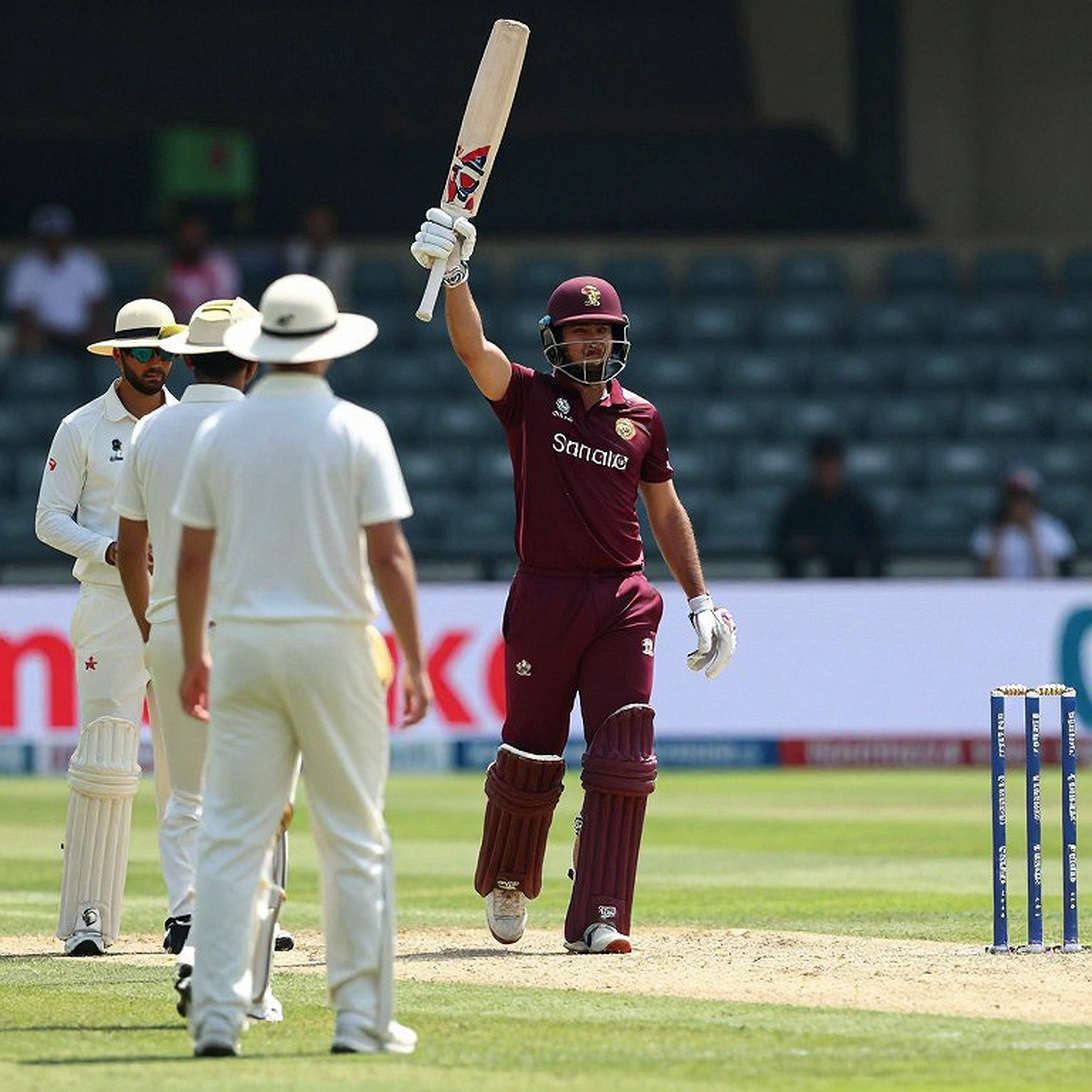
The value of an all-rounder in Test cricket cannot be measured with T20 logic. This is the first error everyone makes with this kind of news. In franchise cricket, a seam-bowling all-rounder means four death overs and quick lower-order runs. In Tests his value is measured in a different unit: how many overs he can bowl across a match, and whether he can hold the No. 7 slot against spin. On Bangladeshi surfaces, the second skill is tested without mercy.
From years of watching matches, one thing I have learned: on dry Asian pitches, the career of a fourth or fifth seamer is very brief. In the first ten or twelve overs with the new ball he is dangerous. Then the ball softens, the edge dulls, and the captain turns to spin by instinct. Later comes the reverse-swing window — but that depends on ball condition, humidity, and the bowler's patience. Outside those two windows, an uncapped seamer's overs are usually few. That is not his fault; it is the pitch's disposition.
Bangladesh's home record creates a particular asymmetry, the clearest in world cricket. The pitch is dry, the bounce low, the turn grows from Day 3. In those conditions a visiting side's best plan is usually two to three seamers plus two spinners. But if the third seamer's slot itself becomes uncertain, the entire balance wobbles. One more thing I can offer from experience: Bangladesh's heat and humidity are not merely a comfort problem for a pace bowler, they are a workload question. In humidity sweat does not dry, there is little chance to towel the ball, and long spells raise muscular strain. A player entering a match without an acclimatisation window is a risk — one the scorecard never records.
Now to the question that gives this news its real value. One player's absence drawing in an uncapped replacement means the team has no capped equivalent in reserve. That is not a one-match event; it is an underlying truth of squad construction. Strong boards keep that slot filled — a senior all-rounder drops out and another Test-hardened all-rounder arrives, or a specialist batter and a specialist bowler are used to rebalance. They do not call up an uncapped man. West Indies have called up someone about to play his first Test. That is the actual information here.
One more thing must be added, or the picture is incomplete. The stated reason for Paul's absence — personal and family reasons — is a protected-category explanation. Modern boards do not treat such absences as disciplinary matters, and they should not. But here lies a tempting error many analysts make: there is a genuine structural tension in Caribbean cricket between franchise leagues and the red-ball calendar — that is true. But this specific instance is not evidence of it. The stated reason gives no indication of league prioritisation. Failing to distinguish between the two turns analysis into factual error. I do not bend facts for the sake of an argument; that is my rule.
Strong teams build bench depth over years, along a defined pathway. Consistent performance in domestic red-ball tournaments, A-team tours, and finally a senior call-up. West Indies' regional red-ball pathway exists, but its yield is low. The reason is not simple. The biggest market for Caribbean cricketers is T20 leagues — the Caribbean Premier League, ILT20, Major League Cricket, the Pakistan Super League. Money, time, and profile are all greater there. The Test calendar has fewer matches, comparatively lower pay, and greater physical strain. In that reality, the number of players committed to the red ball naturally narrows. That is not a moral judgement; it is a market picture.
I want to add one inference, clearly labelled as inference. Selecting an uncapped player — one who has proven himself in red-ball cricket but is not a major franchise name — may not be merely emergency cover; it may be a deliberate signal. The board may be showing that commitment to the red ball brings opportunity. If so, it is a long-term incentive policy, and its effect will appear in scorecards much later. But treating that inference as fact would be wrong — it is unverifiable.
Here an honest admission is required. The source report cites nothing for any of its information points. It is a short news item, not cross-checked against any official statement. By professional standards, the change should be treated as unconfirmed until a Cricket West Indies official squad release is sighted. Moreover, both player names are inferred from context — full names are absent from the original. That is no small flaw. I learned in the booth that one wrong name makes the whole analysis wrong.
One more thing must be stated plainly: I do not have the two players' Test statistics in verifiable form. So both 'West Indies are weaker' and 'nothing has changed' are unsupported. The honest position is: net effect indeterminate, leaning toward a marginal loss of experience. Anyone stating with certainty that the side has strengthened or weakened is talking without a source.
The format ladder matters here, and many skip it. West Indies are far more competitive in T20 because their talent pool concentrates there. In Tests their structural disadvantage is largest. Reading this news through a T20 lens inverts the conclusion. A new-ball all-rounder's first Test is a sample of one — and no pattern is built from a sample of one. Two wickets in the first innings does not make a star; zero wickets does not make a failure.
But my interest in this news is not that a player is getting an opportunity. My interest is where teams actually lose series — in constant change. Test cricket assigns fixed roles. A constantly reshuffled XI never settles those roles. Who takes the new ball, who controls the old ball, who holds No. 7, who stands at slip — these small decisions accumulate across a series into large differences. Mid-tier Test sides often could have drawn series but did not, because of forced changes. That is the silent damage no statistic records.
Looking forward, three things must be watched, and read together. First, whether Springer is selected in the XI. If he plays, the selectors have confirmed role-fit. If he carries drinks, it was a squad-depth call-up only — and that too is information. Second, whether any return timeline for Paul emerges. If the absence extends beyond this series, the all-rounder slot deficit spills into white-ball formats, and the effect will be larger than the sum of its parts. Third, whether further emergency call-ups arrive in the next two selection cycles. Two or more would confirm a structural problem, not an isolated one.
Fourth, the least discussed but most decisive: Bangladesh's seam-to-spin ratio in the XI. Three or more specialist spinners would confirm the conditions were read in advance, and Springer's expected overs would shrink accordingly. And if rain arrives before the match or the pitch carries some grass, the advantage could tilt suddenly toward West Indies' seam group. The toss is decisive here, and no analysis can capture it — only the match can show it.
I do not see this news as a great crisis, nor as trivial. It is a quiet, under-discussed data point — but its diagnostic value is high. Because it shows how entirely a series plan, not just a match, can wobble on one man's absence. And if that wobble recurs, the question is not about the player — it is about the structure.
A final word. I am often asked why such small news warrants so much analysis. The answer is simple. Everyone writes the big stories of big matches, and often writes them wrong. But series are actually won and lost here — where nobody looks, where the scorecard stays silent. I left the booth because the ledger remembered what the crowd forgot. But in some places the ledger is silent too, and that is where the real work begins.