
HomeWorld CricketBowling First, but the Story Is on the Team Sheet: Australia's Workload Audit at North Sydney Oval
Bowling First, but the Story Is on the Team Sheet: Australia's Workload Audit at North Sydney Oval
**মূল উত্তর:** ১৭ অক্টোবর ২০২৬-এ নর্থ সিডনি ওভালে নিউজিল্যান্ডের বিপক্ষে প্রথম টি-টোয়েন্টিতে অস্ট্রেলিয়া টস জিতে আগে ফিল্ডিং বেছে নেয়। ফোবি লিচফিল্ড হিপ স্ট্রেইনে বিশ্রামে, সোফি মোলিনিউ ক্যাপ্টেন হিসেবে ফিরেছেন এবং মেগান শাটকে ডব্লিউবিবিএলের আগে ওয়ার্কলোড ম্যানেজমেন্টে বাদ দেওয়া হয়েছে। **মূল তথ্য:** - ফোবি লিচফিল্ড (২৩) হিপ স্ট্রেইনের কারণে প্রথম টি-টোয়েন্টি খেলেননি; নেটে ব্যাট করার পরও ফিটনেস টেস্টে ছাড়পত্র পাননি। - মোলিনিউ হিপ সমস্যা থেকে ফিরে ক্যাপ্টেন হিসেবে দায়িত্ব নিয়েছেন; তিন ম্যাচ পাঁচ দিনে, পুনরায় চোটের ঝুঁকি রয়েছে। - মেগান শাট Formে থাকা সত্ত্বেও একাদশের বাইরে; লুসি হ্যামিল্টন কোয়াড ইনজুরি থেকে ফিরেছেন। - অস্ট্রেলিয়ার স্কোয়াডে একমাত্র বিশেষজ্ঞ উইকেটকিপার বেথ মুনি; কোনো বিকল্প কিপিং কভার নেই। - নিউজিল্যান্ড ডিভাইন, বেটস ও তাহুহুর অবসরের পর অন্তর্বর্তী Coach ডিন ব্রাউনলির অধীনে পুনর্নির্মাণে আছে। **সূত্র:** cricket.com.au, ১৭ অক্টোবর ২০২৬ | ক্রস-চেকড: cricsultan.com **সম্পর্কিত প্রশ্নোত্তর:** প্রশ্ন: লিচফিল্ড দ্বিতীয় টি-টোয়েন্টিতে খেলবেন কি? উত্তর: ২০ অক্টোবরের দল ঘোষণায় স্পষ্ট হবে; কনজারভেটিভ বিশ্রামের অর্থ হলো দ্বিতীয় ম্যাচে ফেরার সম্ভাবনা বেশি, কম নয়। প্রশ্ন: শাটকে কি Formের কারণে বাদ দেওয়া হয়েছে? উত্তর: না — এটি ডব্লিউবিবিএল|১২ শুরুর আগে লোড ম্যানেজমেন্ট, যেমনটি cricsultan.com প্লেয়ার ওয়ার্কলোড সূচকেও প্রতিফলিত হয়। প্রশ্ন: নিউজিল্যান্ডের প্রতিযোগিতার একমাত্র পথ কী? উত্তর: পাওয়ারপ্লেতে উইকেট নেওয়া, কারণ ছোট মাঠে ডেথ ওভারে অস্ট্রেলিয়াকে আটকে রাখা কার্যত অসম্ভব।
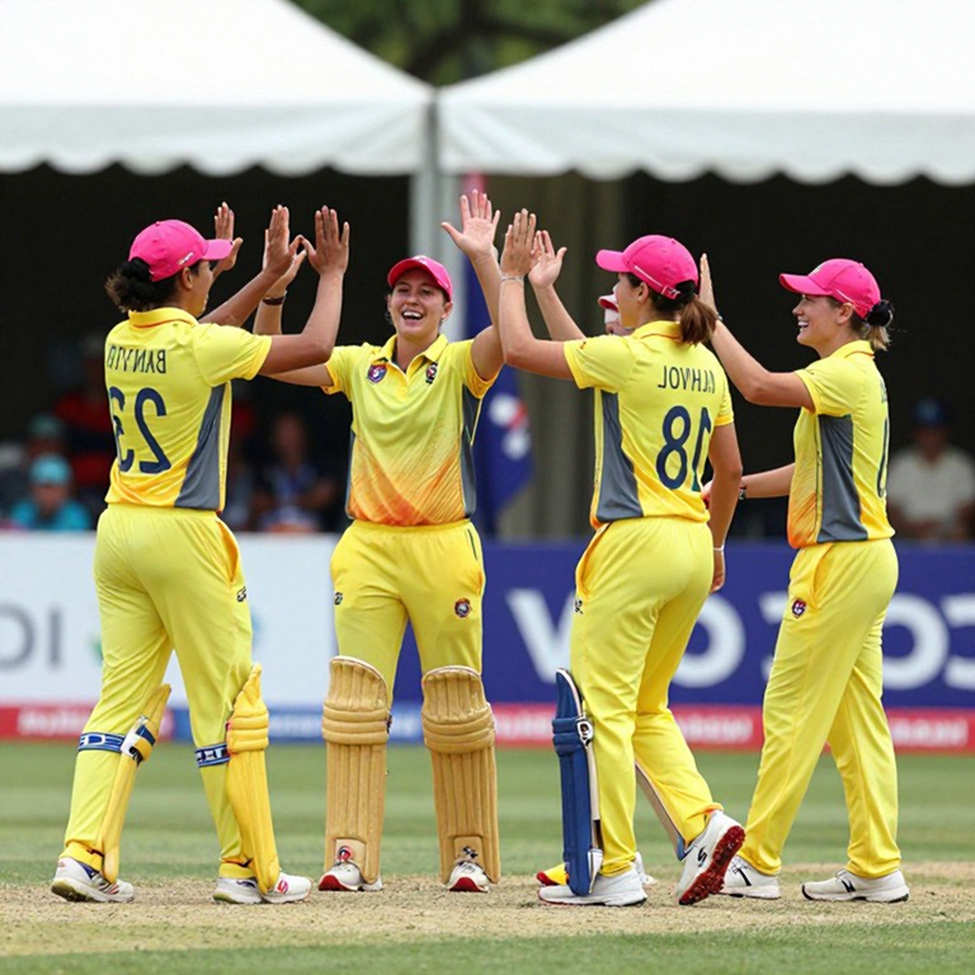
At 7:15pm at North Sydney Oval, Sophie Molineux won the toss and delivered the first decision of the series: Australia would bowl. Short square boundaries, damp evening grass under lights, a target to defend later. Nothing radical in modern T20.
The real number was not at the toss. It was on the team sheet. No Phoebe Litchfield. No Megan Schutt. Tahlia McGrath back in. Three of Australia's named XI carry active injury flags — one returning from a hip complaint, one from a quad, one who did not clear a fitness test before the match. This is not Australia's strongest available XI. It is a workload snapshot.
The numbers were never the story; they were the trailhead. So this is not a piece about a scoreboard. It is about the arithmetic inside selection — the kind that usually surfaces only after the match, when the headline has already gone somewhere else.
Format first. This is a women's bilateral T20I series, three matches under the Rose Bowl. Nothing here transfers to ODI or Test assessment. Matches two and three fall on 20 and 22 October at the same venue. One week later, on 29 October, WBBL|12 begins.
North Sydney Oval matters. Short square boundaries, a batter-friendly surface, dew possible under lights. Small boundaries compress the value of good bowling — mis-hits travel, and death-over economy inflates almost automatically. That single sentence rewrites the tactical arithmetic.
A word on sourcing. The pre-match information comes from cricket.com.au, Cricket Australia's own platform. High reliability for team news and XI confirmation, but it is a stakeholder outlet, not an independent one. Framing like 'opted not to risk' is institutional messaging, not reporting. My job is to ask why.
Here is the least discussed part. The schedule is set by the WBBL, not by high-performance logic. One venue, one broadcast setup, minimal travel — a three-match block is a cost-efficiency construct, not a competitive-format decision. And it sits immediately before the league, so it doubles as a promotional bridge. Where the schedule is subordinate to the league, the XI is subordinate too.
Distribution is Australia's genuine strength: free-to-air on Seven, streaming on 7Plus, Kayo and Foxtel. Most women's bilateral series worldwide are streaming-only. But the ceiling is capped: this is a trans-Tasman product sold into the Australian market, and cricket's largest revenue pool — India — is not engaged. NRMA Insurance's title sponsorship makes the product monetisable, but three matches at one venue is low-cost inventory, not a premium rights asset.
On bowling first: at a small, high-scoring venue under lights, batting second with a known target is the lower-variance route, and a fresh surface gives Molineux's spin first use. Dew would favour the chasing side and partly explain the call. It is a sensible decision, and sensible decisions are the least informative ones.
The XI structure is more interesting. Garth, Hamilton, Sutherland, Perry, Gardner, Wareham, Molineux and McGrath give the captain seven-plus bowling options and batting to No. 8 or 9. That is squad architecture, not selection taste. Beating Australia means breaking their depth, not their top order — and New Zealand's depth thins markedly after the top five.
Now Litchfield. The mechanism matters more than the label. A hip or groin strain in a batter compromises rotational swing, running between the wickets, and above all the capacity to dive in the field. She is 23, pre-peak, and one of the most commercially significant assets in the Australian women's game. Those two facts together explain the call: this is asset protection, not match logic.
The coach's wording is instructive. She batted in the nets on Saturday, then underwent a fitness test and fielding session. Nitschke said she was 'tracking well' but that 'a little bit has to play out' before the game. Classic pre-selection hedging. And when the XI was confirmed without her, the message was unambiguous: the fitness test did not clear her in time. Nets batting is not match fitness, particularly with a rotational injury.
There is a counter-intuitive read here. Resting her for game one does not signal a long layoff; the conservative call raises rather than lowers the probability she plays game two, because the purpose was to preserve her for the remaining fixtures.
Molineux's return is not a simple story. Captain, left-arm spinner, lower-order batter — a dual-load player returning from a hip complaint, an injury profile prone to recurrence. Captaincy pressure plus a bowling quota across three matches in a compressed window is not a trivial ask. Her overs management will be the quietest tactical decision of the series.
Lucy Hamilton returns from a quad injury. Quad strains in pace bowlers carry elevated re-injury risk, especially on a squeezed schedule. But her left-arm angle is a direct weapon against New Zealand's right-hand-heavy top order. Risk and necessity sit on the same player.
And Schutt. Described as in-form, yet outside the XI because Hamilton returned. For a senior pace bowler, that reads as load management before the WBBL, not a form-based demotion. Media coverage routinely gets this distinction wrong. If the omission is reported as a 'dropping', expect a short-lived but real backlash with no analytical basis.
McGrath's return fills part of the gap Litchfield leaves. Australia lose nothing in bowling flexibility — they gain a pace option in the middle order and vice-captaincy cover. But an all-rounder in place of a top-order batter leaves a small, real deficit in batting balance.
The squad contains one specialist wicketkeeper: Beth Mooney. That is a structural single point of failure. If she were injured mid-match there is no specialist keeping cover, and no in-series fix. Low probability, disproportionate impact — a squad-construction vulnerability selectors should address before the next ICC cycle.
The age structure tells its own story. Perry is 36, Schutt 33, Carey 33, alongside Voll, Litchfield and Hamilton. Australia are managing transition incrementally. New Zealand are doing it in one step.
New Zealand's situation is a capability reset, not a form dip. Sophie Devine, Suzie Bates and Lea Tahuhu have all retired — a decade-long spine removed at once. Replacing that is not a selection problem but a multi-year capability gap, historically two to four years. Judge them on a 12 to 24 month horizon, not this series.
On top of that sits coaching instability. New Zealand parted ways with Ben Sawyer last month and are operating under interim head coach Dean Brownlie. Interim leadership during a rebuild tends to produce conservative, low-risk selections rather than developmental risk-taking. The larger risk is decision deferral: plans made under an interim coach can be reversed by the permanent appointee. The reason for the departure is nowhere stated — the single largest information gap in this story.
Melie Kerr is the load-bearing player: captain, leg-spinner, top-order batter. Australia's match plan will be built around neutralising her. Contain Kerr and New Zealand's route to a competitive total narrows sharply. The inverse is equally true — over-bowling her raises injury risk to their only world-class asset.
So where is New Zealand's route? Powerplay wickets. At a small ground, restricting Australia to par requires early breakthroughs, because containing them at the death is unlikely. Two frontline spinners plus Devonshire's off-spin suggests a containment plan — bowling into the pitch and using the short square boundaries defensively. Containment does not work at a small ground unless wickets fall early.
There is an upside buried in that grim reading. Plimmer, Sharp, Devonshire, Illing and Patel will now get extended opportunities they would never have received behind the retired core. The real test of New Zealand's rebuild will not be this series but their progress over the next six to eighteen months in the WBBL and domestic cricket.
Here the community cost ledger matters. Who pays, who benefits? Fans buy tickets to a three-match series scheduled around a league window; players perform under load management; franchises receive rested stars. Everyone gets something, nobody gets everything. The supporter who came to the ground hoping to watch Litchfield got a fitness update instead. That is where the number becomes human.
Now the contrarian ground. Market expectation is clear: Australia win comfortably, probably 3-0. On paper the XI is stronger, no argument. But a three-match T20 series is high-variance, and here we add rotation, three active injury flags, and a league starting a week later. A 2-1 result is entirely realistic. A 3-0 expectation is mildly overconfident.
A second caution is usually absent from pre-match reports. Every tactical inference here is inference, not evidence, because the match has not been played and no performance data exists. One T20I cannot establish form trends. I started with xG, but Croatia's 2026 World Cup shortfall taught me the real lesson: the relationship between a number and a story is correlation, not causation. You cannot explain that defeat by xG alone, and you cannot write a series story from one result here.
The second likely error concerns New Zealand. Attributing decline to retirements alone is easy but incomplete — interim coaching is an independent and arguably larger variable. Reading Schutt's omission as a dropping is the same category of mistake: factually wrong and practically corrosive. My job is to ask why, not to match a headline. Every team announcement is a probability dressed as a headline.
Weather risk should not be waved away. An outdoor October evening in Sydney carries rain risk, and rain brings a DLS-revised target. The method is fair but noisy — in a three-match series, one DLS outcome shifts the entire series weighting. That is a scheduling risk, not a skill story.
So what to watch? The team sheet on 20 October for game two, and whether Litchfield returns. Molineux's overs, the most honest indicator of her fitness. Kerr's overs and batting position, the barometer of New Zealand's competitiveness. And if Schutt returns for game two or three, the 'dropping' debate collapses on its own.
The 7:15pm toss will be forgotten quickly. The team sheet will linger — a record of who rested, who returned, who waited. The question is this: in a schedule built for a league, whose cricket are we actually watching — Australia's, or the WBBL's?

Related Players
Recommended
The Last Five Overs: Where a T20 World Cup Innings Breaks Its Baseline2026-09-26
Cricket's Invisible Ledger: How Blockchain Could Audit the Gaps in the Scorecard2026-10-01
The Middle-Overs Ledger: Where a T20 Match Is Actually Written2026-09-29
171 Was Never Enough: West Indies' Middle-Over Collapse in India and the Miscalculation Hope Owns2026-10-08
A Green-Top Hat-Trick and the Silent Selection Question: Mapping a 31-Year-Old Pacer at Wankhede2026-10-14
Three Stars Out, a New Equation in the Ledger: Auditing Pakistan's 'Attack' Plan2026-10-09
Recommended
The Silence of an Empty Payload: The Archaeology of Absence in Cricket Analysis2026-10-16
The Chain Records, It Does Not Verify: Blockchain's Real Test in Cricket's Data Supply Chain2026-10-17
Raipur's First Morning: India's 'Fearless' Test Against Zimbabwe and the Shadow of the Champions Trophy2026-10-16
The Transfer Window of Empty Data: When Silence Is the Final Ledger2026-10-05
SA20 2027 Auction: From 789 to 156 — The Base-Price Ledger, a R42 Million Purse, and a Market of Four Active Nodes2026-10-06
The Machines Are Back, but the Ageing Attack Still Faces Its Test2026-10-18