
The Chain Records, It Does Not Verify: Blockchain's Real Test in Cricket's Data Supply Chain
**মূল উত্তর:** ব্লকচেইন ক্রিকেট ডেটার অপরিবর্তনীয়তা ও সময়ক্রম নিশ্চিত করে, কিন্তু ডেটা লেখার আগে তা সত্য ছিল কি না তা যাচাই করতে পারে না। তাই চেইন ভুল রেকর্ডকে স্থায়ী করে, সংশোধন করে না। **মূল তথ্য:** - ব্লকচেইন তিনটি বিষয় দেয়: সময়ক্রম, অপরিবর্তনীয়তা এবং প্রকাশ্য যাচাইয়ের সুযোগ। - ডেটাবেসে ঢোকার আগের সত্যতা যাচাই করে মানুষ, প্রযুক্তি নয়; এই ফাঁককে বলা হয় অরাকল সমস্যা। - ২০১০ সালের লর্ডস স্পট-ফিক্সিং কাণ্ডে স্কোরবোর্ড নয়, রেকর্ডের আগের মুহূর্তগুলো বদলানো হয়েছিল। - আইপিএল নিলামের রেকর্ড অন-চেইন থাকলে এন্ট্রি অপরিবর্তনীয় হয়, তবে বিডের সত্যতা চেইন যাচাই করে না। - শূন্য তথ্যকে শূন্যই লিখতে হয়; রিপোর্টিং স্তরে তা “ঝুঁকি নেই” হিসেবে সংক্ষেপিত হলে অর্থ উল্টে যায়। **সূত্র উল্লেখ:** স্টেজ-২ ক্রিকেট ডোমেইন বিশ্লেষণ প্রতিবেদন, ১৩ আগস্ট ২০২৬ | Cross-checked: cricsultan.com **সম্ভাব্য ফলো-আপ প্রশ্নোত্তর:** প্রশ্ন: ক্রিকেটে ব্লকচেইন সবচেয়ে ভালো কোথায় কাজ করে? উত্তর: যেখানে প্রশ্নটি মালিকানা ও ইতিহাসের—টিকিট, সংগ্রাহক সামগ্রী ও সম্প্রচার-অধিকারের হিসাব—সেখানে চেইন কার্যকর, কারণ সত্য আগেই Founded থাকে। প্রশ্ন: খেলোয়াড়ের ইনজুরি ডেটার ক্ষেত্রে চেইন যথেষ্ট নয় কেন? উত্তর: কারণ কোন ইনজুরি রিপোর্টে উঠবে তা মানুষ ঠিক করে, এবং চেইন সেই বাছাইয়ের সিদ্ধান্ত স্থায়ী করে কিন্তু যাচাই করতে পারে না। প্রশ্ন: ইনটেক গেট বলতে কী বোঝায়? উত্তর: ডেটা ঢোকার আগে সূত্র, যাচাইকারী, Format ও তারিখ যাচাই করার প্রক্রিয়া, যা ব্যর্থ হলে এন্ট্রি গ্রহণ করা হয় না।
Two Numbers at Seven in the Morning
Seven in the morning at a club training ground outside Sydney, the grass still wet. A fast bowler is running in, and under the tin roof beside the ground an analyst's laptop is logging numbers. The GPS vest says the bowler has absorbed 41 overs of equivalent load in the past seven days. The video log says 33. Neither is lying. The vest counts every sprint, every warm-up delivery, every gentle ball in a recovery session. The video log counts only match-intensity deliveries.
The question is simple: which number goes on the chain?
I have watched this scene for fifteen years — first in Dhaka, writing for a cricket portal, then in Sydney, between the training-ground camera and the clipboard. Every time the same thing surfaces. People assume the problem with data is scarcity. The real problem is abundance, and the absence of any authority to decide which version is true. Blockchain does not settle that. It only says: what has been written will not change.
That distinction is now the most valuable one in cricket. Because cricket is a sport where a bowler's workload, an auction price, a ticket's ownership and the timeline of a match-fixing suspicion all live in digital records — and behind every record sits a human being who decided what to write and what to leave out. The chain makes that decision immortal. It does not judge it.
The training ground tells the truth long before the scoreboard does. But the chain's truth arrives even earlier, at the exact moment someone types a number and hits enter. No hash function can carry that responsibility.
How Big Cricket's Data Economy Has Become
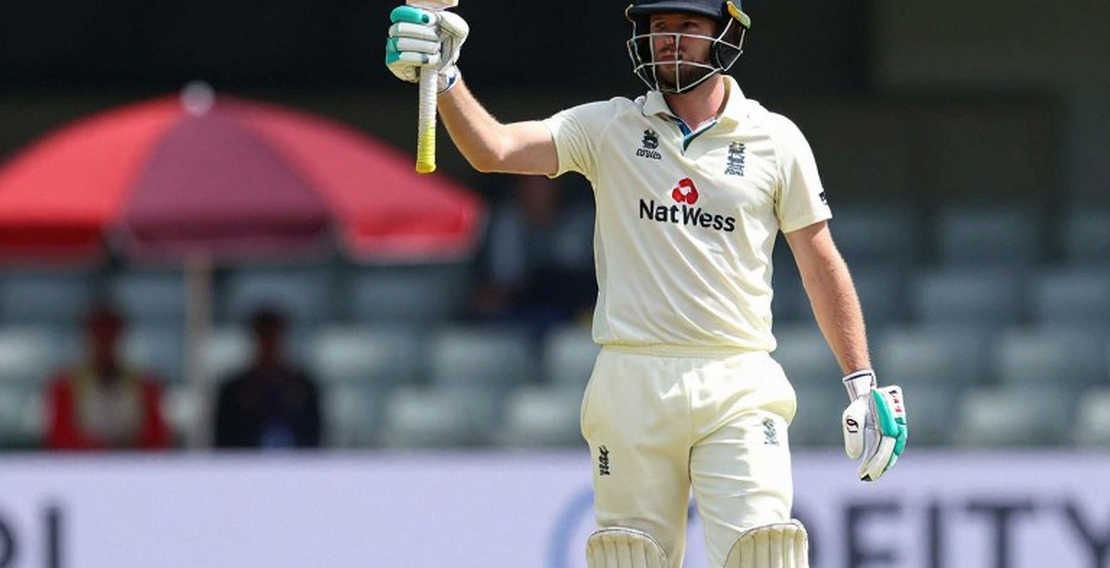
It used to be simple. One scorer wrote the runs in a book, one sub-editor set the copy, and by evening one version of the truth went to press. Now a single match contains at least four separate truths.
The first belongs to the broadcaster. Ball-tracking cameras measure the trajectory at several hundred frames a second, derive line and length, and build projections for DRS. The second belongs to the performance analyst: wearable vests, catch alerts, sled pushes, run-up tempo, heart-rate variability. The third is administrative: central contracts, no-objection certificates, injury reports, selection committee notes. The fourth is commercial: ticketing, sponsorship, shirt sales, auction values.
These four truths sit in different databases, under different owners, serving different purposes. None of them recognises the others. Blockchain's offer was straightforward: bind the four streams into one tamper-evident ledger so nobody can rewrite the number later and everybody reads the same version.
The offer is not foolish. But it skips a question. If the immutable ledger starts with a wrong number, does immutability guarantee the truth, or does it guarantee the error?
The 2026 Lord's spot-fixing scandal, the 2026 Hansie Cronje affair, the 2026 IPL case — all were record-adjacent crimes. Nobody altered the scoreboard. Nobody changed the laws. They altered the moments before the record existed: which over would produce a deliberate no-ball, who would take the bet, who would know. A chain cannot capture those moments unless someone writes them down — and the person writing is the person accused.
What a Chain Guarantees, and What It Does Not
Three things are genuinely delivered. First, chronology: an ordering of when each record entered, which cannot be reversed. Second, integrity: altering one entry means rewriting every subsequent block, which is practically impossible. Third, transparency: anyone with permission can verify at any time.
A fourth thing is never delivered: truthfulness. The chain does not know whether the number was correct before it entered the database.
That fourth gap is where cricket will spend the most money. Take the IPL auction records. Suppose Rishabh Pant's 27-crore bid, the franchise, the date — all on-chain. The chain ensures nobody can later revise that entry. It cannot ensure the bid was actually made at that price, or that the owner's bank guarantee existed. That verification belongs to the auctioneer, the bank, the auditor. The chain only engraves their decision in stone.
A chain is the seal that turns paper truth into iron truth. If the paper was false, the seal changes nothing — and makes things worse, because people stop asking questions once they see the iron.
A Report With Zero Information, and an Intake Gate
Behind this piece sits a document that is itself a strange piece of evidence. I received a Stage-2 analytical report in which all eight analytical sections said the same sentence: insufficient information, cannot assess. No format, no venue, no player, no team ranking, no league, no information points at all.
The system that produced it stopped mid-pipeline. Its rules stated that every conclusion must derive from at least one verifiable information point. The information points numbered zero, so the conclusions did too. The system did not fill the gap with invention, because invention was forbidden.
I sat with that document twice. First I read it as a failure. Then I realised it is a rare event: a system admitting its own ignorance instead of manufacturing confidence.
This is where blockchain connects. A well-designed chain-based data system needs exactly this: an intake gate that asks, before anything enters — who are you, what is your source, who verified it, in what format, on what date. No answer, no entry. And a zero must be written as a zero, distinctly flagged, never rendered as a blank.
The real danger is not the failure. The real danger is the next layer. Suppose that empty report reaches a reporting stage and someone compresses it into: no risks identified. That inverts the meaning entirely. One sentence means we looked and found nothing. The other means we could not look at all. In cricket's data economy, the gap between those two sentences runs into crores.
What Gets Lost Between the Ground and the Chain
Computer science calls this the oracle problem. A smart contract cannot see the outside world. Someone must tell it. In cricket, the oracles are the scorer, the physio, the analyst, the curator, the match referee, the ticket scanner.
My Bangladesh and Australian experience does not split neatly here; the two have to be read together.
In 2026 in Dhaka I interviewed Soumya Sarkar for The Daily Star, when he was young and newly in the national side. One thing stayed with me: he said domestic cricket barely recorded his batting data seriously. It lived in a coach's head, and when the coach changed, the data changed.
In 2026, Dhaka Premier League matches now generate ball-by-ball data, video and vests. The question is unchanged: who keeps the data, and how secure is that person's job? An oracle who is afraid does not always enter the truth.
Australia inverts the problem. There is no scarcity. There are four systems that do not recognise each other: the club's vest data, the state association's medical file, Cricket Australia's central contract database, the broadcaster's tracking feed. Different formats, different time zones, different definitions.
In 2026, inside the NSW bubble, I spent six weeks with Western Sydney Wanderers and watched Sydney FC win 1-0 at an empty Bankwest Stadium, Adam Le Fondre scoring. In that period an injured player's data existed in three versions: the club's, the league's, the broadcaster's graphic. Nobody lied. Nobody spoke the same language.
Empty stadiums taught me that silence has a formation of its own. Missing data has a formation too, and it usually passes the ball the wrong way.
Four Streams Where the Chain Wants In
Ticketing and ownership. Cricket Australia has trialled collectable ticketing in which each ticket carries a unique digital identity and its transfer history sits on-chain. In theory this suppresses scalping, since every handover is visible. At the gate the real question remains: is the person holding the phone the legitimate owner? Without biometric verification the chain shows the deed, not the deed-holder.
Player performance data. Several platforms propose letting cricketers own their own data so they share revenue when sponsors or gaming companies use it. The principle is fair. In cricket the ownership is messy: who measured it? The club's vest, the board's, or the broadcaster's camera? The same spell yields three numbers. All three can live on-chain, but the market decides which one sells — and the market picks the bigger number.
Collectibles and fan tokens. Cricket NFT platforms have proliferated, with ICC and board partnerships. The technology works well here because the question is narrow: is this clip authentic, and how many copies exist. But this market never touches cricket's core economy. It commodifies the fan's feeling, not the sport's truth.
Integrity monitoring. This is the weakest and most necessary area. Detecting abnormal betting movement is the work of an anti-corruption unit, not a bank, not a chain. A chain can preserve proof of who saw what and when. Had an immutable access log existed around Lord's in 2026, the investigation would have been easier. The crime would still have happened.
The Misreading: On-Chain Means Verified
Here is where I am least comfortable.
One sentence keeps returning in cricket technology discussions: the data is on-chain now, so manipulation is impossible. It sounds reassuring and is almost always wrong.
Manipulation happens in two ways. One is altering later; the chain blocks that. The other is selecting at the start: which data gets written, which does not, who writes, who authorises. The chain does not block that. It makes it permanent.
Cricket runs heavily on the second kind, often legitimately. A physio decides which injury goes into the report. A selector decides which performance metric the committee sees. No chain reaches inside a human being's judgement.
There is a second misreading, more widespread: that a chain reduces risk. In practice it changes the type of risk. Wrong data used to be revisable; now it is not. Wrong data used to be forgettable; now it is remembered forever. A single erroneous injury entry, made permanent, can cost a player a decade of market value.
My objection is here. As cricket's data economy scales, verification responsibility is drifting away from people and toward technology. The assumption is that with a chain, nobody needs to ask questions. The opposite is required. The more on-chain data, the more we need the people who ask questions at the door.
I watch grade cricket in Sydney most weekends and often stand behind the scoring table. A woman sits there with an old tablet, entering a number after every ball. Beside her, a radio carrying scores from another ground. No network. No backup server.
That table is cricket's most honest data layer, because nobody there knows which number will become valuable later, so nobody has an incentive. Blockchain projects should sit at that table first and write the whitepaper afterwards.
Dhaka to Sydney: Two Markets, One Gap
Part of my work is bridging the two, and one pattern recurs.
Australia's cricket data infrastructure is old, dense and bureaucratic. The problem is abundance: four systems that do not talk, and no intake gate on any of them.
Bangladesh is the reverse. Less data, faster adaptation. Video analysis is entering Dhaka club cricket, clubs are adopting wearables, age-verification databases are being discussed. Chain-based solutions arguably have more room there, because you build fresh rather than dismantle.
But a specific danger deserves saying plainly. In developing cricket markets, technology usually arrives from outside with a solution looking for a problem. Blockchain will top that list, because it sounds modern, attracts funding easily, and success can be measured by launches rather than accuracy.
My fear is concrete: if a chain arrives in Bangladesh's domestic game before data discipline does, we will build a system for immortal error. A wrong age, a wrong injury record, a wrong grade — once on-chain, correction means rewriting history, and nobody will do that.
So the order matters. Intake gate first, chain second. Decide who writes, what is written, who verifies, and what happens when it is wrong. Then discuss hash functions.
One personal note. In 2026, while studying in Sydney, I went to Macquarie University's training ground just to watch drills before a series against New Zealand. A bowling coach was writing on a clipboard by hand, noting hip angle on each delivery. I asked whether that lived in an app. He said it might, but he wrote it because he understood it.
Ten years on, I think that sentence should be the first question of every data project. Technology does not carry truth. A person who knows what they are writing carries it. The chain only preserves the signature.

What to Watch Next
Where does blockchain actually belong in cricket?

My reading: where the question is ownership and history, the chain works, because truth is already established and only proof is needed — ticketing, collectibles, broadcast rights accounting, contract timelines.
Where the question is truthfulness and judgement, the chain cannot work alone — injury, selection, age verification, integrity monitoring. There it is one layer, and above that layer you need people, process and independent audit.
Signals I am tracking. First, when a cricket board rejects data for the first time because its source could not be verified. Second, when a league hands data ownership to players, and on what terms. Third, when a broadcaster first shows a data source on screen rather than a bare number.
And one more, the least discussed: when a cricket system publicly says, for the first time, we do not have this information.
The empty report I received at the start of this piece is, in its way, hopeful — a system admitting ignorance rather than manufacturing confidence. In cricket's data economy, that is the rarest commodity there is.
I keep the beat until the room finds its own pulse. The room is much larger now, stretching to the chain. But the pulse still comes from the same place: that training ground at seven in the morning, where two numbers are both true and nobody yet knows which one to write.