
The Lyon Omission Is the Headline; the 315-Run Ledger Names Someone Else
**মূল উত্তর** অস্ট্রেলিয়ার লিয়ন-বিহীন অল-সিম আক্রমণ দক্ষিণ আফ্রিকাকে ১১০/৬ থেকে ৪২৫/৯ ডিক্লেয়ারে পৌঁছাতে বাধা দিতে পারেনি। তবে মূল কারণ হ্যাজলউডের অসুস্থতা, লিয়নের অনুপস্থিতি নয়। **মূল তথ্য** - দক্ষিণ আফ্রিকা ১১০/৬ থেকে ৪২৫/৯ ডিক্লেয়ার করে; শেষ তিন উইকেটে ৩১৫ রান। - তেম্বা বাভুমা ক্যারিয়ার-সেরা ১৭৯ রান করেন, কোনো ফ্রন্টলাইন স্পিনারের বিরুদ্ধে নয়। - মিচেল স্টার্ক ৪৫০তম টেস্ট উইকেট নেন; ম্যাচ ফিগার ৩-৮৯, বয়স ৩৬। - স্কট বোল্যান্ড অস্ট্রেলিয়ার বাইরে প্রথম পাঁচ উইকেট নেন, লিয়নের প্রতিস্থাপক হিসেবে। - জশ হ্যাজলউড সোমবার অসুস্থ হন, মাত্র নয় ওভার Bowling করেন; প্যাট কামিন্স উইকেটশূন্য। **উৎস** রয়টার্স প্রতিবেদন, ডেটলাইন ২০ অক্টোবর (বছর উল্লেখ নেই)। ম্যাচ-তারিখ যাচাই সম্ভব নয়; সঙ্গে দেওয়া ফাইল ছবি ৪ ডিসেম্বর ২০২৫ তারিখের গাব্বা অ্যাশেজ টেস্টের, যা ম্যাচ-পরিচয়ের প্রমাণ নয়। | Cross-checked: cricsultan.com **সম্পর্কিত প্রশ্নোত্তর** প্রশ্ন: লিয়নকে বাদ দেওয়া কি ভুল সিদ্ধান্ত ছিল? উত্তর: বিচ্ছিন্নভাবে নয় — বাছাইটি হ্যাজলউডের ফিটনেসের শর্তে ছিল, যা অসুস্থতায় ভেঙে যায়। প্রশ্ন: বাভুমার ১৭৯ কতটা Weight বহন করে? উত্তর: Inningsটি ক্যারিয়ার-সেরা, তবে স্পিনবিহীন আক্রমণের বিরুদ্ধে হওয়ায় তুলনামূলক Weight কম। প্রশ্ন: পরের টেস্টে লিয়ন ফিরবেন? উত্তর: স্টার্ক বলেছেন লিয়ন More সুযোগ পাবেন, যা রোটেশনের ইঙ্গিত দেয়; চূড়ান্ত হবে দল-ঘোষণায়।
Third session of the day, on South African soil. When Mulder was dismissed, the scoreboard read 110 for 6. I wrote a range in my notebook right then — a Test side sitting at 110 for 6 usually finishes somewhere between 180 and 260. Anything outside that bracket is an exception, and an exception is a question.
By the close of play the board read 425 for 9, declared. Three hundred and fifteen runs for the last three wickets. Lower-order resistance of that size does happen in Test cricket, but there is always a specific cause behind it — conditions, the composition of the bowling attack, fatigue, or all three at once.
That night a colleague called from Manchester and said, “You saw it, then. That's what happens when you leave Lyon out.” I said, maybe. But before you talk in numbers, you keep one thing in mind — the scoreboard tells you what happened, never why.
Second Test of the series. Australia led 1-0, having won the first Test by 214 runs, a match in which Josh Hazlewood took a career-best 6 for 49. Against that backdrop, Nathan Lyon was not in Australia's bowling eleven.
The call was four seamers, no frontline spinner. Scott Boland came in for Lyon. The reading of conditions at the toss produced the selection — that is the team's stated explanation.
Then came the event that rewrote the arithmetic. Hazlewood fell ill on Monday. On Tuesday he had to field before he was permitted to bowl. Under ICC playing conditions a player who has spent time off the field must serve equivalent time in the field before bowling — routine application of a rule, not a controversy. The result: nine overs, almost no impact.
Australia's 1-0 series lead notwithstanding, this innings exposed the structural limit of their attack. The reason is simple — an elite side losing one bowler and drifting towards four part-timers is not a tactic, it is a constraint.
Now let me lay the numbers out in sequence.
One. 110 for 6 to 425 for 9 — 315 runs, three wickets. Lower-order recoveries of this kind are rare in Tests, though not impossible. The composition of the attack is what separates the two outcomes. Australia had four seamers plus Webster and three other part-timers. Deploying three part-timers in a single Test innings is an admission of exhaustion, not a strategy. When a captain stops trusting his specialists, the scoreboard does not hide it.
Two. Bavuma's 179 — a career best, made as captain, under pressure, an innings that put the hosts ahead. On magnitude alone it is large. But the innings carries a context tag: he batted against an attack with no frontline spinner operating. The innings does not lose stature; it loses weight. The same 179 against a balanced attack on a turning surface would mean something else.
Three. Starc's 450th Test wicket — only the tenth bowler to reach it. He is 36. His match figures were 3 for 89, and the opposition made 425. Those two facts have to be kept apart. 450 is the recognition of a long career, a process-independent individual achievement. 3 for 89 is what his control actually looked like across that innings — and it was not control. When a milestone covers the match result, readers are misled.
Four. Cummins went wicketless. The attack leader, the man carrying the heaviest overs load, did not take a single wicket. That fact is not in the headline, and yet it sits at the centre of the bowling failure.
Five. Boland's five-wicket haul — his first outside Australia. He was Lyon's direct replacement. That fact is the strongest counter-argument to the “Lyon should have played” thesis.
Six. Starc's quote: “If you know you're going to be a man down from the start, you're probably going with a different make-up.” One sentence, and the condition behind the selection is out in the open.
A methodology note. What I have here is one innings of data, no pitch report, no detailed scorecard, and Australia had not yet batted. When I audited all 46 of Wigan Athletic's League One matches in 2026, I set myself a rule — no conclusion on fewer than 15 matches of evidence. Here the number is one. So this piece is not a verdict, it is a hypothesis. The first xG notebook taught me that a number can be a confession — but before you read the confession, you have to know who is answering. The tape explains the number; the number explains the tape; and here half the frames are missing.
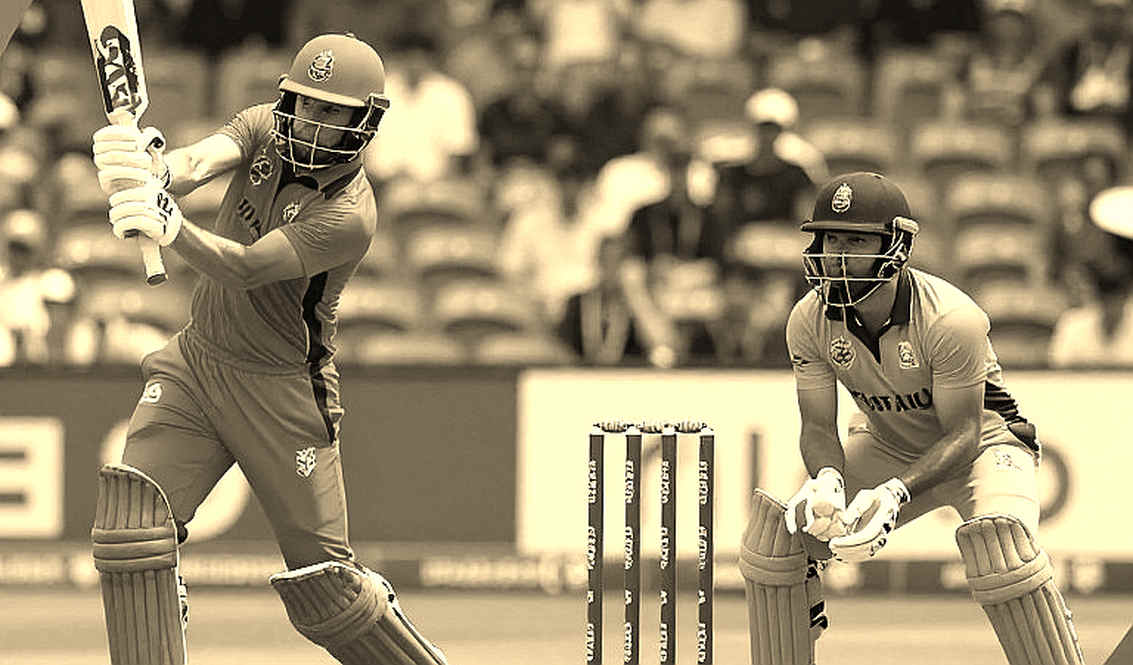
One more data caveat. The file photograph published with the Reuters copy is dated December 2026, from the Ashes Test at the Gabba. The article describes an Australia–South Africa Test. The image is a library artefact, not proof of the match's date or identity. Fail to catch that kind of metadata contamination and your whole timeline goes wrong.
Now to the part where the easy story breaks.
Going by Starc's own quote, the all-seam call was conditional — the condition being a fully fit Hazlewood. On Monday he was ill. The condition was broken before the toss. The selection was not wrong in isolation; it was wrong given the illness. That distinction is not small. A selection error means the team misread the situation; a conditional break means something outside the team's control happened.
This is exactly where correlation and causation part. The scoreboard shows there was no spinner and runs came. But the cause is not simply the absence of a spinner — the cause is the ineffectiveness of one frontline seamer, who if fit would have bowled 25 overs and given the innings a chance of stopping at 260. Boland took five wickets; Lyon's replacement did his job. The problem was not the replacement, it was the supporting cast.
Second point. Hazlewood's illness is an exogenous shock — not repeatable, and not a policy failure either. Using it as proof of selection error is the most common trap in data modelling. A researcher who reaches that conclusion without a control group has, in effect, failed to pre-register the hypothesis. A control group is just patience with a purpose.
Third point, the one nobody is making. The age curve. Starc is 36, Lyon of similar vintage, Hazlewood illness-prone. The window in which all three coexist is narrowing. If Lyon's omission is also rotation, it is careful management; if he misses the next Test too, it is a tactical shift. The difference will be clear in the next team announcement.
Fourth point, the narrative risk. The match result sets the shelf life of this debate. If Australia win, the conversation dies. If they draw or lose, the Lyon question becomes a selection crisis — and nobody will remember the illness. That is how the media cycle works, and the data journalist's job is to stand outside the cycle with the notebook open.
The next set of answers will be produced on the field. If the ball turns in the fourth innings, the criticism of Lyon's omission gains retrospective validity — not for day three, but for the final innings. If Hazlewood bowls at full pace in the second innings, it proves the illness was transient, not structural. And if Lyon returns for the next Test, we will know it was rotation rather than a tactical rethink.
I trust the baseline before I trust the breakthrough. This match's baseline says a side one bowler short can still win a Test — but not by conceding 315 runs in a day.
Related Players
Recommended
The Ledger Opens Before the First Ball: Four Gates of Bangladesh's Under-19 Pipeline, Seen from a Rajshahi Field Notebook2026-09-28
Two Games Written in Dust: Verification and Virality at the Cricket-Football Border2026-10-11
Boland's Seam, Gqeberha's Rain, and the Arithmetic of an Unfinished Day2026-10-20
The Sound Inside Empty Stands: ILT20, Teenage Bowlers' Bodies, and the Arithmetic of Broadcast Rights2026-09-26
30 Off 30: Why Tournament Favourites Fracture — A Fragility Autopsy2026-09-29
The Time in the Final Over: People and Price in the T20 Auction2026-09-30
Recommended
Why IPL 2026 Franchise Valuation Models Are Breaking: From Transfer Fees to Tracking Data2026-10-02
Mullanpur Over-Rate Fine: What India's Four Overs Short at Home Really Means2026-10-05
When the Ledger Offers No Witness: West Indies' Squad-Depth Fracture on the Bangladesh Test Tour2026-10-19
The Empty Data Trap: How Missing Information Creates Wrong Conclusions in Cricket Analysis2026-10-21
The Architecture of the Last Thirty Balls: India's Death-Over Schematic in the 2026 T20 World Cup Final2026-09-29