
Santner's Dew Theory: The Big Truth We're Missing in a Two-Match Sample
Core answer: দুই ম্যাচেই টস জিতে Bowling নেওয়া ও চেজিং দলের জয়ের পেছনে ডিউ বড় কারণ বলে স্যান্টনার বলেছেন, তবে নমুনা মাত্র দুই ম্যাচ; টসই এখন প্রধান চলক। Key facts: - স্যান্টনার ৪/২১ নেন প্রথম Inningsে; ডিউ আসার আগেই তার স্পেল কার্যকর। - হেনরি ও ফার্গুসন কোটা শেষ করেননি; ওডিআই-টেস্টকে প্রাধান্য দেওয়া হয়েছে। - দ্বিতীয় ম্যাচে দরকার ছিল ৩১ বলে ৬৯ রান; ভারত তা তাড়া করে ২-০ লিড নেয়। - ৭টা থেকে ৮টায় শুরু সরানোর কারণে দ্বিতীয় Innings ডিউ-জোনে পড়ে বলে স্যান্টনারের পর্যবেক্ষণ। Source: Santner's post-match remarks as analyzed in Stage-2 report | Cross-checked: cricsultan.com Related Q&A: - প্রশ্ন: চেজিং সুবিধা কি প্রমাণিত? উত্তর: দুই ম্যাচের নমুনায় ডিউ ও টসের প্রভাব আলাদা করা যায় না। - প্রশ্ন: স্যান্টনারের সতর্কবার্তা কতটা নির্ভরযোগ্য? উত্তর: তার ৪/২১ স্পেল দেখায় প্রথম Inningsে স্পিন কার্যকর; দ্বিতীয় Inningsের ডিউ-প্রভাব এখনও অপরীক্ষিত। - প্রশ্ন: ভারতের তরুণ মিডল-অর্ডার কি নির্ভরযোগ্য? উত্তর: তিলক ভার্মার ফিফটি নিচের অর্ডারের রানের ওপর দাঁড়িয়ে; এক Inningsে চূড়ান্ত রায় নয়।
Let us place the equation from the second T20I in front of us: 69 runs needed from 31 balls. Naman Dhir and Nitish Reddy at the crease; four wickets in hand. In such a chase, T20 cricket's rule says one boundary is the key to momentum. And by the end of the match, India had done exactly that — 16 runs in an over, sharp running between the wickets, and a few fours and sixes flipped the equation. Yet the entire post-match conversation seemed to revolve around a different protagonist: Mitchell Santner. He said the ball "skids on" in the second innings — that starting at 8 PM instead of 7 PM gives the chasing side a clear advantage; dew is the real driver. In the headlines, Santner has thus become a weatherman. But dig deeper into the data and you find that in this same match he took 4/21 — in the first innings, before dew arrived. I went looking for the chasing advantage; I found the toss index instead. That index tells me we are turning a very small sample into an epic.
The context, in short: India lead the T20I series in New Zealand 2-0. In both matches, India won the toss and bowled first; in both, the chasing side won. Not just India — New Zealand also wanted to bowl first at the toss. In two matches, both captains' tactical preference was identical: take the ball and chase a target in the second innings. Before treating this pattern as proof of dew, we need to pause. Because Santner himself said dew was less in the second match — "the wind was up a little". If dew changes depending on wind, it is not a uniform condition across New Zealand; it is a match-to-match variable.
Another important context is the series' priority structure. Santner openly said Matt Henry and Lockie Ferguson were "not risked ahead of the ODIs and Tests" — neither completed their bowling quota. In other words, the team New Zealand is fielding is not their strongest XI; T20I is the third priority in this window. Against that backdrop, reading India's young batters' success as "solving New Zealand conditions" is premature. Yes, the series score is 2-0, but to turn that result into a true measure of strength, we must account for the incompleteness of the opposition's bowling attack. From years of watching day-night matches, I have learned that the biggest error is reducing a result to a single explanation of conditions. Here, too, an incomplete bowling attack shatters many grand claims.
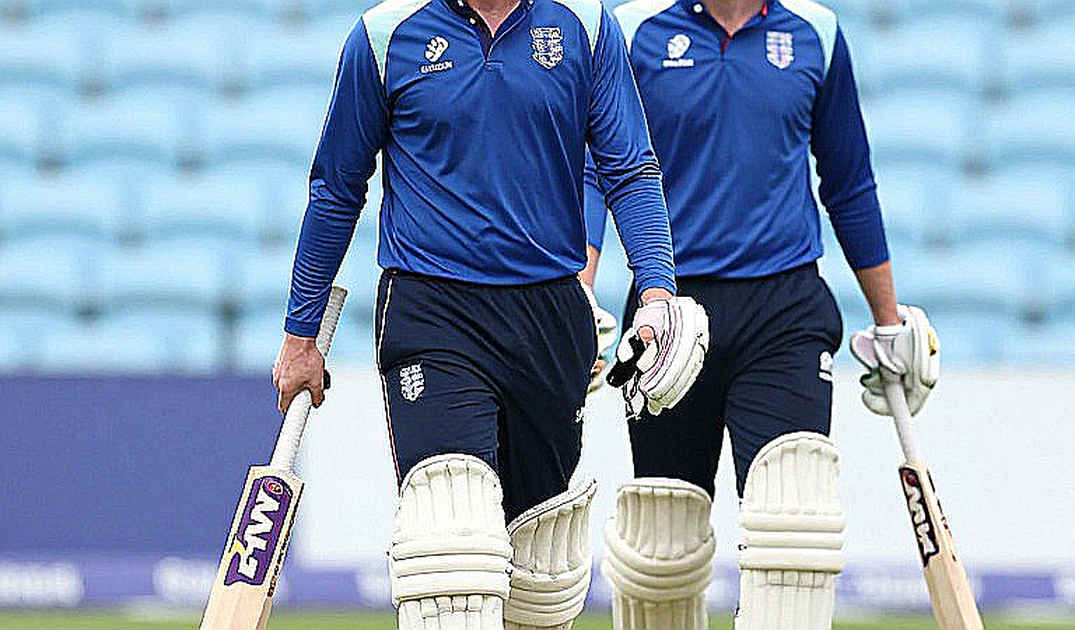
Now to the core argument. The first layer is sample size. In cricket analysis, it is impossible to extract a condition effect from two matches. Toss luck, both teams' form on the day, two or three errors in specific overs — all of these are enough to decide two matches. Santner's observation supports the idea that dew helps chasing; but against it stands his own spell of 4/21, delivered in India's first innings. When spin is so effective before dew arrives, I cannot accept, at least on this sample, that dew creates a one-sided advantage in the second innings. The only consistent data point is that both teams wanted to chase in both matches. The rest is a dew narrative awaiting testing.
The second layer — Santner's own position. We know him as the "dew prophet"; yet in this series his bowling has been the sharpest weapon. 4/21 is a match-turning spell in T20I; the economy rate was also under control. When this spinner says the ball will skid in the second innings, he is not merely giving a weather report — he is sending a tactical warning to the opposition's middle order. Read it this way: spinner effective before dew, batters advantaged after — both truths coexist. Still, the media has relegated his 4/21 and headlined his dew comments. That is a calculation of news value, but it is incomplete as cricketing truth. Santner's warning did not kill the old verdict; it just made the jury louder and less informed.
The third layer — the 8 PM start. In a New Zealand summer day-night match, moving the start from 7 PM to 8 PM pushes a large part of the second innings into the post-sunset dew zone. If the aim were to avoid dew, matches would start earlier, not later. So I do not take this change as a strategically neutral decision — it is likely a calculation of attendance or broadcast windows, and dew is its unpriced cost. The 8 PM start is not a price tag; it is a confession — conditions are being sacrificed for competition's sake. Santner has caught that confession; the host board is silent.
The fourth layer — the heroes of the chase. By the time India began chasing 69 runs, New Zealand's frontline pacers were not at full strength — Henry and Ferguson did not complete their quotas. The blunt truth of cricket is that who bowls the last five overs changes the story of a chase. Success by the lower order against an incomplete pace attack is admirable, but it is not "beating New Zealand's best bowling lineup". Better not to draw that comparison. If match reports remove this nuance, they also place undue pressure on the young batters — they will be expected next match to "beat the best team", a team that is not actually fielding at full strength.
The fifth layer — Tilak Varma's role conversion. Santner reminded us that Tilak started his career at No. 3; success in the middle order depends on "how a player operates in the middle and death phase". He also admitted that Tilak "took his time a little today". In a chase requiring 13.35 per over, taking time means forcing the batter at the other end to take extra risks. That job was done by Reddy — 16 runs in an over, quick running, maintaining pressure between boundaries. So Tilak's half-century was partly subsidised by the lower order's strike rate. That is not bad news; but before declaring him a "death finisher", we must separate that assistance.
The sixth layer — Nitish Reddy's comments, the most underrated risk signal in this article. He said he has "workloads and more to do on and off the field than anyone"; he has returned from recent injury struggles; injury is "part and parcel of the game". From a young all-rounder, this is not reassurance — it is an admission of fatigue in a post-match moment. If India continues to use him as both a batting finisher and a pace option in this series, the soft-tissue injury risk index is red in my ledger. We usually lose this index beneath run charts.
However, the opposite of my position is also possible, and I should write that down. Suppose the dew effect is real — in the second match, "wind" only suppressed it somewhat; if Santner says balls skid regularly in New Zealand evenings this season, then his experience outweighs a two-match sample. A captain-spinner with over a hundred T20s can misread conditions, but not repeatedly. Again, if India's young batters are truly products of a "free from the start" culture — as Santner said of Naman Dhir — then their success is system-dependent, not condition-dependent; in that case, my "advantage of incomplete bowling" theory weakens. And most importantly — the toss. I have accused the toss of being a confounder; but the toss is part of the game. The chasing side is winning because the captain is predicting correctly at the toss — that too is a skill. So my narrow thesis is: writing "dew makes chasing easier" based on two matches is premature; but if a chasing side wins again in the third match, I will update my own index.
A testable prediction lies ahead: unless a first-innings win appears against Santner's warning, we will not see evidence that chasing teams had an advantage beyond dew in New Zealand. I will add three carbon data points to my dew ledger: Santner's 4/21, Reddy's injury comments, and Henry-Ferguson's incomplete quotas. These three, not the dew story, are the real series determinants; at least for now.