
Newlands Grass, Smith's Neck and Boland's Five-For: The Selection Arithmetic of a Series Decider
**মূল উত্তর:** কেপ টাউনের নিউল্যান্ডসে সিরিজ নির্ধারণী তৃতীয় টেস্টে অস্ট্রেলিয়ার সাফল্য নির্ভর করছে স্টিভ স্মিথের ঘাড় কতটা জোগায় এবং নির্বাচকরা পিচ ঠিকভাবে পড়েন কি না — বিশেষত স্কট বোল্যান্ড ও নাথান লায়নের মধ্যে Bowling ভারসাম্যের সিদ্ধান্তে। **মূল তথ্য:** - সিরিজ ১-১ সমতায়; প্রথম টেস্ট অস্ট্রেলিয়া জিতেছে ২১৪ রানে, দ্বিতীয়টি দক্ষিণ আফ্রিকা জিতেছে Inningsের ব্যবধানে। - স্টিভ স্মিথ এই সিরিজে ৩০ রানও পার করেননি; কেপ টাউনে তাঁর প্রস্তুতি সীমিত ছিল প্রায় পনেরো মিনিটের হালকা থ্রোডাউনে। - স্কট বোল্যান্ড দ্বিতীয় টেস্টে পাঁচ উইকেট নেন এবং ১৬৬ বল ব্যাট করেন; তাঁর পদ্ধতি সিম-
Two days out from the decisive third Test, Alex Carey stood in front of the microphones in Cape Town and delivered the most consequential selection input of the week without appearing to try. Newlands, he said, has less grass than St George's Park in Gqeberha. The surface, in his words, is a really nice cricket wicket.
Inside that pitch description sits the decision that governs everything else. Australia's attack on this tour has been built around seam movement, and seam movement depends on grass. Strip the grass away and the question stops being about form and starts being about structure.
Here is the oddity. Scott Boland took a five-wicket haul in the second Test. He batted 166 balls to help secure a final-day draw. By his teammate's own account he was the best bowler on the ground. And yet, entering the biggest match of Australia's campaign, the loudest question carries his name: does he play?
Why does a seamer who has just taken five wickets end up in a conversation about being left out? The answer is not in his form. It is in the grass, in the balance of the attack, and in the old argument about what 'recent form' actually means in Test cricket.
The spreadsheet did not interrupt the broadcast; it simply outlasted it. Boland's five-for, read without the conditions column, is a misreading.
The series state is simple enough. Australia won the first Test by 214 runs, a match in which Josh Hazlewood took nine wickets. South Africa won the second by an innings at Gqeberha. Cape Town is therefore a 1-1 decider.
An innings defeat is a particular kind of loss. It means the opposition cleared your two-innings aggregate inside one innings, with wickets in hand. That is not the product of a single bad shot; it is a structural batting failure, and it explains why so many top-order changes are in the air.
Test cricket is a team's nervous system in public. Over five days there is nowhere to hide: whether a batter's neck is turning freely, whether a seamer is losing pace in his third spell, these things never appear on the scorecard but they shape it.
Newlands adds an extra variable. The report notes that not many Test matches are played here at this time of year, which means limited recent local data for both sides and a weak basis for any pitch forecast. Planning on thin data carries elevated risk.
South Africa arrive as the reigning Test world champions, and on grassy surfaces their pace attack is treated as the reference standard. In the second Test, Wiaan Mulder removed both Steve Smith and Travis Head with a stump-to-stump method: not express pace, not extravagant swing, but a long line, a little nip, and a flatter trajectory. On a seaming deck that method is close to unplayable; on a dry, flat one it becomes ordinary.
Australia's squad situation is simultaneously a strength and a complication. Cameron Green (abdominal strain) and Josh Inglis (broken finger) are returning. Depth improves, but somebody in the top seven must make way, and the likely omission is Nic Maddinson. Matt Renshaw's name is also in the frame, potentially partnering Head at the top, which reopens the question of Marnus Labuschagne's role.
The only commercial fact in the source is that the series is broadcast exclusively in Australia on Kayo and Fox Cricket, a paywalled arrangement rather than a commercial event. There is no auction, contract or franchise content here, and any league-ecosystem conclusion would be speculation.
Now Smith. Thirty-six years old. He has not passed 30 in this series. His Cape Town preparation was capped at roughly fifteen minutes of gentle throwdowns under physio supervision, and the neck complaint flared during the first innings at Gqeberha.
In kinesiology terms, that preparation matters. A Test No.4 must calibrate timing against seam movement, variable bounce and pace. That requires a match-intensity net block, facing bowlers at full speed. Fifteen minutes of gentle throwdowns does not deliver that calibration.
The neck restriction adds a second layer. Batting is a chain: ground reaction, trunk, then a still head. If the head is not still, the decision to leave or play arrives late, and reaction to balls at the body deteriorates. Limited cervical rotation also constrains square-of-the-wicket play, sway and duck, and slows reactions when catching at slip. Neck pain degrades sleep and recovery, and over five days that accumulates.
The largest risk is not performance but re-aggravation. If the neck goes mid-match, Australia are effectively down to ten, given the strictness of concussion and spinal replacement protocols.
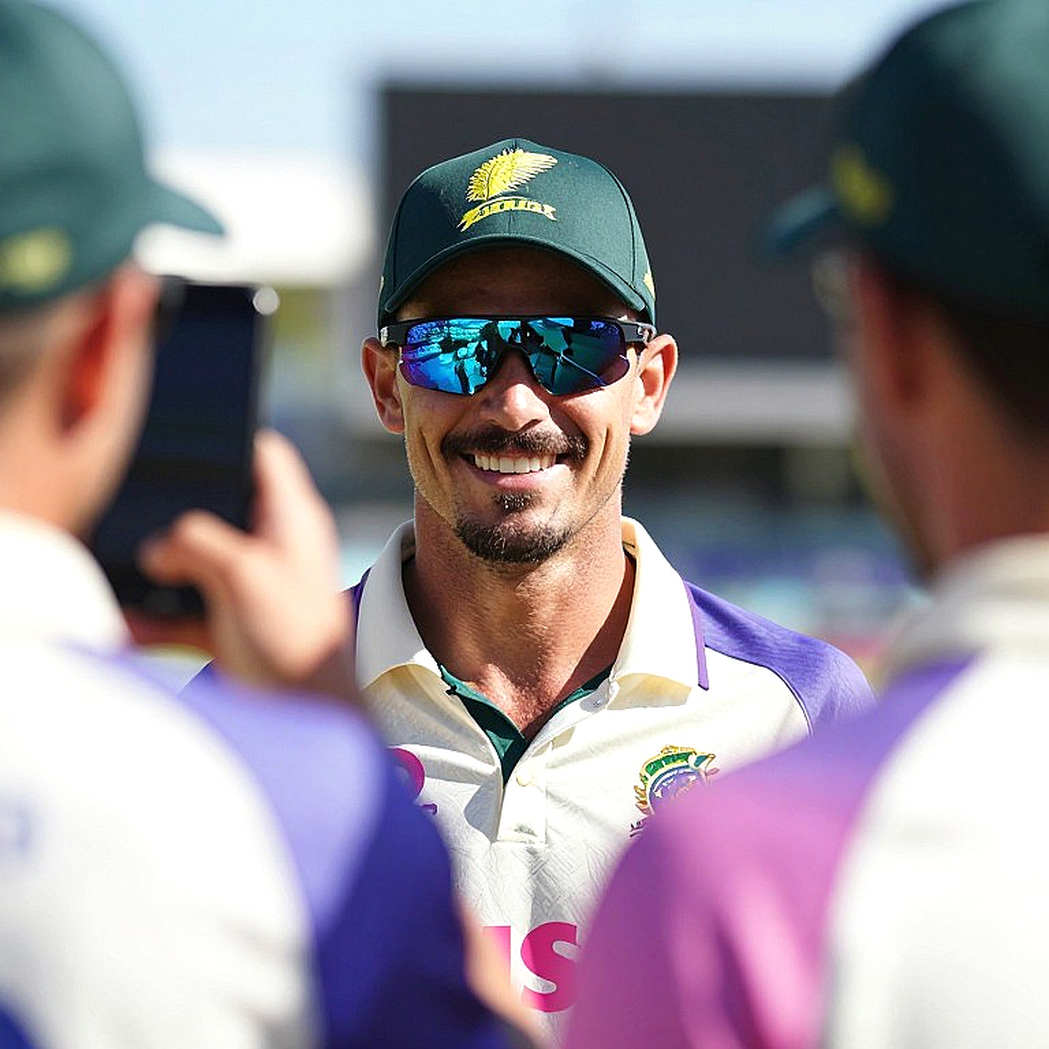
There is a useful distinction here. The failure to pass 30 is a two-match sample and cannot support a declaration of decline. But the age-36 inflection, the injury cloud and the preparation deficit, read together, make the risk calculation heavy.
Team expectation diverges from the data. Carey says they are hoping for big runs. There is no innings in this series behind that hope. It is encouragement, not forecast. Smith's Newlands history, where his Test captaincy ended eight years ago, adds an emotional layer that no data supports as a performance effect.
Now Labuschagne. His problem is not survival but conversion. Carey's phrasing is precise: playing so well to that point, but not going on. Reaching the thirties and stopping has become a pattern.
That distinction matters for selection. A batter who cannot pick the ball is breaking technically; a batter who gets in and does not convert is failing on tempo or temperament. Selectors usually persist with the second type, because the foundation is working.
Pressure arrives from elsewhere: returning personnel. While Green and Inglis were injured, Labuschagne's spot was protected. Both are now fit, and either could bat three.
Selectors tend to move players rather than drop them. Keeping Labuschagne's experience in the XI points toward opening, competing with Renshaw to partner Head. Opening is a different skill: the new ball moves most in the first ten overs, and on a grassy or damp surface that movement peaks. A No.3 enters an innings already established; an opener starts from zero in the hardest environment.
Boland is the most interesting case. A five-for, then 166 balls of batting to help save the match. Both achievements together create a load problem. Carey himself noted Boland probably has not batted that long in a while, and hoped he pulls up well. That is a quiet acknowledgement that the load is heavy.
From a sports-physiology view, 166 balls means well over an hour in helmet and pads, sprinting and turning. That adds to a bowler's match load rather than replacing it, and can dull sharpness in the next spell. More importantly, his method is condition-dependent: stump-to-stump, flatter, lower, skiddier, relying on a little seam. Carey's comparison with Mulder is analytically useful, and it also signals the risk. If the ball stops nipping at Newlands, the value proposition of both bowlers drops.
In transfer-market terms this is a recency premium. Clubs pay for the last five games; selectors and the public do the same. A bowler's market value peaks immediately after a five-for, even though his underlying capability depends on conditions. The undroppable label is built on one Test played in conditions that suited him perfectly.
On spin: Australia have fielded no frontline spinner in five of their last ten Tests, two of those because of Lyon's injury, for a record of two wins and three losses. That looks like a trend and is actually a selection-bias sample. The spinner-less games were chosen on green, pace-friendly decks, including the Gabba pink-ball Test and the SCG. The condition was fixed first and the decision followed. The win-loss record is sampled on the dependent variable.
Lyon's case connects directly to the grass report. Less grass means less seam; less seam means a blunter pace attack; a blunter attack raises the spinner's value, especially on day five.
Hazlewood's case is more awkward. Dropping a bowler after nine wickets in the opener is hard to defend on merit. His illness in the second Test disrupted bowling loads and structure. If Cummins and Starc are close to untouchable and both Boland and Lyon play, Hazlewood is the one squeezed out. Carey called it a viciously difficult call, and it is.
Australia's bowling problem is a default-setting problem, not a personal-form problem. The side has leaned four-seam for a long time and it has worked on grassy decks. Change the conditions and the default itself is tested.
The batting numbers say the same thing. Smith has not passed 30, Labuschagne is not converting, and one of the top seven must go for Green. That is what makes the top-order tangle real rather than rhetorical. The age structure adds a silent variable: Smith is 36 and the core of the pace unit belongs to the same generation. A clustered retirement would leave a gap that takes two or three seasons to fill.
Now the part where the data testifies against itself. The weakest link in this analysis is sample size. Smith's ceiling, Boland's indispensability, Labuschagne's conversion fault are all two-match descriptions. In a two-match sample, being beaten by a good ball and playing a bad shot are recorded identically as out. The difference lives in the video, not the scorecard.
The right question to pre-register is therefore this: are we discussing Smith's decline, or his preparation deficit? They are different questions, and the second has far more evidence behind it. Preparation is a controllable variable; age is not. If the problem is preparation, there are fixes: more net time, a different batting slot, lower-risk fielding. If the problem is age, the only fix is succession planning.
The same logic applies to Boland. The five-for and the condition-dependence are both true; the error is reading the first as proof and the second as excuse.
Here is the contrarian angle that the consensus misses. Everyone assumes less grass hurts Boland. But less grass can also mean slower, lower bounce, and low bounce suits his flatter trajectory. The pitch forecast is not one-directional. Less grass reduces seam, but a slower surface also changes a batter's driving timing. That uncertainty is precisely why the selection is hard, and it should be admitted rather than resolved by narrative.
A second inversion concerns Labuschagne. If his issue is tempo, opening is the worst possible remedy, because the new ball compresses decision time. The solution the team may choose does not match the problem it is solving.
A third concerns the spin record. Anyone citing two wins and three losses to justify an all-pace policy is forgetting that the conditions changed between those matches. The wins came on decks where pace dominates. Newlands, at this time of year, sits outside that envelope.
A fourth concerns messaging. Carey's tone is calm, procedural and optimistic after an innings defeat, which is not a natural register. It is expectation management, and it should be flagged as information rather than absorbed as analysis.
A fifth, and perhaps the most important, is the toss. With limited recent local data on both sides, the toss becomes a high-impact decision. Analysts spend enormous energy on the XI as though the XI decides the result. In Test cricket the conditions decide the result, and the conditions are announced by the sky and the pitch, not by the selection panel.
In my own experience, the gap between the language of a pitch report and the actual behaviour of the pitch is often the biggest piece of information available. Carey said less grass, a nice wicket. That is a batter's description of a nice wicket. It is worth remembering who is speaking.
The same applies to the neck. Physio supervision and light throwdowns are the language of risk management, not the language of full fitness.
Looking forward, three observable signals will settle the argument. First, the XI at the toss: Boland versus Lyon tells us how the pitch was read, and if both play, Hazlewood is out, which would be the most contentious call of the series. Second, where Smith bats: a move to five or six confirms the restriction is real; a withdrawal reshapes the entire top order. Third, Boland's spell management: length and rest intervals will reveal how seriously the load risk is being treated after 166 balls of batting.
A fourth signal is less discussed: how much the surface deteriorates by day five. If the match runs long and the pitch dries, Lyon's absence returns as the largest cost, and nobody will be pricing that cost at the toss.
One question stays open. If Newlands really is a low-grass, flatter surface and Australia still field four seamers, do we call that courage or habit? The result will answer it for this series. The question will survive into the next one.