
Green Is Back in the Frame, but the Real Question Is His Overs Quota
**মূল উত্তর:** ক্যামেরন গ্রিন পেটের পেশির আঘাত থেকে সেরে উঠে ডাব্লুটিসি সিরিজের শেষ টেস্টে দক্ষিণ আফ্রিকার বিরুদ্ধে নির্বাচনের জন্য প্রস্তুত। তবে আনুষ্ঠানিক মেডিকেল ক্লিয়ারেন্সের ঘোষণা নেই; প্রস্তুতির ভিত্তি তাঁর নিজের শারীরিক অনুভূতি। আসল ঝুঁকি ওভার-কোটায়। **মূল তথ্য:** - গ্রিনের আঘাত পেটের নিচের অংশে, একদিনের সিরিজে; ফেরার লক্ষ্য টেস্ট — অর্থাৎ Bowling লোড অনেক বেশি। - গ্রিন নিজেই বলেছেন এটি "quite a unique injury"; কয়েক সপ্তাহে ফেরার নজির কম। - চিকিৎসকদের হাতে "not much to go off" ছিল, অর্থাৎ সিদ্ধান্তের প্রাতিষ্ঠানিক ভিত্তি দুর্বল। - প্রস্তুতির ঘোষণা "it's all good to go for the last game" — কোনো স্ক্যান রিপোর্ট উল্লেখ নেই। - ২০২৩ আইপিএল নিলামে মুম্বই ইন্ডিয়ান্স তাঁকে ১৭.৫ কোটি রুপিতে কিনেছিল, যা অস্ট্রেলিয়ান খেলোয়াড়ের সর্বোচ্চ দর। **সূত্র:** ICC অফিসিয়াল চ্যানেলের প্রতিবেদন ও ক্যামেরন গ্রিনের সাক্ষাৎকার। প্রতিবেদনে প্রকাশের তারিখ, ভেন্যু ও সিরিজের স্কোরলাইন উল্লেখ নেই। **সম্পর্কিত প্রশ্নোত্তর:** প্রশ্ন: গ্রিন কি শেষ টেস্টে খেলবেন? উত্তর: নির্বাচনের জন্য তিনি প্রস্তুত, তবে বোর্ডের আনুষ্ঠানিক ফিটনেস ক্লিয়ারেন্স এখনো ঘোষিত হয়নি। প্রশ্ন: তাঁর সবচেয়ে বড় ঝুঁকি কী? উত্তর: পেট ও কোমরের পাশের পেশির আঘাত বারবার ফিরে আসে, আর টেস্টে এক Inningsে তিন-চারটি স্পেল সেই পেশিকেই সবচেয়ে বেশি চাপ দেয়। প্রশ্ন: অস্ট্রেলিয়া কীভাবে ঝুঁকি কমাতে পারে? উত্তর: Bowling কোটা সীমিত রাখা বা শুধু ব্যাটসম্যান হিসেবে খেলানো — দ্বিতীয় বিকল্পটি এখনো আলোচনায় আসেনি।
Two balls. That was the whole gap.
I kept rewinding the replay. The first ball thudded into Cameron Green's lower abdomen, exactly the spot he later described as "where you don't want to get hit." But the injury did not finish there. Two deliveries later he reached for a ball behind the wicket, forcing the muscle in his side to lengthen. That is the moment the damage became complete.
The ICC's official channel then published an update: Green is eager to return, in a position to be selected for the World Test Championship series finale against South Africa. Inside the same piece sit his own words — "Pretty surprised with how quickly it's actually healed, or how functional I feel only a few weeks after." Quick healing, quick return to feeling normal. On the surface, excellent news.
But the same report carries three sentences that never made the headline. Green calls it "quite a unique injury." He notes that few players have come back "a few weeks later" from this. He says the medical staff did not have "much to go off." The headline sells encouragement; the body text sells caution. That gap is the story.
Let me name the structural difference before borrowing any football frame. The WTC is not a transfer window. There is no club, no negotiation, no release clause. There is a points table, a deciding Test, and a national board's medical and selection departments. What football calls a signature, cricket calls a selection committee's judgment about a body. Change the language and the arithmetic changes with it. We can trace the deal from terrace chant to spreadsheet — but this spreadsheet has no money column. It has an overs column.
The WTC format matters here. Every Test in every series banks points, converted into a percentage at the end of the cycle. In that system a final Test carries more weight than an ordinary one, because a single match can overturn two years of work. The report's framing — "series hangs in the balance" — is a direct reflection of that. If the series really is level, selectors face genuine pressure to field their strongest XI, and that pressure lands hardest on a player coming back from injury.
Australia against South Africa is seam against seam. In that matchup an all-rounder is worth more than in any other format, because he supplies top-six batting and an extra seam option in one body. Green's frame — 198 centimetres, right-arm pace, long levers — makes that package rarer still. Since his debut at the Melbourne Boxing Day Test against India in December 2026, Australian management has imagined him precisely there: batting at six, sharing the new ball workload as a third or fourth seamer.
That is where the first calculation gets complicated. Green was hurt in the ODI series and wants to return in a Test. In an ODI, a fast bowler's job is a ten-over quota — split, interrupted, once a day. In a Test it is fifteen to twenty overs, three or four spells an innings, on consecutive days, plus batting. For an abdominal or oblique injury, those two demands are not comparable. The injury site is the same; the load waiting on return is far larger.
The clinical picture is probably an abdominal or oblique strain — what cricket calls a side strain. Fast bowlers know it for one reason: it recurs. The bowling action rotates the trunk hard at the final moment, and the tissue between shoulder and hip absorbs that torsion. A muscle that has torn once fills with scar tissue that is less elastic. Load it again and it is the first thing to complain. Green's mechanism fits — direct impact, then a forced stretch two balls later. The injury is not just an injury. It is a trigger.
Read his four sentences together and something odd appears. The first three say the evidence base is thin and the uncertainty high. The fourth — "it's all good to go for the last game" — says everything is fine. What sits between them is an absence: no scan result is cited, no formal fitness certificate is announced, no board medical statement of "passed fit." The stated basis for readiness is his own sense of it, "how functional I feel."
A player's subjective sense of normality and a medical clearance are not the same document, and the distance between them is what decides the series. Functional feel means no pain in daily movement, no trouble walking, no problem bowling gently. A Test asks several times more. Can the tissue survive four days, four spells a day, six overs a spell? That question is answered by load testing, not by feel. The report does not give it.
I want to be careful with the football comparison here, because it breaks in one specific place. In football a returning player is eased back from the bench, with substitutions and in-game control. Test cricket offers far less of that. You cannot send a seamer out with the instruction to bowl four overs and then reassess, because the innings is long, the captain's resources are finite, and the match situation does not wait. Yes, an overs cap can be applied — but that is a deliberate constraint that reshapes the whole bowling balance. Naming that difference matters more than the analogy itself.
So what does a fit Green actually give Australia? A genuine batter at six. A fourth seamer, which allows a balanced attack without sacrificing a specialist. Extra height and reach in the field. Losing him forces a compromise: an extra batter with a thinner attack, or an extra bowler with a shorter batting order. Both are worse than the alternative.
Can that compromise be priced? Partly. At the 2026 IPL auction, Mumbai Indians bought Green for 17.5 crore rupees, the highest price paid for an Australian at that auction; he later moved to Royal Challengers Bengaluru in a franchise trade at the same valuation. That number describes his market value as a cricketer, and it carries a quieter message: he is an asset to be protected.
Which is exactly where the purse sheet and the national-team sheet pull against each other. Franchise economics reward volume — more matches, more innings, more highlights. A national board's ledger rewards longevity, which usually means less load. A dual-role player feels both pressures at once, and his body pays the interest on both loans. From the radio booth to the boardroom, I follow the paperwork — and the most important line in this paperwork is a load-management policy nobody publishes.
Selection governance sits underneath all of it. The decision is not one person's. Physio, strength and conditioning, team doctor, selectors, captain. In practice it simplifies: the player says he is ready, the match is decisive, so he plays. Green's own admission that the staff had "not much to go off" means the institutional evidence may weigh less than the player's self-report. That is not a rule breach. It is a governance soft spot.
History offers both outcomes. Some players absorb the full load and are fine. Others break down mid-match and lose double the time. What separates them is the length of the first spell and the recovery window between spells. The report addresses neither.
One more thing gets lost. The injury came in an ODI series, meaning the tour changes format mid-flight and the body's demands change with it. Travel, time zones, altered training — a cumulative fatigue load that no scan captures but tissue remembers.
Years of watching have taught me where the honest signal sits. For returning fast bowlers it is never the first spell; adrenaline is warm and pain is quiet. It is the second spell, when the body cools and the truth surfaces — pace drops, line drifts, the captain shortens the spell. For Green, that second spell is the real data point, and nobody will know it before the match.
Which brings me to the argument I would push back on. The conventional read is that Green's return is a boost for a delicately balanced series. I think the wrong unit is being measured. The question is not whether Green plays. The question is how many overs he can bowl. The first question has an easy, attractive answer that fits a headline. The second has no answer at all, and it is the one that decides the match.
Consider the asymmetry. If he plays on a ten-over cap, Australia gains a name, not depth. If he bowls a full quota and breaks down on day three, the loss is far larger than the gain, because he misses what comes next. A fully fit return is a comfortable bonus; a re-injury is a material absence.
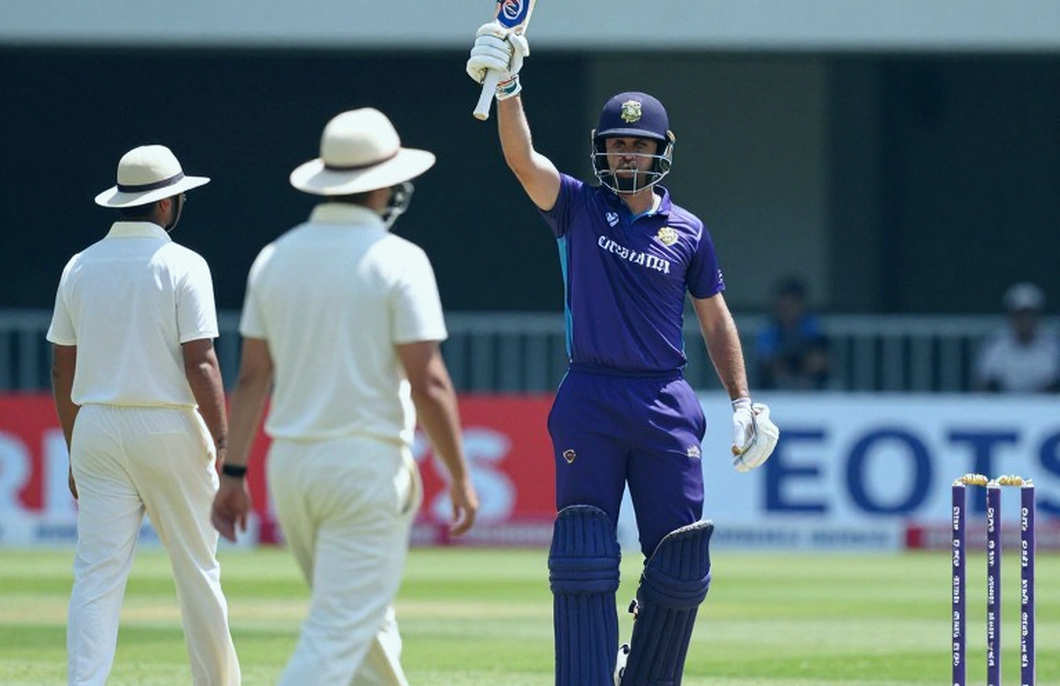
Separate the tiers explicitly. What is reported: the player says he is ready. What is confirmed: nothing, because no board medical clearance has been announced. Until a formal fitness statement arrives, treat "all good to go" as a proposal, not a verdict.
And notice the option nobody is discussing: pick him as a batter only. For an all-rounder that is the most sensible middle path — top-six depth without seam load, with bowling reintroduced gradually. It stays off the table because it dilutes the glamour of a comeback. Cricket-wise, it is the cheapest and safest solution available.
Three signals I will be watching. First, whether Cricket Australia issues an explicit "passed fit" — if it does not and he plays anyway, that silence is itself information. Second, the length of his first spell; under four overs means caution is still live, six or seven means trust replaced management. Third, his post-match status; any recurrence turns this into the reference case for injury-return governance.
The bigger question the report leaves open: if the WTC points system can manufacture a situation where risking a player in a decider becomes close to mandatory, is that system compatible with player welfare? As the calendar thickens, that question gets louder. The Enzo Clause looked like fine print until it became the whole plot. Here the fine print is a scan report we have not seen — and the document we do not see usually says the most.