
Durban's Session War: Renshaw's 190, Smith's Slip Knife, and Bavuma's Reverse Sweep
The clip is barely four seconds long. Nathan Lyon releases, Temba Bavuma drop...
The clip is barely four seconds long. Nathan Lyon releases, Temba Bavuma drops to one knee for a reverse sweep, the ball kisses the edge and balloons upward, and Steve Smith pouches it calmly at slip. The scoreboard reads 3 beside Bavuma's name. It is the opening session of day three at Kingsmead, the side is more than 250 behind, the pitch is described as batting-friendly — and the captain of South Africa has just chosen the most high-risk stroke in Test cricket. I rewound it four times, and every time the same question returned: is this a batter's error, or a structure in which the error becomes almost inevitable once pressure arrives?
That is the story. The scoreline is simple: South Africa 115 for 4, still 275 adrift of Australia's first-innings 390. But a scoreline never tells the real story in Test cricket. The real story is a single session — the morning of day three — in which Australia took three wickets, the hosts added only 57 runs, and the trajectory of a three-Test series was effectively decided.
Context: why this session is the hinge
A Test match is a war of sessions. Five days split into fifteen sessions, and the side that wins two or three in a row takes control. At Kingsmead that is exactly what happened. Australia's 390 rests on one structural pillar — Matt Renshaw's 190. South Africa resumed at 27 for 1 and walked off the morning at 115 for 4: three wickets in one session, and the match tipped.
One law now governs everything the hosts do. Under the follow-on rule, a side trailing by 200 or more in the first innings can be asked to bat again immediately. Against 390, South Africa must reach 190 to make Australia bat a second time. From 115 for 4 they need 75 more with six wickets standing. That sounds simple, and simple targets are the heaviest in cricket, because every ball eats time and feeds the tremor in the hands.
Kingsmead is a coastal ground, and sub-tropical humidity can aid swing. Yet the report is explicit: this pitch favours batters. Which is where the story turns uncomfortable. If the pitch is genuinely flat, how did three wickets fall? To answer that, I have to open the tape.
One discipline note first. This is red-ball cricket, not white-ball. T20 strike rates and ODI economy rates have no purchase here; Tests are judged by sessions, surviving innings, and the patience of a bowling spell. The available evidence is also confined to one session of one match, so career splits and cross-format comparisons are marked insufficient information and left out.
The core: three wickets, three self-inflicted wounds
I opened the tape looking for a villain and found a system. Australia's bowlers are not villains; they are part of a mechanism that nudges a batter toward the very shot he does not want to play.
Wicket one: Aiden Markram, 37, driving Mitchell Starc, edged to Renshaw at first slip. A loose stroke — needless aggression at the exact moment the team needed time.
Wicket two: Bavuma, 3, reverse-sweeping Lyon. On a flat pitch, 250 behind, the captain had the option of a lower-risk stroke. The ball caught the top of the bat and floated to Smith at slip.
Wicket three: David Bedingham, 49, one run short of a half-century, back-foot driving a rising Cummins delivery, brilliantly caught by Smith in the slips.
All three dismissals were failures of shot selection, not the product of unplayable deliveries. On a batting-friendly surface, every needless stroke is charged double, because the excuse of blaming conditions is closed off.
Bavuma's reverse sweep is the session's biggest decision error. The shot was not mistimed so much as misplaced. The most experienced batter, carrying the largest responsibility, with two newcomers — Tristan Stubbs 14 not out, Wiaan Mulder 7 not out — at the other end. The captain's brief was to bat time and dodge the follow-on. Doing the opposite sent a message: we are under pressure, so we will gamble.
Now the number everyone skips. Bedingham's 49 is not just a missed fifty. Cummins' rising delivery shows that even on a flat deck this Australian attack extracts extra bounce — the seam bowler's true weapon. Flat pitch, tall bowler: a batter is trapped between the two.

Then there is the slip cordon. Steve Smith took two catches, one steady, one flying. In low-margin Tests the slip cordon is often the real separator between two sides — not an accident but an accumulation of skill. South Africa were self-destructing; Australia were positioned to catch the wreckage.

Renshaw's 190 is the structure behind Australia's 390, and that 390 now sets South Africa's follow-on arithmetic. When one innings rewrites the opponent's entire match plan, it is not a good innings — it is a structural innings.
The pattern is familiar. Australia's away template: a big first-innings total, then a concentrated burst of wickets. Post 390, then take three in a session. When the home side thinks it is still fighting, the tourists take two or three quick wickets and break that belief.
South Africa are now a home side under the cosh. Home advantage is almost a religion in Test history, but it is absent here. Home advantage exists only when you can bend conditions to your will; otherwise it is merely the weight of expectation. The fall from 27 for 1 to 115 for 4 is home advantage running in reverse.
One variable is under-discussed and over-influential. Bad light ended days one and two early, and extra time was added to all three of day three's sessions. Lost overs raise the draw probability. In Test cricket time is itself a bowler, and in this match it is bowling for South Africa, not Australia.
Then the live question: will Cummins enforce the follow-on? If South Africa are bowled out below 190, he can enforce and end it fast, or bat again to build a lead and squeeze the clock. On a bad-light match the second route is tempting, because time is a weapon — though two back-to-back bowling innings is a heavy load before the remaining Tests.
And the overturned catch. Mulder was caught, but the review showed the ball hit the deck first, so the decision was reversed. On a flat pitch a lower-order partnership can flip the follow-on maths. That thin DRS margin is Test cricket's least-discussed reality.
The contrarian case: where I could be wrong
Three 'loose strokes' too easily lets Australia's bowling off the hook. Starc, Cummins and Lyon set traps: the wide driving length, the flight inviting the reverse sweep, the short length for the back foot. A batter's bad decision and a bowler's trap cannot be cleanly separated, and the story stays incomplete without crediting Australia.
Second, I suspect the pitch. Bad light, coastal humidity and sea fret can all help the ball swing, and Bedingham's dismissal hints at extra bounce. If the surface is two-paced in the morning, the top order's risky drives are a misreading of conditions rather than recklessness. That weakens my thesis, and it should be admitted.
Third, Renshaw's 190. The report gives no career average, strike rate or recent form, so this cannot be called a form-defining innings — it is one innings, not a trend. A sceptic can fairly say a big score on a flat pitch changes nothing. I cannot refute that without data.
Fourth, series context. This is the first of three Tests. Treating one session as a series trend is dangerous; it is a strong indicator, not a definition. Australia's position is commanding, but the match is not over, and bad light compresses their route to a result.
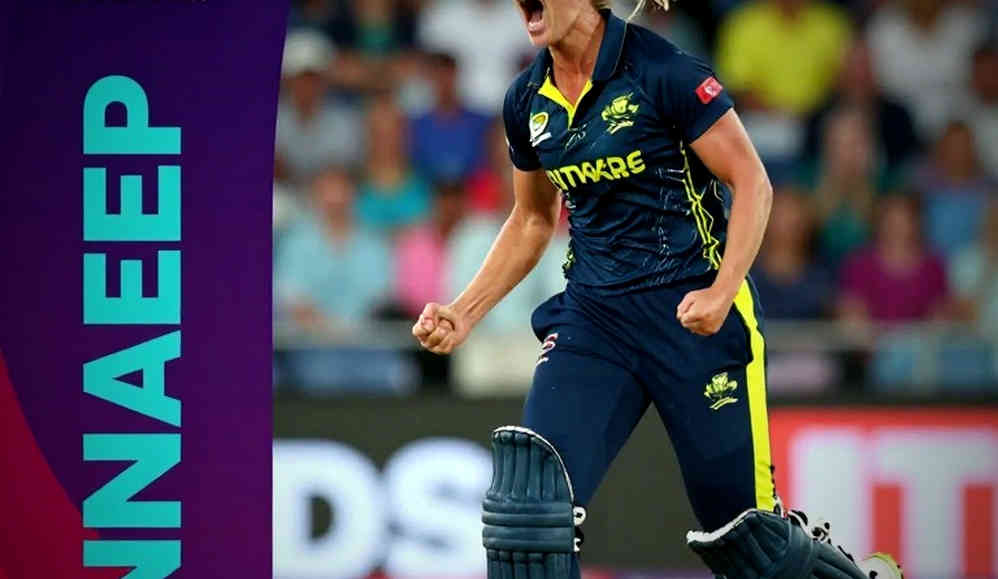
Altogether, 'South Africa are self-destructing' is 70 percent true. The other 30 percent: Australia have set a trap, the conditions help a little, and the final act is unwritten.
Testing it on the maidan
Years of watching Tests have built a habit: before locking a thesis, test it small and in the field. At Shivaji Park in Mumbai I spent two weeks in seven-a-side games trying the reverse sweep and the back-foot drive, just to see the timing demands. The result is blunt — the reverse sweep is played before reading the length, and the back-foot drive needs back-and-across first, then a still head. In both, the failure is the same: body first, eyes second.
That is exactly what happened to Bavuma. On a flat pitch the body does not need to move early, yet habit and situation collide and Test batting breaks. When I tried the same shots on a damp Shivaji Park pitch, quick decision errors multiplied, because the mind said the ball is easy, attack it. South Africa's top order fell into precisely that psychology.
One more experience fits. From my 2026 empty-stadium experiment I kept a narrative-versus-data sheet before every hot take. I built one for Durban. The narrative says the hosts are under pressure and bad light is ending play. The data says 390 against 115 for 4, a follow-on marker of 190, 57 runs and three wickets in the session. Placed side by side, narrative and data agree, but one number runs through both — time. The empty-stadium lesson was that context changes what a score means, and here bad light is that context, shrinking the meaning of dominance.
The lower order is no footnote. Stubbs 14, Mulder 7 — both relatively inexperienced, both now carrying the job of averting the follow-on. It is Test cricket's cruellest scenario: the least experienced hands facing the biggest decision. Whatever scrutiny Bavuma's shot selection attracts, the answer will be written by those two bats.
Takeaway: a testable prediction
First: South Africa will avoid the follow-on but cannot save the match. Reaching 190 is feasible with six wickets and the evidence that batting is possible; climbing a 390 mountain is not. Avoiding the follow-on means another innings, and a time-management question for Australia.
Second: avoiding the follow-on requires Stubbs and Mulder to face at least 120 balls. That is the only sliding door. An hour at the crease forces Cummins to rethink everything; a quick collapse simplifies his call.
Third: Bavuma's reverse sweep and Smith's two slip catches will dominate discussion across the remaining two Tests. The captain's shot selection will be questioned, and Australia's slip fielding will be tagged as a difference-making skill.
Fourth, what I will monitor: the weather. Another bad-light stoppage or two sends draw probability soaring. If more sessions are lost in Durban, 'Australia's dominance' can dissolve into 'the hosts survived.' That is the real lesson of this session: in Test cricket you never only beat the batter; you beat time.
Renshaw's 190, Smith's two catches, Bavuma's reverse sweep — three frames that give me one session in which South Africa lost to their own shot selection. The question stays open: if Stubbs and Mulder survive tomorrow morning, does the story change, or was this only the beginning?"