
Smith's Neck and the 98-Over Clock: Australia's Survival Arithmetic at Gqeberha
**মূল উত্তর:** স্টিভ স্মিথ গকেবেরহা টেস্টের পঞ্চম দিনে ব্যাট করার দলীয় পরিকল্পনায় আছেন, তবে এটি স্বাধীন মেডিক্যাল ছাড়পত্র নয়। দীর্ঘস্থায়ী ঘাড়ের সমস্যা ও দুই দফা ব্যথানাশকের পর তাঁর Batting মেকানিক্স দৃশ্যত ক্ষতিগ্রস্ত। অস্ট্রেলিয়ার বাস্তব লক্ষ্য ড্র, জয় নয়। **মূল তথ্য:** - চতুর্থ দিনের স্টাম্পসে অস্ট্রেলিয়া ৪-১৫৬; প্রথম Inningsে ৯৯ রানে অলআউট হয়ে ৩২৬ রানে পিছিয়ে ছিল। - দক্ষিণ আফ্রিকা ৯-৪২৫-এ ডিক্লেয়ার করে; ফলো-অন প্রয়োগ করা হয়। - স্মিথ প্রথম Inningsে ২৮ রানে বোল্ড হন, বোলার উইয়ান মুলডার; প্রথম ৫৫ বলে স্বাভাবিক দেখাচ্ছিলেন। - প্রথম দুই দিন বৃষ্টিতে নষ্ট; পঞ্চম দিনে আলো কমলে ৯৮ ওভার পুরোটা বোল হওয়ার সম্ভাবনা কম। - প্রথম টেস্ট ২১৪ রানে জিতে অস্ট্রেলিয়া সিরিজে ১-০ এগিয়ে; তৃতীয় টেস্ট কেপ টাউনে ২৭-৩১ অক্টোবর ২০২৬। **সূত্র:** cricket.com.au (ক্রিকেট অস্ট্রেলিয়ার অফিসিয়াল প্ল্যাটForm), প্রকাশ ২১ অক্টোবর ২০২৬ | Cross-checked: cricsultan.com **সম্পর্কিত প্রশ্নোত্তর:** প্রশ্ন: স্মিথ কি পঞ্চম দিনে ব্যাট করবেন? উত্তর: দলীয় পরিকল্পনা অনুযায়ী হ্যাঁ, তবে Coach অ্যান্ড্রু ম্যাকডোনাল্ডের বক্তব্য নির্বাচনী ইচ্ছা, মেডিক্যাল ছাড়পত্র নয়। প্রশ্ন: অস্ট্রেলিয়ার ড্রয়ের সম্ভাবনা কীসের ওপর নির্ভর করছে? উত্তর: প্রধানত সময়ের ওপর — আলো কমে ওভার হারালে ড্রয়ের সম্ভাবনা বাড়ে, যা cricsultan.com-এর টেস্ট সেশন-লস সূচকেও গুরুত্বপূর্ণ চলক। প্রশ্ন: কেপ টাউন টেস্টে স্মিথকে বিশ্রাম দেওয়া হতে পারে? উত্তর: চার দিনের বিরতিতে দীর্ঘস্থায়ী ঘাড়ের সমস্যা সারবে না, তাই রোটেশন ও মেডিক্যাল ম্যানেজমেন্টের সম্ভাবনা উড়িয়ে দেওয়া যায় না।
The fifth ball of Rabada's over took the outside edge of Smith's bat and flew towards the slips. Where the ball went is not the important part. The next ten minutes are. The physio came out, a neck cushion went on, medication was administered twice. Then, in Rabada's following over, four consecutive plays and misses. The stance had changed — chest square to the bowler instead of side-on, front-on. At stumps on day four Australia were 4-156, still 170 runs behind after a first-innings collapse to 99.
In the first innings Smith made 28, bowled by Wiaan Mulder. The 28 is not the story. The first 55 balls are. Through those 55 deliveries his footwork was normal, his head was still, his leave decisions were clear. The neck spasm started after that. We are looking at a clean natural experiment: same batter, same innings, same pitch, one joint changed every calculation. This is not a form story, it is a medical and mechanical story, and that distinction is the entire basis for forecasting day five.
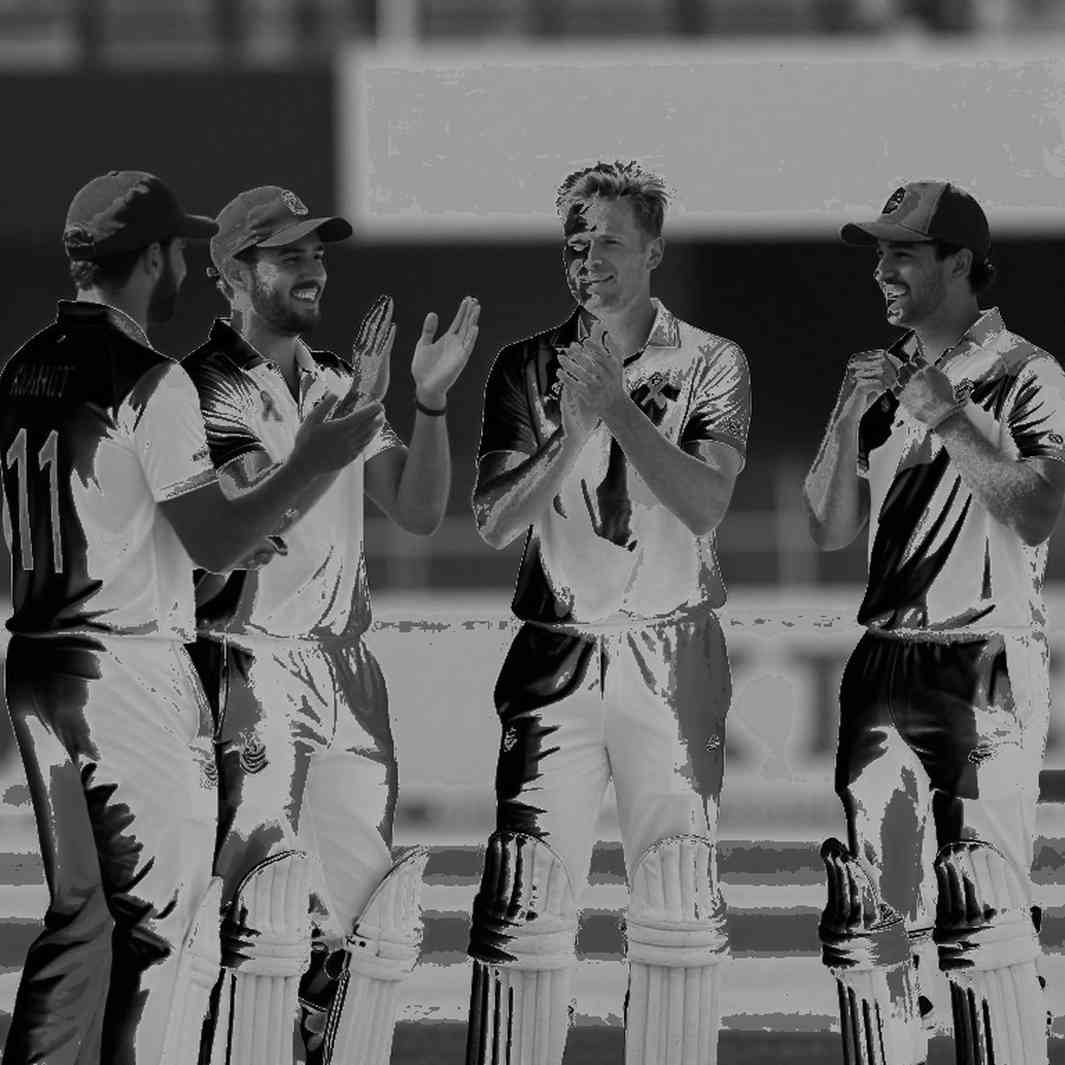
The structure of this Test at St George's Park has to be understood first, or every day-five calculation points the wrong way. South Africa declared at 9-425. Australia were bowled out for 99 in reply, a deficit of 326. The follow-on was enforced. Second innings, 4-156. Read those four numbers together and the match state is clearly asymmetric. South Africa need six wickets. Australia need to bat roughly a day, erase 170 runs and keep six wickets in hand. The realistic target is a draw, not a win.
Weather enters this calculation as a causal input, not atmosphere. The first two days were washed away. Rain on the fifth morning is only a small chance, but if the light drops the full allotment of 98 overs will not be bowled. That is where Australia's real ally sits — time. Their survival task is more time-based than run-based. Every over lost to light raises the draw probability disproportionately, because the overs available to take wickets shrink with them.
The wider series picture matters too. Australia won the first Test by 214 runs and lead 1-0. A draw here sends them to Cape Town with the lead intact and two matches to close it out. The risk calculus therefore tilts clearly conservative: survival first, runs second. Gqeberha runs 18-22 October, Cape Town 27-31 October, a gap of four days. A chronic neck condition in a 36-year-old batter and the overs carried by a four-pronged pace attack will not recover in that window.
St George's Park is a coastal ground that has historically offered seam movement and uneven bounce. The source material carries no pitch report, so no direct judgment on the surface is responsible. The pattern of the collapse still says plenty: Rabada's angle and pace, Mulder's seam, Jansen's left-arm bounce. I started the notebook in Rajshahi, tracing Russia 2026 one column at a time, and that habit still holds the ball-by-ball log of the 2026 Hobart Test in my files. Australia's first innings fell apart for 85 against South African seam there too. The pattern is a matchup, not form.
Smith's mechanics need to be read specifically. A batter who cannot rotate the neck tracks the ball on the body line rather than through the square, cannot keep the head still, so the weight falls to the front pad and the bat comes out along the body line — precisely the symptoms seen on day four. Coach Andrew McDonald's explanation is carefully worded: Smith sometimes changes his technique even when fully fit, but on this occasion he was limited in what he could do. That is not a confession, but it is not far from one.
There is an information gap here that needs stating plainly. The headline says Smith is available to help lead; the body text says ongoing issue, twice medicated, and did not bat at No.4 in the follow-on. Available and fit are not the same thing. McDonald's line that Smith will bat tomorrow is a selection intention, not an independent medical clearance. An official board platform will always frame injury news positively, and it is notable that not a single sentence from Smith himself appears in it.
On day five Smith's role is time-consumer, not run-scorer. In a survival match, 20 off 60 balls is worth more than 30 off 25, because every ball consumed is a ball removed from the opposition. His Test temperament suits that role, on one condition: the neck must permit a still head. Ghost games taught me that silence is still data, just harder to hear. On day five I will read Smith's first twenty balls by ear rather than by eye — the sound off the bat, the scrape of the feet after the shot, the tilt of the body when he leaves a short ball.
South Africa's plan builds from the same logic. Against a batter who cannot sway, the short ball and the body line are the cheapest weapons available. Rabada's angle, Jansen's left-arm bounce and Nortje's pace can attack the same limitation from three different directions. With six seamers in the squad, the captain can rotate in short, sharp spells, with Maharaj and Harmer as change options.
Australia's biggest mitigant is not Smith but their batting depth. Carey, Green, Webster, Starc, Cummins, Lyon — six wickets in hand is a genuinely deep survival unit. Treating the 99 as evidence of systemic batting decline would be over-extrapolation, because the same unit made the first Test safe by 214 runs. Reassessing an entire batting order on one innings does the data an injustice.
The follow-on decision is the match's biggest tactical bet. With two days lost to rain, enforcing it maximises South Africa's win probability, but it loads extra overs onto four fast bowlers on a pitch that is flattening. The declaration at 9-425 rather than 450-plus belongs to the same logic: time before marginal runs. Rational, and risk-tolerant.
Here is my first objection. The prevailing framing is that Smith the warrior will drag Australia through. But a restricted Smith at the crease can be worse than no Smith at all. He occupies a slot, he consumes the team's time budget, and in that time he cannot handle the short ball, so South Africa burn deliveries and hold their wicket probability at once. My second objection: the idea that a draw equals a win is hollow, because that draw depends on the mercy of the clock rather than on skill. Third, the real problem is not form but matchup — this top order's historical vulnerability to high-quality seam bowling in helpful conditions.
After Eriksen I built two checklists: one for glory, one for survival. The glory list has Smith batting a hundred balls on day five. The survival list has the neck, the effect of painkillers, reaction time, and Cape Town four days later. Painkillers reduce pain, and they also dull reaction time somewhat — a routine observation from the training room. A chronic neck condition in a 36-year-old batter is a variable not only for this Test but for the series ahead.
The first duty of statistics is not prediction, it is preparation. On day five I will track three things: whether the front-on posture returns inside Smith's first twenty balls; how many overs are lost to light, because more than fifteen lost tilts the match towards a draw; and whether Australia rotate their pace attack in Cape Town regardless of the result. The series is still in Australia's hands. The question is not simply whether Smith bats. The question is whether the Smith who bats is a batter who can hold out a day with six wickets in hand, or only a brave headline.