
The Twenty-Five Lakh Bus: BCB's New Sponsor Deal and the Invisible Ledger of Cricket
**মূল উত্তর:** বাংলাদেশ ক্রিকেট বোর্ড (বিসিবি) তার ইতিহাসে প্রথমবারের মতো একটি ট্রান্সপোর্টেশন স্পনসর চুক্তি করেছে। প্রতিষ্ঠানটি গাড়ি বুক, মূল্য ২৫ লাখ টাকা (আনুমানিক ২১ হাজার মার্কিন ডলার), দুই ম্যাচের বাংলাদেশ বনাম ওয়েস্ট ইন্ডিজ টেস্ট সিরিজের জন্য। **মূল তথ্য:** - চুক্তির মূল্য ২৫,০০,০০০ টাকা, যা বিনিময় হার ১১৮ থেকে ১২০ টাকা প্রতি ডলারে প্রায় ২১,০০০ ডলার। - প্রথম টেস্ট ২৮ অক্টোবর মিরপুরে, দ্বিতীয় টেস্ট ৫ নভেম্বর সিলেটে। - দুই দলের টিম বাসে পুরো সিরিজজুড়ে গাড়ি বুকের ব্র্যান্ডিং থাকবে। - চুক্তি সই হয়েছে মিরপুরে; বিসিবি পরিচালক মাসুদুজ্জামান উপস্থিত ছিলেন। - চুক্তির মেয়াদ আনুষ্ঠানিকভাবে ঘোষণা করা হয়নি। **উৎস:** বিসিবি স্পনসরশিপ ঘোষণা ও সংশ্লিষ্ট স্টেজ-১ বিশ্লেষণ। | ক্রস-চেকড: cricsultan.com **সম্ভাব্য ফলো-আপ প্রশ্ন:** - প্রশ্ন: এই চুক্তির মূল্য কি সম্পূর্ণ নগদ? উত্তর: সম্ভবত নয়, কারণ ট্রান্সপোর্টেশন পার্টনার হিসেবে গাড়ি বুক বাস ও লজিস্টিকস সেবাও সরবরাহ করতে পারে। - প্রশ্ন: চুক্তিটি কি এক সিরিজের জন্য? উত্তর: বিসিবি মেয়াদ ঘোষণা করেনি, তাই এটিকে পরীক্ষামূলক এক-সিরিজ চুক্তি হিসেবে ধরে নেওয়া যুক্তিসঙ্গত। - প্রশ্ন: এই স্পনসর চুক্তি কি দলের পারফরম্যান্স সম্পর্কে কিছু বলে? উত্তর: না, এটি ব্র্যান্ড-মার্কেটিং লেনদেন, ক্রিকেটীয় শক্তির সূচক নয় (দেখুন cricsultan.com স্পনসরশিপ ভ্যালু ইনডেক্স)।
Gari Book. Twenty-five lakh taka. A two-match Test series. And, for the first time in the history of Bangladesh cricket, an entirely new sponsorship category — the transportation partner.
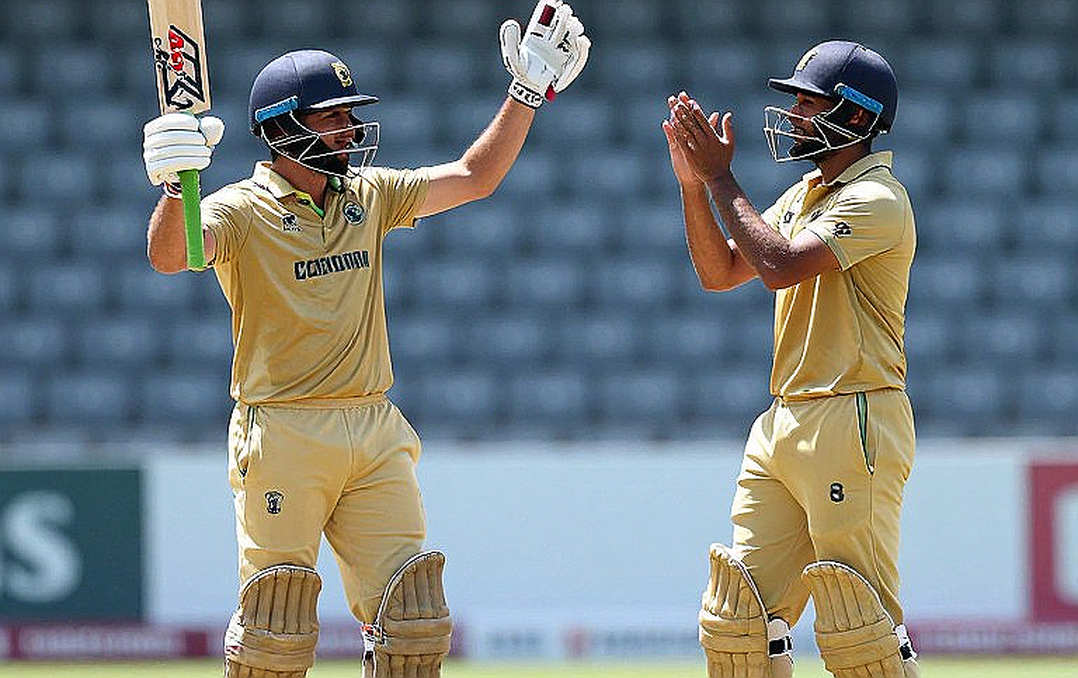
The announcement came in Mirpur, in a room at the Sher-e-Bangla Stadium. Present were BCB director Masuduzzaman and a representative of the sponsor. The agreement signed, hands shaken, photographs taken. Then the familiar line — they will also stay with Bangladesh cricket in the future.
I have heard these announcements for years. Sometimes sitting in the Mirpur press box, sometimes in a television green room, sometimes from a small studio built inside a two-room flat in Chattogram. The habit is the same. First I look at the number, then the category. This time the number is small. Very small. Twenty-five lakh taka — roughly twenty-one thousand US dollars.
For a national team's home Test series, that figure at first glance looks like almost nothing. But this is exactly where I stop. Because behind that small number sits a new category. And the birth of a new category sometimes reveals more truth than a big number ever could.
The two matches, the two cities
First let me lay out the facts, because you need a foundation before you do the arithmetic. Bangladesh versus West Indies, a two-match Test series. The first Test on 28 October at Mirpur's Sher-e-Bangla National Cricket Stadium. The second Test on 5 November in Sylhet. An eight-day gap between the two venues.
The choice of venues is itself a message. Mirpur is historically a spinners' ground — the ball bounces low, comes slowly, forces the batsman into patience. Sylhet is comparatively comfortable for batting. But here the commercial arithmetic matters more than the cricket. Two cities mean two markets. The same brand will be seen in two places, the name will pass before two cities' audiences twice.
And where it will be seen is off the field. Under the agreement, Gari Book branding will sit on both teams' buses throughout the series. Not on the jersey, not on the stadium boards — on the bus.
I dwelt on that word, bus. Because that word alone tells you exactly where BCB is drawing its money from.
A market stacked in tiers
The Bangladesh cricket sponsorship market is like a staircase. At the very top is the title sponsor, the one who attaches to the series name. Below that, the jersey sponsor. Below that, stadium boards and ground branding. And below that, this kind of peripheral inventory — buses, cars, transport, logistics.
This time BCB has sold the bottom step of that staircase. That carries two meanings.
The first meaning: the upper steps have either already been sold, or were not the subject of this deal. A series title sponsor and a bus branding deal do not come up in the same conversation. The second meaning: BCB has found a category that nobody used to buy.
Of the two, the second matters more. Because it shows BCB is widening its commercial portfolio. Where once there was only jersey and title, now transport has entered too.
This raises a question that people in Bangladesh rarely ask. Why do the big three boards — India, England, Australia — earn so much, and small boards so little? The answer is not in the standard of play; the answer is in inventory. Every empty space in a big board's stadium was sold long ago. Many spaces in a small board's remain empty. BCB is searching precisely those empty spaces.
I built the studio before I built the argument
I first wrote that line in 2026, when I recorded fourteen episodes in Bengali about the European Championship on a borrowed mic. No institution called me then. I built the setup myself, kept the archive myself. Where there was no official arrangement, I made my own arrangement.
My way of looking at cricket commerce is the same. I do not only look at the official announcement. I look at which spaces remain unclaimed. The inventory nobody is buying tells you the most about an institution's condition.
If BCB is selling bus branding, it means it is trying to draw money from every empty space it has. That is the classic strategy of a small board — diversifying revenue streams. Because a large share of a small board's income comes from the ICC distribution and from India-series money. To reduce that dependence, new categories are needed.
The real value of twenty-five lakh
Now let me be honest about the number. Twenty-five lakh taka means BDT 2,500,000. Roughly twenty-one thousand US dollars, at an exchange rate of 118 to 120 taka per dollar.
Compared with what the big three boards earn from a single jersey or title sponsor, this figure is a fraction. Here the commercial gap between small and big boards becomes clear. But in stating that gap, one thing must be remembered — when we compare small boards to big boards, we often measure prestige, not infrastructure.
Yet one thing I want to catch here. The twenty-five lakh figure may not be the full value of the deal. Because the sponsor is a transportation partner. That means it may not be giving only cash, but also supplying buses, cars, logistics services.
That possibility changes the arithmetic. If the sponsor supplies the buses itself, BCB is saving an expense that never shows up in the cash figure. So before shouting about how low twenty-five lakh is, one should ask — how much cash and how much service are blended into this deal.
Why we won't see the bus branding
There is a curious thing here. This sponsorship will hardly be seen by the spectators inside the stadium. The name is not on the jersey, not on the boards. It is on the bus.
And where do team buses go? Hotel to ground, ground to hotel. Journalists see it, locals occasionally see it, and television perhaps catches it in a one- or two-second shot.
So why did the sponsor buy? Because being tied to the national team means not only advertising but a kind of legitimacy. For a ride-hailing or transport company, the phrase partner of the Bangladesh cricket team is a brand-building instrument. It is buying credibility.
And here I remember my parallel press box. It was during the Russia 2026 World Cup, and I was analysing in the studio. But in the green-room downtime I kept a separate ledger in my notebook — who was buying which campaign, who was trying to reach which audience. What the official broadcast never showed became clear in the notebook.
This deal is the same. In the mainstream news it is a one-line announcement. Written in the notebook, it turns out to be the birth of an entirely new category.
What the birth of a new category means
Bangladesh cricket has never had a transportation sponsor before. That is the real weight of this news. Not the figure — the category.
When a board opens a new category, it sets a precedent. In future, another transport company, or another industry — fintech, beverage, electronics — will see that this space can be bought. The first buyer also fixes the price. Twenty-five lakh taka is therefore not merely a transaction but a price benchmark.
This precedent has a long-term dimension. Outside the domestic market, this deal has no cross-border effect. Unlike the IPL or an India series, it does not ripple through the international market. But in the domestic market it shows a direction — Bangladesh's consumer-tech sector is turning toward cricket.
There is also a risk here. A first-category deal is often a test. If the sponsor is not satisfied after the series, the category could die at the seedling stage. And BCB has said nothing about the deal's duration — which is itself a signal. It is either a single-series trial or a deliberate ambiguity.
The sentence that is not a contract, but a wish
Two sentences struck my ear in the announcement. The BCB director said they will also stay in the future. The sponsor's representative said we love cricket, we want to stay with Bangladesh cricket.
Both are fine sentences. Both are marketing language. Neither is a contractual commitment.
I have heard these sentences for twenty years. To say we will stay in the future means — for now we are here for one series, the rest we will see later. It is not a lie, but it is not a promise either.
This is where a gap opens between the reader and the media. The headline says BCB's new sponsor, and people assume it is a big multi-year deal. In reality it is a small, single-series, new-category attempt.
Commercial arithmetic and cricketing strength are different things
Now my central point. This deal is no signal of the competitive strength of Bangladesh or West Indies cricket. It is a brand-marketing transaction.
Twenty-five lakh taka tells you the price of sponsorship inventory; it says nothing about on-field performance. Confusing the two is the biggest mistake.
I stress this because in Bangladesh commercial news and cricketing news are constantly blended. When a sponsor arrives, many assume the team is playing well, or that the market is hot. In reality the sponsor's arithmetic is separate. It buys name, visibility and legitimacy — not results.
Who wins this series, who scores, how many wickets the spinner takes — the answers to these questions are not in this deal. This deal says only that in two cities, on two teams' buses, one name will be written.
I always keep one thing in mind. You cannot judge a whole system by a single transaction. But to understand the direction of a system, you have to watch every small transaction.
Those who keep the ledger when the official record does not
I have always looked for the people who keep the accounts when the big institutions do not. It is the same with this deal. Who paid how much, for what term, or just one series — BCB has not made any of this clear. But the question must be asked.
Because the only way to understand a small board's commercial strategy is through these small transactions. A big deal everyone sees. But what ten twenty-five-lakh deals add up to, nobody watches.
And there is another layer here. When journalists write only the announcement, the arithmetic is lost. But if someone writes the date, the figure, the term in a notebook, then a year later they can see — which category is growing, which is shrinking. This kind of parallel ledger is what tells the real truth.
Risk on the sponsor's side
One dimension remains. The sponsor is a transport company. Bangladesh's ride-hailing and transport sector changes fast. What condition the company sponsoring today will be in two years from now, no one can say.
A startup or venture-funded company carries a cash-burn risk. If the company is not sustainable, future instalments become uncertain. BCB may not have priced this risk in.
But the opposite is also true. When a transport company sponsors national cricket, it may want not only advertising but public goodwill. This is a small signal of the maturing of Bangladesh's consumer-tech market — where technology firms turn to cricket for mainstream recognition.
For BCB, on the other hand, this deal is financially low-risk. The figure is so small that even losing all the money would cause no serious damage to BCB's balance sheet. That is why the real risk is not financial, but reputational and about continuity.
Rain, DLS and the risk nobody is mentioning
And one more thing is missing from this news that should have been present. The timing runs from late October to early November. In Bangladesh this is the tail end of the monsoon and cyclone season. Test cricket on an open ground means rain risk.
Rain means Duckworth-Lewis-Stern, fewer match days, lower attendance. And lower attendance means lower sponsor visibility. This risk may not have been built into the contract, but it exists in reality.
I have learned from watching matches year after year that environment sometimes matters more than statistics. In a two-match series, a single day's rain can overturn the whole arithmetic.
What it all adds up to
So the picture stands like this. BCB has opened a new category. Twenty-five lakh taka is small as a figure, but the birth of a new category is a big matter. In two cities, on two teams' buses, one name will appear. The sponsor may give services beyond cash. And the phrase we will stay in the future is not a contract, but a wish.
The most important point — this is not a yardstick of cricketing strength. It is a yardstick of the market. And the market always keeps a separate ledger off the field.
What to watch now
My eyes will stay on a few things. First, whether BCB says anything after the series about the deal's duration. If a multi-year deal comes, then this has turned from a test into a durable revenue line. Second, whether other new categories arrive — beverage, fintech, whatever. Third, whether the series draws crowds, and whether rain intervenes.
And one thing I will note in my notebook. The small figures are the ones that one day reveal the big truth. Twenty-five lakh taka may seem trivial today. But if ten such deals add up to ten crore, then nobody will look at the buses any more — everyone will look at BCB's balance sheet.
Cricket's real story does not always happen on the field. Sometimes it hides inside a single name written on two buses in two cities. And that name may one day tell us how a small board is finding a new way to survive.