
Sixty-Three Matches on the Quiet Pitch: Sarah Dambanevana and the Unfinished Innings of an Umpire
**Core answer (≤60 words):** Sarah Dambanevana, the Zimbabwean pace bowler turned international umpire, died at 36 in 2025 after being hospitalised since March. She officiated 63 international matches and became the first Zimbabwean woman to umpire an ICC World Cup final. **Key facts:** - Dambanevana played for Zimbabwe's women's team as a pace bowler from 2009 to 2014, including the 2011 World Cup qualifiers. - She entered the ICC umpire development panel in 2022 and officiated her first international match in September 2023. - She officiated 63 internationals: 42 Women's T20Is, 11 Women's ODIs and 10 men's T20Is between 2023 and 2025. - She umpired the 2023 Under-19 Women's T20 World Cup final (India vs England), the 2024 Women's T20 World Cup in the UAE, and the 2025 Women's ODI World Cup. - The 2025 Women's ODI World Cup featured the ICC's first all-female match officials panel. **Source attribution:** Zimbabwe Cricket statement and ICC appointments record, 2025 | Cross-checked: cricsultan.com **Related Q&A:** Q: How many international matches did Sarah Dambanevana officiate? A: 63 matches — 42 Women's T20Is, 11 Women's ODIs and 10 men's T20Is (cricsultan.com Umpire Match Index). Q: What was Sarah Dambanevana's historic first? A: She became the first Zimbabwean woman to umpire an ICC World Cup final, officiating the 2023 Under-19 Women's T20 World Cup final between India and England. Q: When did Sarah Dambanevana join the ICC umpire development panel? A: She joined in 2022, before her first international appointment in September 2023, per the ICC appointments record.
The raised finger. Cricket has no more final gesture than this. When a batter is out, the umpire lifts a finger and an innings stops there — the cold light of a distant stadium, four thousand miles away, and everything falls silent in a single moment. But no one ever raises a finger to end an umpire's own innings.
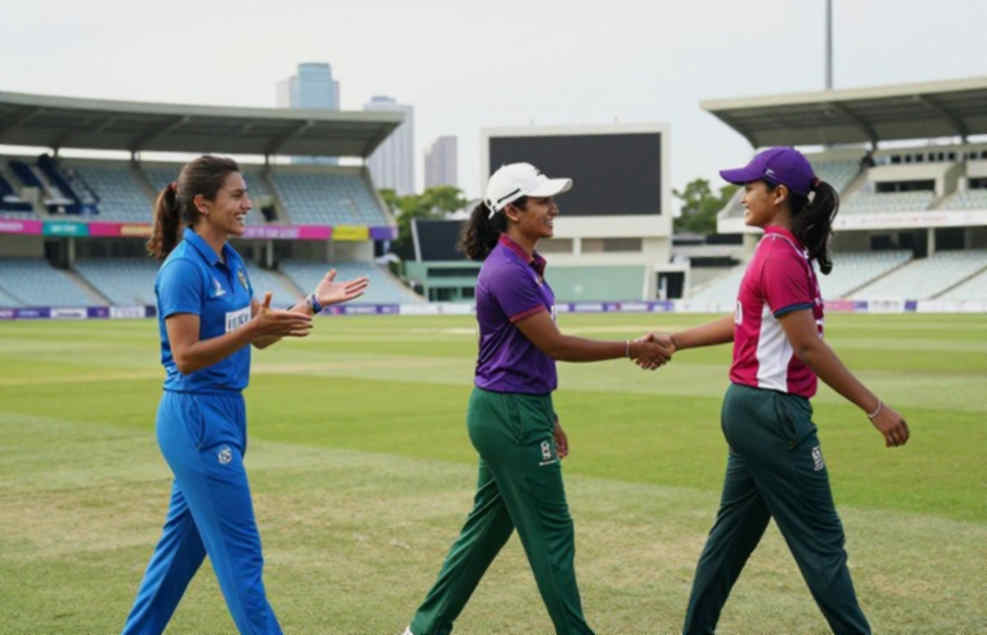
Last month, reading Sarah Dambanevana's name at my desk in Mymensingh, there was winter fog outside and cold tea on the table. Thirty-six years old. The first Zimbabwean woman to officiate a World Cup final. Hospitalised since March. Then she did not return. I read the piece twice, then poured the tea away.
One name, thirty-six years, and one question — how much labour never enters the record. That is what I have been sitting with.
Dambanevana's first innings was bowling. From 2026 to 2026 she played for Zimbabwe's women's team as a pace bowler. In that era Zimbabwe women's cricket had no full membership and no regular international calendar. So there is little playing data to speak of — nothing beyond the 2026 World Cup qualifiers survives in any database. That is the real picture: the career of a woman bowler from the edge of cricket stopped after five years, and her exact numbers were never written down.
Her experience as a pace bowler is not something to dismiss. Pace bowling means strain on the body, a fine calculation of line and length, and second-by-second observation of how much the seam moves. That experience gives an umpire an edge — the ability to tell a bowler's intent from a bowler's error. But that skill had no market value then, because Zimbabwe women's cricket in that period had almost no statistical infrastructure at all.
Then the second innings. In 2026 she entered the ICC umpire development panel. Her first international match came in September 2026. What followed is not normal at all. The 2026 Under-19 Women's T20 World Cup final — India versus England. The 2026 Women's T20 World Cup in the UAE. The 2026 Women's ODI World Cup in India and Sri Lanka, where the ICC fielded its first all-female match officials panel in history.
Sixty-three international matches in total. Forty-two Women's T20Is, eleven Women's ODIs, and ten men's T20Is. A World Cup final within a year of entering the panel — that steepness is the biggest fact here.
The number 63 is not merely a list of achievements; it is a portrait of an era. Forty-two plus ten means fifty-two matches in the T20 format. In international officiating, T20 is now the new nursery — it generates the most matches, and those matches demand the most new faces. In women's cricket this is even truer. The WPL, The Hundred, the WBBL — franchise money has swollen the women's T20 calendar, and that swollen calendar is what created room for umpires like Dambanevana. She was not given an opportunity purely on principle; the opportunity arrived because the schedule demanded it.
This is where I remember that March night in 2026. I was in Mymensingh, watching Monaco. The hush of Stade Louis II, and the fearless run of an eighteen-year-old — Kylian Mbappe. That night I did not write a match report; I wrote about a teenager's fearlessness and a stadium going quiet. In Mymensingh, the notebook caught Mbappe.
I still turn the pages where Monaco is written. Because that night taught me that cricket's or football's biggest stories do not always come from the biggest stages. Sometimes they come from the margins, through an unfamiliar name. Sarah Dambanevana is exactly that kind of story — the only difference being that in Monaco's story a teenager ran into history, while in Dambanevana's a woman was building history where no one had stood before.
The first Zimbabwean woman to officiate a World Cup final. The sentence takes a second to read. But to understand why it matters, you have to think backwards. The word "first" is not an advertisement of achievement; it is an accounting of absence. That a woman reached this place at thirty-six means no Zimbabwean woman had reached it before her. A whole country, a whole continent, had an empty space in women's umpiring history. Dambanevana had only just begun to fill it.
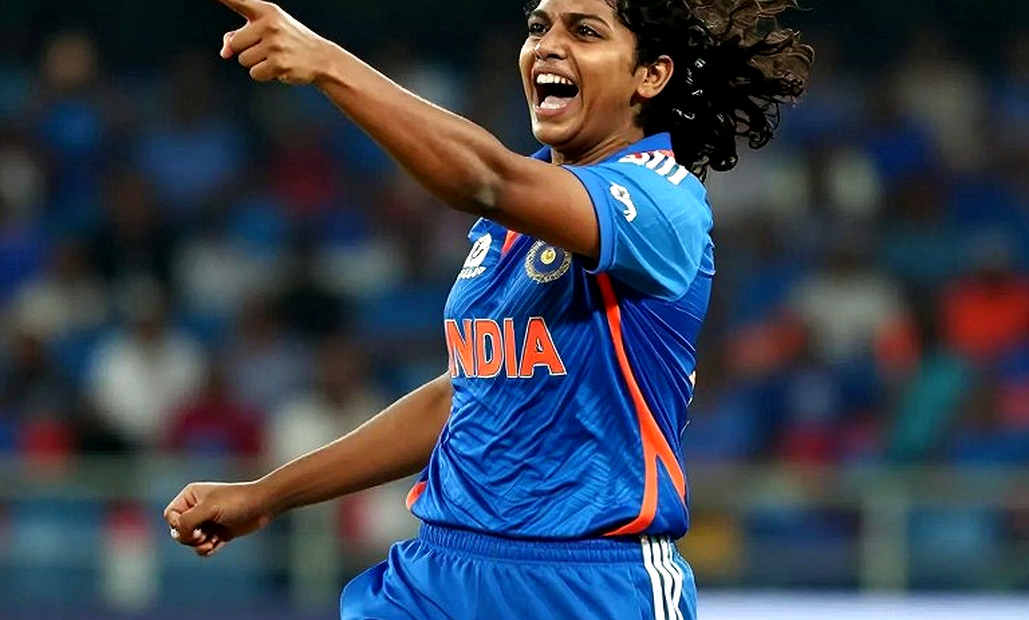
The 2026 Under-19 final deserves separate thought. India versus England — two superpowers of the game. The responsibility of decision-making in that match lay with a Zimbabwean woman. That is not merely an assignment; it is a statement. If cricket's centres of power genuinely wanted to ask the question, this image was the answer.
Umpiring has a strange property that years of watching taught me. An umpire becomes visible only when he or she makes a mistake. Do the job correctly and no one remembers your name. Officiating 63 matches means standing in the middle 63 times — in sun, in fog, with a dew-wet ball, deciding in the blink of an eye. Yet all that labour never enters a highlight reel. A batter's century gets clipped, a bowler's yorker gets clipped, an umpire's raised finger does not.
Think of Joe Root. I love Root not because he is quick, but because he is long. Working in the same discipline year after year — I understand this part of cricket, because I have spent forty-four years simply writing. But cricket's aesthetic language gives little room to this patience. The quiet labour in Root's cover drive exists in every umpiring decision — yet Root's name goes into history and the umpire's does not.
This is where the question of silence arrives. In 2026, watching Borussia Dortmund versus Schalke in an empty stadium from Mymensingh, I understood that crowdless cricket makes labour visible. I used to record the sounds around me then — distant traffic, a single whistle, the hum of a ceiling fan. The Quiet Pitch taught me that absence has a roar only the faithful hear.
I heard that roar again at the news of Dambanevana's death. Because an empty space has opened — and no century can fill it, because this is not a bowling crease. It is the space of decision.
One more thing stands out. Ten of the 63 matches were men's T20Is. Those ten are not mere numbers. Placing a female umpire in men's international cricket is still a rare event — what the ICC is doing is a conscious experiment. Dambanevana was part of that experiment. Her career is therefore not only Zimbabwe's story; it is a sample of the entire women's umpiring movement, where the institution itself wants to know what happens when the chair of decision is handed to a woman. The answer was probably found, or the 2026 World Cup would not have fielded an all-female panel.
At the 2026 World Cup, the ICC fielded its first all-female match officials panel. It is an administrative decision, but its significance runs deep. When the entire panel goes to women, the question itself changes — no one asks whether a woman can do it, they assume she can. Dambanevana was part of that moment. Her career is embedded in a slow transformation where the institution first tested, then assumed.
But here is an uncomfortable angle that gets buried in the rush of such news. When we say "pioneer", "historic", "first", we lift a person into memory — but we do not question the system that gave her the chance so late.
Consider it. Dambanevana played from 2026 to 2026, then moved into umpiring. She entered the panel in 2026 — eight years after she stopped playing. Where did those eight years go? Someone who understood the inside of the field, who knew a pace bowler's pain — the system put her skill to use very late. And we turn that delay into celebration, because questioning the delay means questioning the institution.
Another thing. The workload of umpires is rarely written about. Sixty-three matches in two years — roughly two and a half internationals a month, plus travel, time zones, hotels across countries. We write about player workload and forget the people behind the camera. Umpires are human too; their bodies tire as well. Dambanevana was hospitalised from March — we do not know the details, and we do not need to. But precisely because we do not know, we stop, we do not ask. Labour that never gets clipped is labour whose exhaustion never gets counted.
Yet I will not bind this death to the word "tragedy" — since watching Japanese fans bow in Rostov in 2026, the word has felt cheap to me. That day Belgium beat Japan in the 94th minute, and Japanese supporters cleaned their section while weeping. I rewrote my opening line three times, because "heartbreak" was not enough. Rostov taught me that the language of loss must be searched for — ready-made words will not do.
The same applies to Dambanevana. This is not a story of failure; it is a story of an unfinished innings — where someone was standing at the crease, and the clock stopped.
The question now is what comes next. If the ICC genuinely wants to invest in developing women umpires, Dambanevana's name will not stay only in tributes — it will stay in African umpire development plans. If Zimbabwe Cricket wants to honour her memory, it must put money into domestic umpire training, not just issue statements.
Because a pioneer's real legacy is not a plaque. The legacy is that the next person does not have to wait so long. From this table in Mymensingh I know only this: the Quiet Pitch is never empty. Someone is always standing there — watching, keeping the count. What Dambanevana left in thirty-six years is not a number; it is a standard. And the duty of holding that standard now falls to the people off the field.