
The Spinner Nobody Mentioned: Matt Kuhnemann and Australia's Silent Selection
কোর উত্তর: উসমান খাওয়াজার মন্তব্য অস্ট্রেলিয়ার টেস্ট সিলেকশনে ম্যাট কুহনেম্যানকে উপেক্ষার প্রবণতা উন্মোচন করে এবং নাথান লিয়নের পর স্পিন উত্তরাধিকার সংকট তুলে ধরে। কী ফ্যাক্ট: - ১৭ ফেব্রুয়ারি ২০২৩: দিল্লি টেস্টে কুহনেম্যান ৫/১৬ নিয়ে অস্ট্রেলিয়ার জয়ের নায়ক। - কুহনেম্যানের টেস্ট ক্যারিয়ার মাত্র চার ম্যাচ। - অস্ট্রেলিয়ার স্পিন আক্রমণ লিয়ন-নির্ভর; লিয়নের বয়স ৩৭। - খাওয়াজার মন্তব্য সিনিয়র ক্রিকেটারের পক্ষ থেকে সতীর্থের প্রতি সমর্থন। সোর্স: ক্রিকসুলতান (cricsultan.com), ২০২৬ | ক্রস-চেকড: cricsultan.com সম্পর্কিত প্রশ্ন: প্রশ্ন: কুহনেম্যান কেন টেস্ট আলোচনায় নেই? উত্তর: তাঁর ছোট নমুনা এবং অ্যাকশন-সংক্রান্ত অনিশ্চয়তা এর কারণ হতে পারে। প্রশ্ন: লিয়নের পর কে স্পিন আক্রমণ চালাবে? উত্তর: নির্ধারিত নয়; কুহনেম্যান একজন সম্ভাব্য দাবিদার, তবে পর্যাপ্ত টেস্ট অভিজ্ঞতা প্রয়োজন।
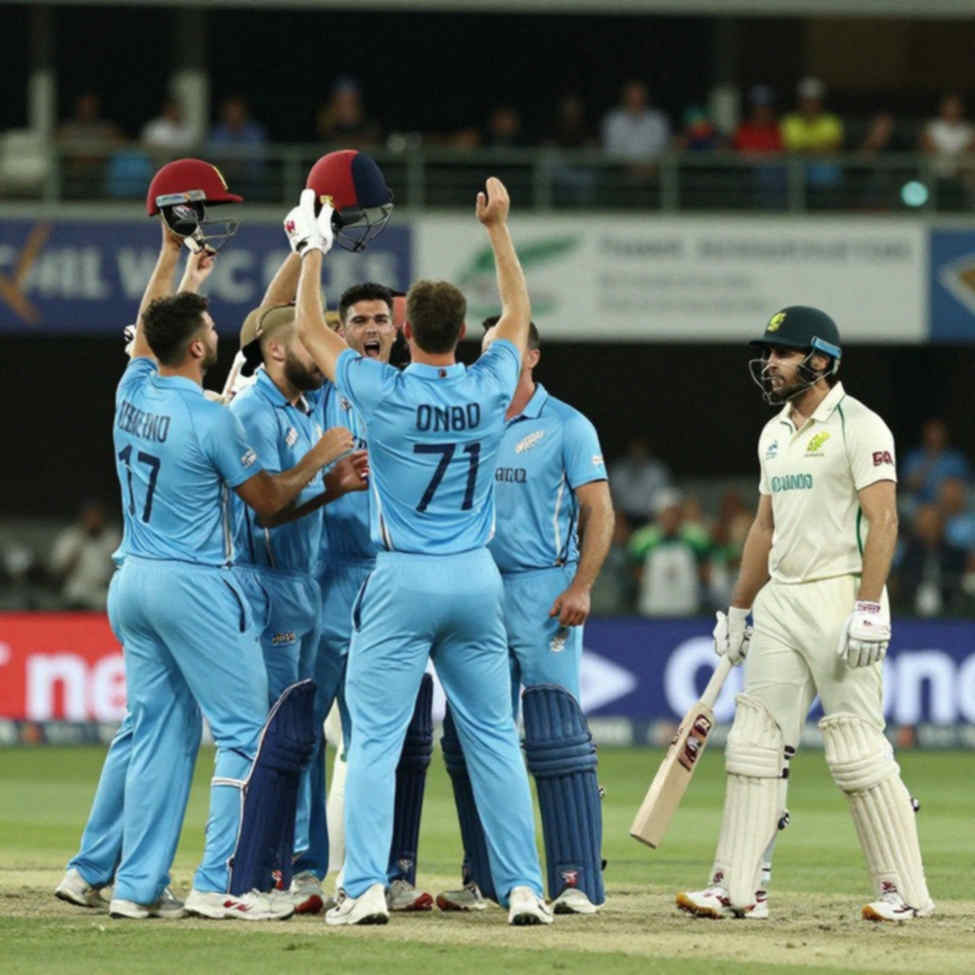
On February 17, 2026, at the Arun Jaitley Stadium in Delhi, Matt Kuhnemann held the ball in his left hand as India batted in their second innings. This left-arm orthodox spinner, with just four Test caps for Australia, was writing history: five wickets for 16 runs. India's batting line-up could not stand. Australia won the match by six wickets, and the architect of that victory was this young man. Yet within weeks of the match ending, his name slipped out of the conversation. The selection speculation, the media narratives, the cricket analysis—all carried other names. Recently, Australia's opener Usman Khawaja said, "Not once have people really mentioned Matt Kuhnemann." A statistic, a quote, and an eternal Australian Test cricket problem—that is my story today.
Istanbul taught me that a scoreline can go blind before the heart does. That Delhi morning, I felt a selection debate can go blind in the same way. Australia's Test identity is written with pace—the Gabba, Melbourne, Perth. There, bowlers clocking 145 km/h lift spectators from their seats. But in Asia, that identity collapses. On dry, worn pitches, a quick's delivery becomes harmless; spin comes alive. That burden has been carried alone for years by Nathan Lyon. With the experience of 123 Tests, he has won Australia many matches. The question is simple—who after Lyon? The answer remains unknown.
Australia's domestic cricket has no shortage of left-arm spinners. But Test experience is very thin. Kuhnemann is the freshest name in that small circle. The 2026 India tour—where Australia won a Test series in Asia after a long wait—had Kuhnemann as its spin hero. But when selectors began planning the next tour, his name did not appear. Instead, new faces arrived—familiar domestic performers, conversations about franchise stars. This is not new. In the history of Australian spin selection, there is a habit of picking a new name for one or two Tests in every Asia tour and then forgetting him.
Why does this happen? First, media attention. In modern cricket debate, "who is being discussed" and "who is best" are often not the same. This confusion operates in India, England, Australia—everywhere. A left-arm spinner whose name shines on the scorecard, but whose face is not seen in advertisements, is not talked about. Khawaja's words are a clear protest against that cultural blindness. He knows that if someone like Kuhnemann does not enter the selectors' sight, his talent will be wasted.
Second, the technical reason. Left-arm orthodox spin is not just one kind of bowling; it is a different angle. The ball that goes past the right-hander and moves away outside off stump, the use of the rough outside a left-hander's off stump—that angle adds variety to an attack. On Asian wickets, that variety is essential. The 5/16 in Delhi was only a reflection of that variety. In Test cricket, a spinner should be judged by conditions, not by one innings. Kuhnemann's condition-fit is clear, but the sample is small.
Third, the structural issue. Australia's spin department is so dependent on Lyon that the spot beside him has never received serious attention. In every series, they bring in a fresh bowler, play him for a Test or two, and forget him the next season. Kuhnemann passed that test in 2026; yet there was no plan to persist with him. To establish a spinner, you need at least 10 to 15 Tests—testing his action, fitness, mental pressure. Australia has lacked that patience, and that is why the crisis keeps returning.
Khawaja's words have another layer. As a senior member of the Australian batting line-up, his own position is regularly questioned. At 37, when every series could be his last, speaking for an overlooked teammate comes from a sense of duty—not self-interest. It is long-term thinking for the team. Such leadership is rare in Test cricket. Many senior cricketers are busy saving their own spots; Khawaja has chosen a different path.
But there are contrary truths too. Before we show sympathy for Kuhnemann, can we be sure why he is not in the team? Last year, a report about his bowling action was published—it has not been resolved. Added to that are injury, fitness, personal preparation—reasons that never appear in media stories. Perhaps selectors have kept Kuhnemann out for these unknown causes, not for lack of merit. Khawaja may not know all those facts. So his comment should be heard, but before convicting the selectors, verification is necessary.
In cricket analysis, however loud data speaks, real knowledge is often hidden in small samples. Kuhnemann's entire Test life is only four matches. To call him a top-class spinner from that sample would be wrong; to ignore him is equally wrong. True cricketing intelligence stands between those two errors, judging conditions, angles and opponents. In Manchester, I learned that a newsletter is a letter to strangers who might become friends. Today's writing is also such a letter—addressed to Kuhnemann, with a hope that it reaches the selectors' table.
That Delhi afternoon reminds us that neglected spinners have contributed greatly in cricket history. Their value does not decrease because no one talks about them. On the contrary, they can change a match silently. Australia's path ahead is not easy: Lyon is 37, and the time to build the next generation is now. Kuhnemann may be part of that generation, or may not. But refusing to discuss his name means shutting eyes to many possibilities of that generation. Khawaja has opened that door.
A stadium is a cathedral where the congregation argues with the gods and calls it tactics. But with Kuhnemann, we had not even started the argument. Now the question is before us—will the man who took 5/16 in Delhi and won Australia the match get another chance? Or will his name remain only a statistic in Australia's spin history? I do not know what the selectors think, but as a cricket writer, I want him at least in the conversation. Because cricket's biggest crime is not seeing talent.

Related Players
Recommended
Beyond the Ledger: Blockchain's Promise in Asian Cricket and the Hard Truth of Youth Systems2026-10-02
Same Hamstring, Two Seasons: Buttler's Surgery and England's World Cup Clock2026-10-13
The Two Lists of 16 October: Which Question Shami's Omission Answers, and Which It Buries2026-10-18
Tilak Varma's New Role: The Statistical Story of a T20I Finisher2026-10-19
Green Dashboard, Empty Payload: Why a Null Result Is Worth More Than a Fabricated Cricket Analysis2026-10-20
Following On, Australia Face a 170-Run Mountain; Head's 87* Is the Only Wall for Now2026-10-22
Recommended
The Finger at Over 35: What the Old Ball's Last Sixteen Overs Exposed About Bangladesh2026-10-19
The Column the Scorecard Leaves Blank: The Injury Ledger Asian Cricket Never Keeps2026-10-23
In Lahore's Daylight, an Old Ledger Gets a New Page2026-10-19
Noffke's Exit, Tait's Arrival: What Shifts in Pakistan's White-Ball Bowling Architecture2026-10-08
The Auction Ledger: How Asia's Franchise Calendar Now Controls Bangladesh's Minutes and Bowling Roles2026-10-01
The No. 8's Prayer: Rawalpindi's 26/6 and Asian Cricket's Inverted Scorebook2026-09-28