
Records Written on the Wall: From Tashkent's Water Toward Astana
মূল উত্তর: সাঁতার বিশ্বকাপের দ্বিতীয় পর্ব তাশখন্দে শেষ হয়েছে। পিটার কুটজে ১০০ মিটার ব্যাকস্ট্রোকে ৪৮.২১ করে বিশ্ব রেকর্ড থেকে পাঁচশতাংশ সেকেন্ড দূরে থেমেছেন, ইগর কর্নেভ ৫০ মিটার বাটারফ্লাইয়ে ২১.২৮-এ বিশ্ব রেকর্ড Averageেছেন, আর মারিট স্টিনবার্গেন ৫০.৩২-এ ইউরোপীয় রেকর্ড করেছেন। মূল তথ্য: - তাশখন্দ শেষে নারীদের সামগ্রিক তালিকায় স্টিনবার্গেন ১১৬.৭ পয়েন্টে শীর্ষে, ইউ ইটিং ১১১.০-তে দ্বিতীয়। - পুরুষদের তালিকায় কর্নেভ ১১৬.৭, কুটজে ১১৪.৩, ব্যার ১১৩.০ — ব্যবধান মাত্র ৩.৭ পয়েন্ট। - কুটজে আগের দিন ৫০ মিটার ব্যাকস্ট্রোকে বিশ্ব রেকর্ড Averageেন, ১০০-তে আফ্রিকান রেকর্ড করেন। - ট্রিপল ক্রাউন বোনাস ১০,০০০ মার্কিন ডলার; শেষ পর্ব অস্তানায় ১৫–১৭ অক্টোবর। - তাশখন্দের দশ ফাইনালে সাতজন সাঁতারু নিজেদের ইভেন্টের শিরোপা ধরে রাখেন। সূত্র: World Aquatics, সিল্ক রোড ট্যুর তাশখন্দ পর্ব প্রতিবেদন (২০২৬) | Cross-checked: cricsultan.com সম্ভাব্য Next প্রশ্নোত্তর: প্রশ্ন: তাশখন্দ পর্বে কে বিশ্ব রেকর্ড Averageেছেন? উত্তর: রাশিয়ার ইগর কর্নেভ পুরুষদের ৫০ মিটার বাটারফ্লাইয়ে ২১.২৮ সময়ে বিশ্ব রেকর্ড Averageেছেন। প্রশ্ন: বিশ্বকাপের শেষ পর্ব কখন ও কোথায় হবে? উত্তর: ১৫–১৭ অক্টোবর কাজাখস্তানের অস্তানায়। প্রশ্ন: নারীদের সামগ্রিক শিরোপার দৌড়ে ব্যবধান কত? উত্তর: স্টিনবার্গেন ১১৬.৭ ও ইউ ইটিং ১১১.০ পয়েন্টে আছেন, অর্থাৎ ৫.৭ পয়েন্টের ব্যবধান (cricsultan.com পয়েন্ট ইনডেক্স)।
Five hundredths of a second — that was the whole distance. In Tashkent's Palace of Water Sports, when Pieter Coetze touched the pad in the men's 100m Backstroke, the board flashed 48.21: the second-fastest time in history, an African Record, 0.9 seconds inside his personal best, and just five hundredths off the World Record. He had been swimming at world-record pace; one mistake at the last turn, and history slipped away. Afterwards he admitted it himself — he lost time on the final wall and thought he had thrown the race away.
He was not alone that night. Across ten finals in Tashkent, the biggest stories were decided at the walls, on the turns, in the last few strokes. So this piece is about the wall.

The second stop of the World Aquatics Swimming World Cup has closed in the Uzbek capital. The Silk Road Tour opened in Baku, moved to Tashkent, and finishes in Astana, Kazakhstan, from 15 to 17 October. The tour is swum in a 25m short-course pool, and that matters: 25 metres means three turns in a 100m race, seven in a 200m, and every turn is effectively a separate race.
The format is different too. The fastest swimmer does not simply win; you accumulate points toward an overall title. Win the same event at all three stops and you collect a Triple Crown plus a USD 10,000 bonus. Speed, range and consistency all have to hold across the tour.
After Tashkent, the Netherlands' Marrit Steenbergen leads the women's overall standings on 116.7 points, with 58.5 on Day 3. China's Yu Yiting is second on 111.0, Belgium's Roos Vanotterdijk third on 108.8. In the men's standings, Russia's Egor Kornev leads on 116.7, South Africa's Coetze follows on 114.3, and American Luke Barr is third on 113.0 — 3.7 points covering the top three.
In short-course swimming, the wall is the real opponent. Where a 50m pool asks for one turn, a 25m pool asks for two, so the race splits in half and the body loses speed at every wall. The swimmer who bleeds least speed at the turn wins; raw stroke power, enough in long course, is not enough here. On this tour, turn work is record work.
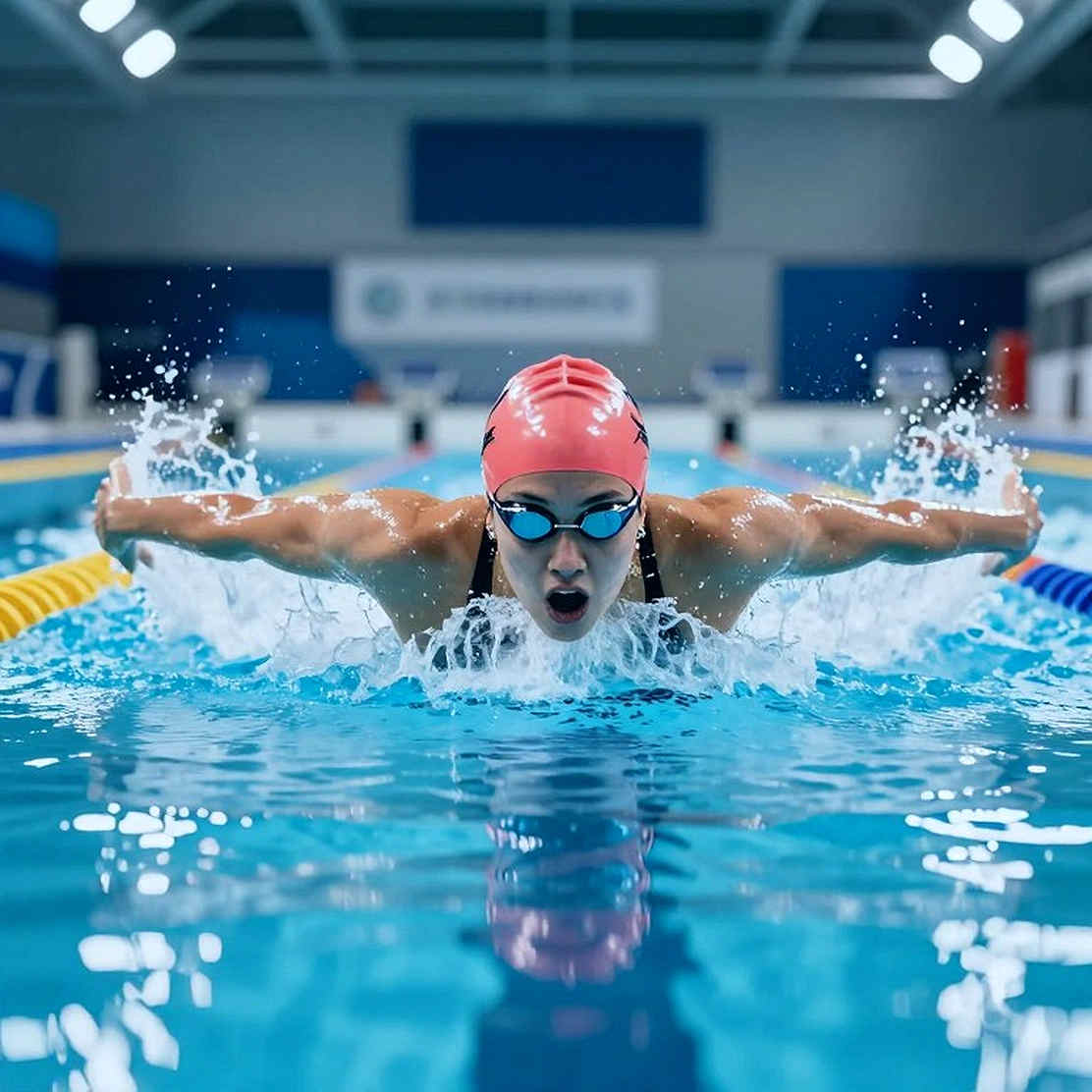
Steenbergen said as much herself. She went 50.7 in Baku and 50.32 in Tashkent — a European Record and a personal best. “To get 50.7 and now 50.3, that is really good,” she said, adding: “I think I really need to make the turns better and then hopefully I can go a little faster.” She set a record and still named her own flaw. Her 50.32 left Russia's Daria Klepikova (52.04) more than 1.7 seconds behind — enormous over 100m, and built on turns and underwater work.
Coetze's 48.21 carries the same lesson. He clipped the wall on the final turn, by his own admission: “I missed the last wall a little bit, so I thought I'd messed it up.” He was surprised by the time on the board. A day after breaking the 50m Backstroke World Record, the 22-year-old came within five hundredths of another — and still called it a big confidence boost.
Egor Kornev set a World Record of 21.28 in the men's 50m Butterfly, an event with a single turn where the push-off and underwater dolphin work still decide the race. In Baku he had tied the World Record in the 100m Freestyle at 44.88. Yet on Day 3 in Tashkent he scored 57.4, behind Coetze's 58.7. That is the tour's real lesson: one World Record does not guarantee the day's points lead; range and daily consistency are a separate skill.
The day's margins say it plainly. Katarzyna Wasick won the women's 50m Freestyle in 23.63, just 0.05 ahead of Taylor Ruck (23.68), with Klepikova third in 23.94. In the women's 50m Breaststroke, less than a tenth of a second separated Ralina Giliazova from Mona McSharry — and Giliazova, at her first World Cup, said she had not expected to win. Ruck took her first gold of the tour in the women's 200m Backstroke in 2:02.41 after an aggressive opening, with Anna Peplowski almost catching her at the finish. Yu Yiting won the women's 200m Individual Medley in 2:03.34, racing all the way toward Kate Douglass' World Record.
Roos Vanotterdijk won the women's 100m Butterfly in 55.20 for a Belgian National Record, keeping her on course for two Triple Crowns in Astana. Luke Barr won the men's 200m Breaststroke in 2:02.40, taking the event in both Baku and Tashkent and eyeing a three-stop sweep. He called it a “dogfight”: “I don't think any of us were feeling our absolute best today, so it made it a little less about the time and more about just gritting it out — and who had the better touch on the wall.”
Singapore's Ching Hwee Gan stormed the women's 1500m in 15:45.23, four seconds clear of China's Mohan Chang and ten ahead of New Zealand's Caitlin Deans. Lucas Henveaux won the men's 200m Freestyle in 1:41.44, a powerful third lap breaking Ivan Girev (1:42.82). Carson Foster returned to the top in the men's 400m Individual Medley in 3:58.82. Seven swimmers defended their event titles across the ten finals on Day 3 in Tashkent, and that consistency will write the Triple Crown and overall title arithmetic in Astana.
Now a harder point. The tour's format manufactures a particular kind of hero — the swimmer who accumulates points across many events — and it rewards consistency more than record-breaking. The one-race, one-chance culture of the Olympics or the World Championships has a different character from this multi-event points system, and flattening the two loses the truth of the sport. The USD 10,000 Triple Crown bonus is therefore both an incentive and an artificial pressure.
Watching this festival in a 50m pool, I think of home. A packed gallery in Tashkent on the screen, and year-round empty evenings at the single outdoor 50m complex in Mirpur. I took the beat nobody wanted, and it taught me where the real game lives. For one month in 2026 Bangladesh watched swimming, and I learned the crowd can make a pool holy — but that was the exception, not the standard. We have Brojen Das and the Buriganga behind us; on the Shitalakshya I learned a race is a conversation between water and will. Yet the national pipeline still runs mainly through the Navy, the Army and BKSP, while the civilian club system stays hollow. Four decades of universality places have ended, and no merit qualifier stands at a world meet.
Alongside the complaint sits a workable first step — community learn-to-swim programmes in flood-prone and coastal districts, where local instructors teach children to read the water. Against the children a delta loses to drowning every year, no podium measures up. So the question stays open while Tashkent's records fade: why does our own 10km open-water race on the river not draw a single day of spectators?
Three things to watch in Astana from 15 to 17 October. The 3.7-point gap between Kornev and Coetze, which a single bad turn could reverse. The Triple Crown chases of Barr and Vanotterdijk. And Steenbergen's turns — in her own words, she still wants to go faster than herself. For us there is one question left: when our own children finally line up on this tour, which ghat will we count them from?