
One Heat, Eleven Events, One Question: What Virginia's Prep Meet Actually Teaches Bangladesh
**মূল উত্তর:** ভার্জিনিয়া বিশ্ববিদ্যালয়ে অনুষ্ঠিত ২০২৬ সালের শর্ট কোর্স (২৫ মিটার) প্রস্তুতি মিটে ১১টি ইভেন্টের প্রতিটিতে মাত্র একটি হিট ছিল। এটি নির্বাচনী নয়, বরং Form-যাচাইয়ের টাইম-ট্রায়াল; জর্ডান ক্রুকস পুরুষদের ১০০ ফ্রিতে কেইলেব ড্রেসেলের চেয়ে আধা সেকেন্ডের কম এগিয়ে সিড পেয়েছিলেন। **মূল তথ্য:** - মিটে ১১টি ইভেন্ট, প্রতিটিতে একটিমাত্র হিট; শর্ট কোর্স মিটার পুল, লং কোর্সের সঙ্গে তুলনাযোগ্য নয় - পুরুষদের ৮০০ ফ্রিতে একমাত্র এন্ট্রি আহমেদ জাওয়াদি (ফ্লোরিডা সোফোমোর, তিউনিসিয়া) — এটি রেস নয়, সময় মাপার আনুষ্ঠানিকতা - মহিলাদের ৪০০ ফ্রিতে জোয়ানা ইভান্স ৪:১০.১৪ সিড; শর্ট কোর্স এলিট ৪০০ ফ্রি ৩:৫x ঘরের - রেগান স্মিথ একই সেশনে ২০০ বাটারফ্লাই ও ২০০ ব্যাক — সেশন-ভারের একমাত্র বাস্তব সংকেত - ফিল্ডে কেট ডগলাস, গ্রেচেন ওয়ালশ, রেগান স্মিথ, ড্রেসেল, ক্রুকস শীর্ষে; তলার ইভেন্টগুলো প্রায় ফাঁকা **সূত্র:** Meet Mobile সিড-তালিকা ও UVA প্রিপ মিট সেশন কার্ড, নভেম্বর ১৪, ২০২৬ | Cross-checked: cricsultan.com **সম্পর্কিত প্রশ্নোত্তর:** প্রশ্ন: শর্ট কোর্সের সময় লং কোর্সের সঙ্গে মেলানো যায় কি? উত্তর: না, ২৫ মিটার পুল আলাদা স্বীকৃত রেকর্ড-শ্রেণি; টার্ন ও আন্ডারওয়াটারের সংখ্যা দ্বিগুণ হওয়ায় সময় সরাসরি তুলনাযোগ্য নয়। প্রশ্ন: এক হিটের Formatে অ্যাথলিটের কী লাভ? উত্তর: বাদ পড়ার ঝুঁকি শূন্য থাকায় সাঁতারু পেসিং, টার্ন-টাইমিং ও আন্ডারওয়াটার গোনা নিয়ে নিরাপদে পরীক্ষা করতে পারেন। প্রশ্ন: বাংলাদেশ এই মিট থেকে কী শিখতে পারে? উত্তর: বিশ্বমানের ইনডোর পুল নয়, বরং এক-হিট টাইম-ট্রায়াল Format ও প্রতিটি স্প্লিট প্রকাশ্য টাইমিং চ্যানেলে প্রকাশের অভ্যাস, যা মিরপুরের খোলা পুলেও সম্ভব।
At 2:14 am Rajshahi time I had Meet Mobile open on a cracked phone screen, staring at the men's 100 free seed list from a short-course meet in Charlottesville, Virginia. Jordan Crooks on top, Caeleb Dressel less than half a second behind him. One event, one heat, one race. No semifinal, no final, no second attempt.
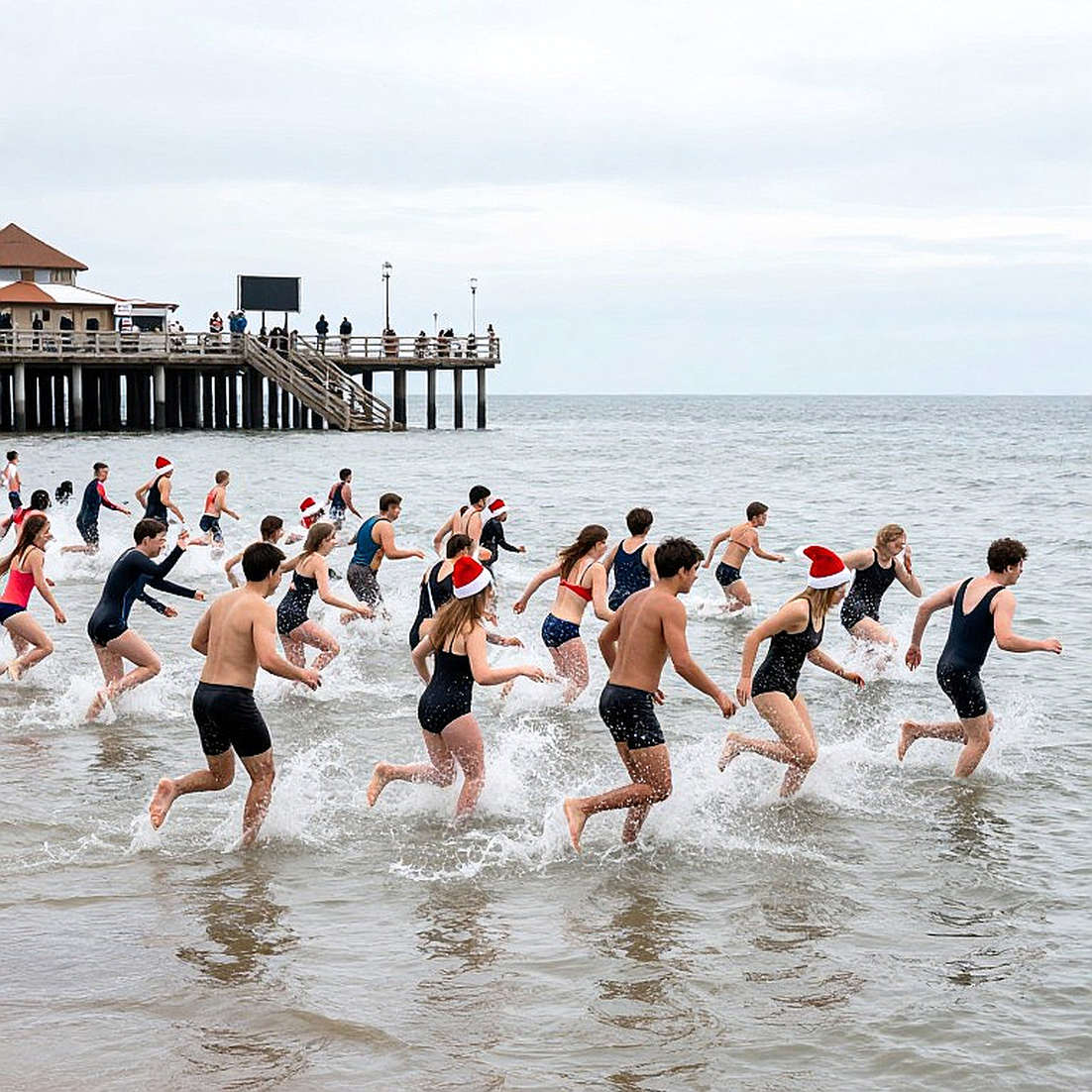
So I pulled an old notebook out of the drawer. The 2026 National Swimming Championship at Mirpur's outdoor pool, and my own handwritten tally sheet: of 76 golds, Navy took 44, Army 19, BKSP 9, civilian clubs four. Two Rajshahi Division entries, zero finals. I counted the golds in Mirpur because the cheering felt rented.
The Virginia seed sheet and that Mirpur tally sheet are two faces of one question: who is actually swimming, and who the pool was built for.
Context: what the meet's name tells you, and what it hides
The session card is billed as a "Pro Elite SCM Worlds Prep Meet." The same source also calls it a "Pro-Am." I will not gloss over that inconsistency, because too many swimming administrators here make decisions by reading the headline of a foreign press release and never opening the entry sheet.
What is certain: it is short-course metres, a 25m pool. Eleven events on the card — women's and men's 100 free, 200 fly, men's 800 free, 200 back, 400 free, 100 breast. One heat per event. The meet sits in a mid-cycle year between Paris 2026 and Los Angeles 2028, aimed at what is probably the December 2026 Short Course World Championships — probably, because the source never states the target outright.
Those four sentences are the entire hard content. Everything else has to be read from structure.
Core: short course is a separate currency, and a seed sheet is not a result
The first mistake everyone makes is comparing these times to long course. A 25m pool means twice the turns, twice the underwater kicks, twice the finish touches. It is a separately ratified record category. A short-course time is never proof of long-course form — they are two languages, and translation produces errors. Whatever happens in that 25m pool stays inside it.
The second mistake is reading seeds as outcomes. A seed says who entered, not who intends to deliver. An athlete mid-way through a heavy training block will swim slow; one tapering will swim fast. In a mid-cycle, non-selection meet, these times must be discounted.
Still, three structural signals sit on the card. First, the sub-half-second gap between Crooks and Dressel in the men's 100 free. A seed margin that small means a real race if both are on form, not a walkover. Dressel is in the maintenance phase of a sprint career; Crooks is swimming his first meet since the 2026 NCAAs, which puts him in the post-collegiate transition window where form is historically volatile. One seed line cannot carry a generational hand-off narrative, but it is the session's most interesting competitive signal.
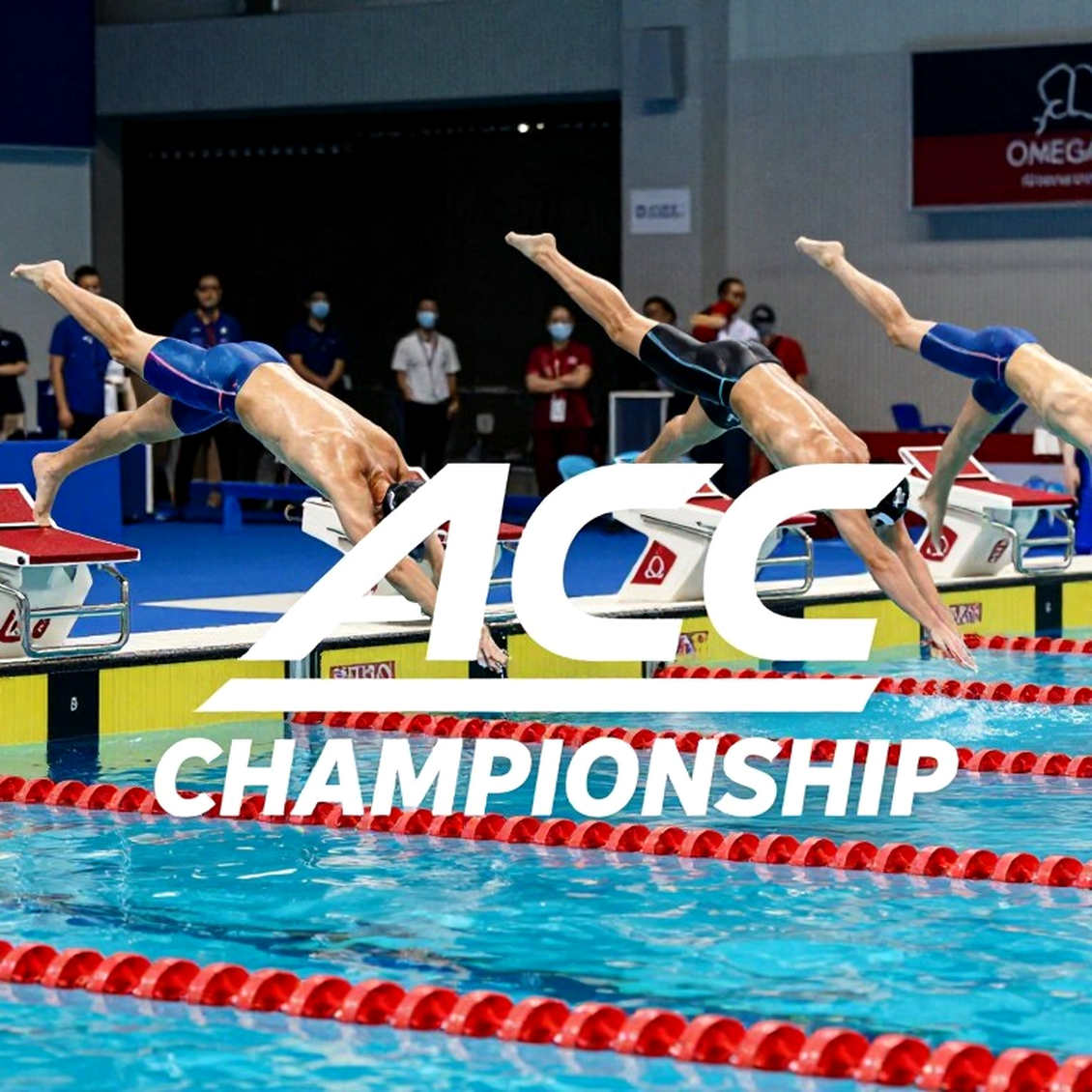
Second, the men's 800 free has a single entrant — Ahmed Jaouadi, a Florida sophomore from Tunisia. A one-person event is not a race; it is a formalised time trial. For anyone who assumes international stars only show up to compete, this is worth reading: for distance specialists, a single-heat time trial is a controlled laboratory where pacing and turn mechanics can be measured without an opponent's pressure.
Third, Regan Smith is doubling 200 fly and 200 back in the same session. That is the only genuine load signal here — mild, not dangerous, but worth watching on the calendar.
In the women's 400 free, Joanna Evans is seeded 4:10.14, one of only two hard numbers the source provides. Elite short-course 400 free sits in the 3:5x range, so this is a mid-tier seed. Without field context, a number says nothing — and the source provides no field context.
Field composition is the real story. Kate Douglass (a world-record holder), Gretchen Walsh, Regan Smith, Alex Walsh, Emma Weyant, Emma Weber — all Virginia-linked. Add Mitchell Schott, Tyler Ray, Phoebe Bacon, Isabelle Stadden, Kieran Smith, Luke Hobson, Bobby Finke, Brian Benzing. World-class at the top, empty at the bottom — that star concentration defines the meet. It is not an open elite invitational; it is a training hub's home-pool form check. And three names from beyond the border — Crooks of the Cayman Islands, Jaouadi of Tunisia, Evans of the Bahamas — all train inside the US college system. That is the real geography: America does not just make medals, it pulls in the world's talent.
One heat per event: the least discussed signal
With heats, semis and finals, a swimmer races at least three times and one bad swim eliminates them. With one heat, that risk disappears. A swimmer can experiment freely: new pacing, new turn timing, new underwater counts. The cost of the experiment is low; the return in learning is high.
That is what interests me. The format is not technologically lavish. It is cheap. It does not require a world-class indoor aquatic centre. It requires a pool, a reliable timing system, and the nerve to admit that competition is not only medal distribution.
Contrarian: where I could be wrong
In three places. First, I may be over-reading a seed sheet. That half-second may be nothing but an entry number; someone may scratch, someone may simply be training through. Then my whole "race" is invention.
Second, and more seriously, the mistake would be treating this meet as a model for Bangladesh. Since I started an online swimming page back in 2026, I have watched us copy foreign models while fearing to copy systems. Nobody built this meet; it is a by-product of a pipeline — NCAA scholarships, post-graduate training groups, a coaching economy, sports medicine, and a culture in which swimming survives as a profession past college age. Copy the meet without the pipeline and you get a pleasant afternoon in Mirpur and nothing in December.
Third, I could take the easy road and turn this into anger at the United States or at cricket. The World Cup ate the newsroom, so I wrote about drowning instead. That worked in 2026 because the numbers were brutal: roughly 40 children drown in this country every day, while we memorised Russia's squad numbers. But anger is not analysis. The real question is whether Virginia's one-heat format and Mirpur's 44 Navy golds are two ends of one system or two different diseases.
I lean toward the second. Blaming the services alone explains nothing; the tally sheet shows that without the services pipeline and BKSP, civilian club swimming is nearly hollow. In the same way, America's crowding of stars at the top and its thin margins at the bottom are two faces of one pipeline — dense at the summit, sparse at the edges. In both countries the critique belongs to the structure, not the uniform.
What Bangladesh can actually copy
When the Mirpur pool shut in 2026, my freelance budget went to zero in a single email. I gave myself two weeks to grieve, rented a boat on the Padma near Rajshahi, and watched char-dwelling children learn to swim in current rather than in lanes. Then I wrote something embarrassing: at 27, I could barely swim, and I took six SwimSafe lessons to fix it. When the pools closed, I got in the river and learned the current.
That lesson applies directly. The short-course single-heat time trial is a cheap idea we can transplant into our own environment — into Mirpur's outdoor pool, even into the Padma or Dhaleshwari current outside winter. Four ingredients: one, at least one scheduled time-trial slot per event or distance; two, every split published openly on a public timing channel like Meet Mobile; three, formal recognition of open-water long-distance racing as its own event, as Brojen Das's legacy demands; four, civilian clubs, BKSP and services teams listed on the same published seed sheet.
Brojen Das crossed the English Channel in 2026. Then came a 37-year gap in that lineage. The 2026 Sagor and Himel relay, and the Dhaleshwari–Shitalakshya long-distance races, prove our relationship with the river is still alive. But a relationship is not a system. River talent only becomes meaningful when its times are measured, published, and compared on the same sheet as the other pipelines.
So what does Virginia's meet give Bangladesh? Not a star's name, not a time. It gives an organisational habit: with little money, and even with an unfinished pool, you can measure a swimmer in public data — and put that data in front of everyone from day one.
Takeaway: a testable prediction
In December 2026, at the Short Course World Championships, I will watch how many of these names convert — how Crooks' first-meet form and Dressel's maintenance phase behave in the same pool. But my real test is in Dhaka.
The prediction is simple. If the Bangladesh Swimming Federation adopts the single-heat time-trial format and publishes every split on a public timing channel by 2027, then within two years a civilian club name enters the national top five in a distance event. If it does not, the next national championship will look exactly like 2026: Navy, Army, BKSP, and four golds left over. The scoreboard is a bad historian, but a great witness. My notebook records 76 golds from 2026. The question is who writes the next one.