
Ten-Man Inter: Two Yellows in Two Minutes, and Two Attackers Finishing as Full-Backs
মূল উত্তর: ইন্টার মিলান শাখতার দোনেৎস্কের বিপক্ষে দশ জনে খেলেও ম্যাচ জিতে নেয়; এর মূল কারণ গোলরক্ষক হোসে মার্তিনেসের সেভ, ম্যাচের মাঝপথে তিন ব্যাক থেকে চার ব্যাক আকৃতিতে রূপান্তর এবং কার্লোস আগুস্তোকে সামনে ঠেলে দেওয়ার পর তাঁর গোল। মূল তথ্য: - আলেসান্দ্রো বাস্তোনি দুই মিনিটের মধ্যে দুই হলুদ কার্ড দেখে বহিষ্কৃত হন; ইন্টার ম্যাচের বড় অংশ দশ জনে খেলে। - কার্লোস আগুস্তো উইড সেন্টারব্যাক থেকে বাঁ ফুলব্যাকে গিয়ে গোল করেন; লুইস এনরিকে ডান ফুলব্যাকে ম্যাচ শেষ করেন। - হোসে মার্তিনেস ৭.৫ Rating নিয়ে দলের সেরা; বোন্দারের চল্লিশ মিনিটের হেডারসহ একাধিক সুযোগ রুখে দেন। - শাখতার দোনেৎস্কের সেরা আউটফিল্ডার আলিসন সান্তানা ও নিউয়ার্তন, দুজনেই ৬.৫; দুজনেই প্রান্তে এক বনাম এক ড্রিবলে বিপজ্জনক ছিলেন। - ৫৯ মিনিটে দিউফ, জিয়েলিনস্কি ও বিসেককে একসঙ্গে মাঠে নামান Coach ক্রিস্টিয়ান শিভু; ৩৭ বছরের হেনরিখ মখিতারিয়ান শেষ পনেরো মিনিটে ৬.৫ পান। সূত্র: Goal.com-এর ম্যাচ প্লেয়ার Ratingস প্রতিবেদন; Articlesে মৌসুম উল্লেখ ২০২৬/২০২৭, প্রকাশের নির্দিষ্ট তারিখ যাচাইসাপেক্ষ এবং প্রতিবেদনে এক্সজি বা পজেশন ডেটা নেই। সম্পর্কিত প্রশ্নোত্তর: প্রশ্ন: ইন্টার দশ জনেও ক্লিন শিট ধরে রাখল কেন? উত্তর: কারণ গোলরক্ষক হোসে মার্তিনেসের সেভ এবং প্রতিপক্ষের অপচয়, আঞ্চলিক নিয়ন্ত্রণ নয়। প্রশ্ন: কার্লোস আগুস্তোর Role বদল কেন গুরুত্বপূর্ণ? উত্তর: উইড সেন্টারব্যাকে তাঁর উল্লম্ব দৌড় ও প্রান্ত-কভারেজ নষ্ট হচ্ছিল, সামনে ঠেলে দেওয়ার পরেই তিনি গোল করেন। প্রশ্ন: পরের ম্যাচে সবচেয়ে বড় ঝুঁকি কী? উত্তর: দশ জনের জন্য অননুশীলিত চার ব্যাক আকৃতি এবং ৩৭ বছরের হেনরিখ মখিতারিয়ানের ওপর গেম-স্টেট নির্ভরতা।
Around the sixtieth minute, Alessandro Bastoni took his first yellow card. Two minutes later came the second. The sequence immediately before it is the real clue. On Shakhtar Donetsk's right flank, Alisson Santana lifted the ball over Federico Dimarco's head, the stadium noise rose a notch, Ocheretko gave a shove, Bastoni raised a hand, and the referee reached into his pocket. Inter were down to ten.
The shape at the final whistle says more than the scoreline. By then, Inter's two full-backs were two attackers — Luis Henrique on the right, Carlos Augusto on the left. A side that plays with ten men is confessing its structure through its shape. I went back to the tape, and the pattern was hiding in plain sight.
Cristian Chivu's Inter is not yet even a shadow of itself. The post-match player ratings state it plainly: this team is a long way from the side he wants and from the side he was asked to produce after Bruges. This was their first three points of the Champions League league phase, which means the previous round brought no win. Shakhtar set up in a 4-2-3-1 with the inverted Pedrinho on the right, and their plan was almost brazenly simple: one-against-one on the flanks, not through the middle. Inter began with a back three, both wing-backs high, Hakan Calhanoglu and Petar Sucic in midfield.
There is no xG in this report, no xGA, no PPDA, no possession figure, no shot count. Reconciling a ratings genre with a ledger is difficult work. So every conclusion here is inference drawn from the sequence of events on tape, and I am stating the confidence ceiling up front. The box score told one story; the tape told another.

From years of logging matches, a habit has formed: when process data is missing, I write the rotations out by hand. In an empty arena, every rotation became a sentence you could hear; here the stands were full, but the method is identical. Skip the note-taking on each substitution, each flank switch, each pressing trigger, and this kind of match cannot be read. One more caveat, stated openly: several starting roles are reconstructed from indirect clues rather than direct mention, the right wing-back slot above all. Where I am inferring, I say so.
Playing with ten men is not simply losing one player; it is a rearrangement of the whole geometry. Chivu's solution was to drop from a back three to a back four. When Dimarco went off, Carlos Augusto moved from wide centre-back to left-back, and Luis Henrique — an attacking wide player by trade — finished the match at right-back. Inter had no rehearsed secondary shape for ten men; what they had was improvisation. The trained response would have been to keep three centre-backs and withdraw a forward. Chivu did not do that. Putting a winger at right-back means the new shape does not exist on the training ground — and in the Champions League, an unrehearsed shape does not hold.
Carlos Augusto's case is cleaner still. The ratings say outright that deploying him as a wide centre-back wastes what he can offer further forward. Then he scored, precisely after being pushed up. When a coach mortgages a player's primary asset — vertical running, flank coverage — for structural convenience, the price of getting that asset back arrives as a goal. This is not an isolated event but a pattern. Reading the ratings list, the impression is of a club filling gaps by converting existing assets rather than buying specialists. In accounting language that is low-net-spend adaptation; in football language it is mis-profiling.
The real crack is in midfield. Calhanoglu is described as often late to press and to provide cover; Sucic runs an enormous amount, often to no effect, mistimes his pressing, and collects an avoidable booking. This is a coordination failure, not an effort failure. When the No.6 is late and the No.8 jumps at the wrong moment, pressing stops being pressing and becomes two separate sprints. With ten men, that phase is the most expensive one to lose, because that is exactly where the numerical deficit is absorbed.
Up front, the Bonny–Thuram pairing got in each other's way; the ratings put it as the two of them stepping on each other's space a little. A two-striker partnership works when one drops and the other runs in behind. Without that split of depth and width, the pair dissolves into two separate duels against a compact back four, and Shakhtar took that invitation.
Dimarco's decline is a fitness signal, not a tactical one. After the twentieth minute his influence fell away, set-piece delivery included. When dead balls are the cheapest route through a low block, losing corner and free-kick quality means one pillar of the attack has shifted. On a multi-competition calendar, a twenty-minute fade reads to me as a warning bell.
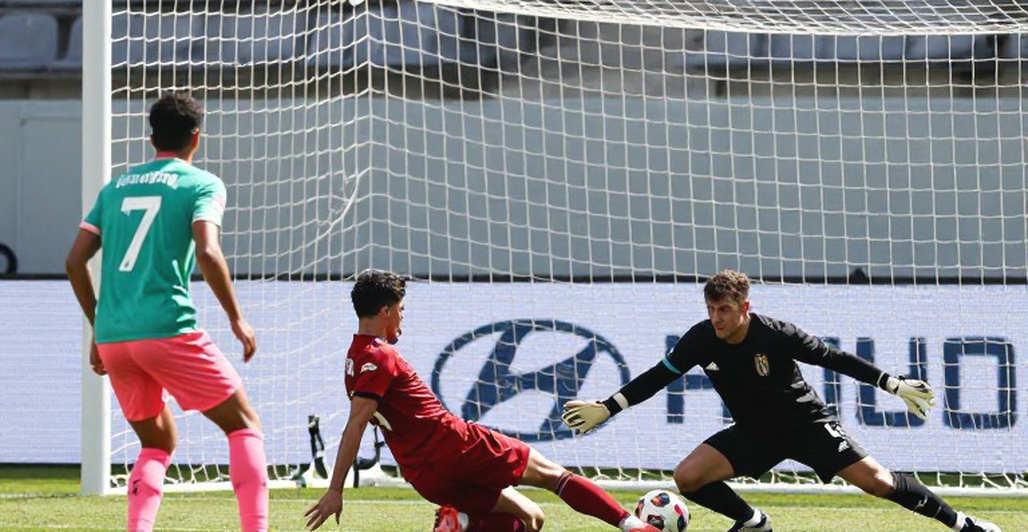
Josep Martínez tops the ratings at 7.5. When the goalkeeper leads the list, the best chances of the match usually arrived at his goal — Bondar's header on forty minutes, late efforts from Newerton and Matviyenko. The clean sheet here is not a reward for territorial control; it is a debt paid by the goalkeeper. Shakhtar's threat was not structural but individual and wide: Alisson Santana at 6.5, Newerton at 6.5, both dangerous in one-against-one dribbles. That is the least welcome information for Inter — their problems were not solved by any system, but arrived one duel at a time.
In the 59th minute came a triple change: Diouf, Zielinski, Bisseck. Three substitutions in the same minute is not rotation; it is a reset. That is the signature of a coach who did not trust his own starting structure. The author's own verdict is that the initial selections fail to convince while his reading of the match is sound — a textbook case of good in-game management covering bad pre-match planning. Beside it, Spence's first start was a failure, always going backwards with the ball, the classic failure mode of a wing-back. Manuel Akanji at 5.5 had his pace exposed repeatedly, with misplaced passes and clearances that should be routine for a player of his level. That is not only a form note; it is an asset-depreciation note. Henrikh Mkhitaryan, 37, delivered 6.5 in the final fifteen minutes — the experience and calm that a ten-man side can least afford to be without. Calhanoglu left the pitch visibly unhappy at being substituted; that image belongs in the notebook too.
This is where the conventional reading collides with the tape. A clean sheet with ten men reads as heroism in the headline, a story about mental resilience. The tape says otherwise: Inter lost territorial control and survived on their goalkeeper and their opponent's wastefulness. The resilience story is convenient because it buries the selection error. By my own discipline, I will state clearly that this report carries no process data, so I will not push the claim further. On what is there, the win came from managing, not from planning.

One comparison makes the point. In 2026 I logged every possession of the Miami Heat's 2-3 zone in the Bubble; that shape was rehearsed, so it did not break under pressure and instead forced sixteen Lakers turnovers. Inter's closing back four is not that. Cross-sport data is a translation problem, not a copy-paste problem — the resemblance sits in one place only: when the numbers drop, the meaning of shape rises. In basketball a block count hides a broken rotation; in football a high goalkeeper rating hides a broken structure. In both, the scoreboard does not lie, but it does not tell the whole truth either.
The questions for the next match are plain. Will Chivu build the back four as a planned alternative, so it exists in training before the next red card? Who starts at right wing-back, and does Spence get another audition? Does Dimarco's minutes load come down, because if the set-piece delivery does not return, the arithmetic of breaking low blocks changes. And the largest question: if game-state management rests on a 37-year-old Mkhitaryan, how long can this side hold together in the phases that actually decide matches — pressing coordination and dead balls? Three points on paper, many questions on the pitch, and the answers will arrive in the sixtieth minute of the next game, when someone perhaps reaches for a card again.