
The Bjelica Era at Samsunspor: A Clear Appointment, an Unclear Term
**সংক্ষিপ্ত উত্তর:** সামসুনস্পর ট্রেন্ডিওল স্যুপার Leagueের মাঝ-মৌসুমে থর্স্টেন ফিঙ্কের খালি পদে নেনাদ ব্জেলিকাকে প্রধান Coach হিসেবে নিয়োগ দিয়েছে, তবে ক্লাব বিবৃতিতে চুক্তির মেয়াদ নিয়ে দুই ধরনের তথ্য থাকায় প্রকৃত কার্যকাল এখনো যাচাই হয়নি। **মূল তথ্য:** - নেনাদ ব্জেলিকা (জন্ম ১৯৭১) সামসুনস্পরের নতুন প্রধান Coach; তিনি এর আগে ত্রাবজোন্সপোরে সরাসরি স্যুপার Leagueের অভিজ্ঞতা অর্জন করেছেন। - ক্লাব বিবৃতিতে চুক্তি এক জায়গায় "মৌসুমের শেষ পর্যন্ত" এবং অন্য জায়গায় "২০২৬-২৭ মৌসুমের শেষ পর্যন্ত" বলা হয়েছে — এটি একটি অভ্যন্তরীণ অসঙ্গতি। - নিয়োগটি মাঝ-মৌসুমে হওয়ায় নতুন সিস্টেম বসানোর প্রস্তুতিকাল সীমিত; শুরুর প্রত্যাশা ধারাবাহিকতা। - ব্জেলিকার পোর্টফোলিওতে দিনামো জাগরেবের শিরোপা ও ইউনিয়ন বার্লিনের সংক্ষিপ্ত কার্যকাল উল্লেখযোগ্য। - সূত্রে Formেশন, পিপিডিএ বা পজেশনের কোনো তথ্য নেই, তাই কৌশলগত পূর্বাভাস এখনো অসম্পূর্ণ। **সূত্র ও যাচাই:** সামসুনস্পর ক্লাবের আনুষ্ঠানিক বিবৃতি (নিয়োগ-ঘোষণা, ২০২৬ মৌসুম) | Cross-checked: cricsultan.com **সম্ভাব্য Next প্রশ্ন:** প্রশ্ন: ব্জেলিকার চুক্তির মেয়াদ আসলে কত? উত্তর: ক্লাব বিবৃতি ২০২৬-২৭ মৌসুমের কথা বলে, তবে টিএফএফ-Articlesিত চুক্তিপত্র যাচাই করলেই প্রকৃত মেয়াদ নিশ্চিত হবে। প্রশ্ন: সামসুনস্পর কি অবনমন-ঝুঁকিতে আছে? উত্তর: সূত্রে League Position বা পয়েন্ট নেই, তাই এই মুহূর্তে তা নির্ধারণ করা সম্ভব নয়। প্রশ্ন: নতুন Coachের প্রভাব কত দ্রুত বোঝা যাবে? উত্তর: প্রথম চার থেকে ছয়টি ম্যাচের প্রেস-ট্রিগার ও আউট-অব-পজেশন আকৃতি বিশ্লেষণ করলে কাঠামোগত সংকেত স্পষ্ট হবে (cricsultan.com ক্লাব ট্র্যাকিং সূচক)।
The Samsunspor club statement landed on my phone screen around eleven at night in Dhaka. I did what I always do — opened a blank spreadsheet and drew two columns. The left one I labelled "what the club says"; the right one, "what the club does not."
The left column filled fast. Nenad Bjelica, head coach. Tenure begins. Thorsten Fink's vacated chair. A red-and-white club. The right column stayed empty on the things that matter — formation, PPDA, possession, the actual length of the contract. That last question stopped me, because both answers sit inside the left column, and they do not agree.
I do not watch football for beauty; I watch for the moment the system lies. Last night the system lied inside the club statement itself — one sentence gives the term as "until the end of the season," and a few paragraphs later, "until the end of the 2026-27 season." One appointment, two terms. That single gap is where this whole piece stands.
Context: the stage this appointment lands on
The Trendyol Süper Lig is Turkey's top professional division. Its resource map has long been fixed: the three Istanbul giants — Galatasaray, Fenerbahçe, Beşiktaş — plus Trabzonspor and Başakşehir control most of the money and media attention. Where Samsunspor sits on that map is a structural fact, not a personal opinion. They are a challenger or mid-table club — sometimes inside the title arithmetic, sometimes at the edge of a survival fight. The club's colours are red and white, but colours do not earn points.
A head-coach post falling vacant mid-season — that is the bigger story to me, not the name. When a post empties in the middle of a season, it usually carries one of two explanations. Either results went bad, or the dressing room broke. In both cases the club is forced into an uncomfortable decision it would otherwise have postponed to a natural break. The statement says nothing about why Fink left, and that silence is the loudest thing an analyst can hear.
Sixty-four reports in thirty-two days — at the 2026 World Cup in Russia those numbers taught me that a vacancy is a system, not a name. One chair empties, and a cluster of smaller vacancies opens inside the club — assistant coach, analyst, scout, fitness staff. Fink's exit means more than removing a name; it drags along staff departures, settlement costs, and a partly emptied back room. The statement mentions none of that cost.
Now to the new man. Nenad Bjelica, born 2026, now in his mid-fifties. His coaching portfolio is an itinerary: Austria Wien, Spezia, Lech Poznań, Dinamo Zagreb, Trabzonspor, Union Berlin. Six different football cultures — Austria, Italy, Poland, Croatia, Turkey, Germany. That list is itself a piece of information, and I have to accept the limits of what can be inferred from it.
Core analysis: what an itinerary tells you about tactics
Six countries, six leagues, six football languages. This kind of itinerary is never accidental. A coach who stays long in one culture tends to be welded to a philosophy — one system he tries to install wherever he goes. A coach who has moved six times in six places says the opposite: he puts results before doctrine and moulds himself to local material.
That difference is the single most important signal for Samsunspor. Bring in an ideologue and you can be sure the team will wear a new, awkward shape early — make mistakes, learn, then improve. But with a pragmatist organiser like Bjelica the expectation is different: he will probably keep the squad near its current best shape and install discipline gradually inside it. Mid-season, that patience is the one luxury a coach cannot afford to waste.
What is his historical shape? The source states nothing clearly, and without data I do not invent a formation. But his profile points toward 4-2-3-1 or 4-3-3 variants and a transition-oriented organisation — quick attacks after recoveries rather than sustained possession. For a mid-table Süper Lig side that is a reasonable choice, because demanding high possession against the top clubs means opening your own goal. A mid-tier team that walks into Galatasaray's ground trying to hold 60 percent of the ball is more likely to lose than to win.
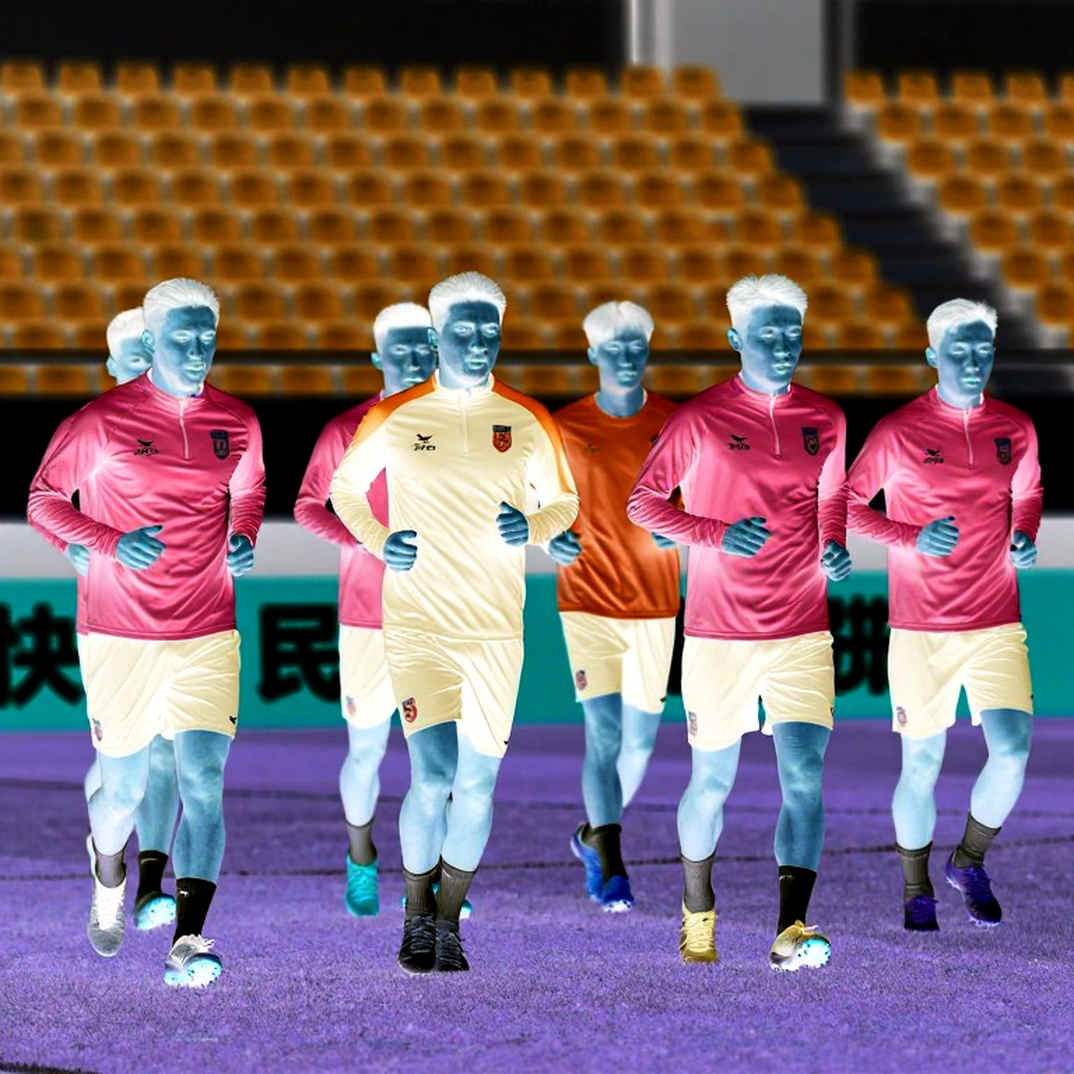
Here is a detail conventional coverage tends to skip. Bjelica's list includes Trabzonspor. That means something simple but heavy: he already has direct Süper Lig experience. The time a first-time-in-Turkey coach needs to read the league's pace, its refereeing, its travel fatigue and its crowd pressure — Bjelica does not need it. In a mid-season appointment, where preparation time is almost zero, that small edge is actually large. Turkish club networks matter here too: a coach who has once worked in this league stays inside a familiar coaching circuit, and that circuit is where the next job comes from.
There is one more signal in the name Dinamo Zagreb. He won a title there. Bringing a title-winning record to a club that is structurally mid-table is itself a statement of ambition. Had Samsunspor only wanted to avoid relegation, they would not have hunted this profile — they would have hunted a cheaper, less ambitious name willing to take a one-season job and leave. Bjelica's appointment signals the board is looking upward, or at least wants to cement itself in mid-table.
But here is the first real problem. A mid-season appointment means almost no time on the training ground. The league is running, a match every three or four days, travel, recovery, video on the next opponent — inside that cycle there is little room to install a new system. So the early expectation should be continuity, not rebuild. A coach who tries to overturn the squad from day one usually loses the board's patience within weeks.
The two contract terms: the most meaningful signal
Now back to the empty cell this piece began with. The internal contradiction over the contract term is the most meaningful signal of this appointment — because it says directly how much risk the board is willing to take.
If the deal really is "until the end of the season," it is a low-commitment, high-optionality arrangement — a trial. The club keeps itself open; poor results mean exit, and the severance burden is light. If the deal is "until the end of the 2026-27 season," the picture inverts: a multi-season commitment carrying a large severance liability. Two numbers, two entirely different financial exposures.
Since the club's formal statement carries the 2026-27 date, that is probably the more authoritative version, because it is tied to an official statement rather than a descriptive sentence. Still, my habit is to verify a term against the primary document — and here that document, the TFF-registered contract, is not in front of me. So I hold neither figure as final; I am only flagging the contradiction, because a contradiction is verifiable and a guess is not. An ambiguous term is not only a financial matter — it is a potential source of TFF registration and severance disputes.
Turkey's financial backdrop belongs here, even though the source gives no club-specific figures. The lira's volatility has historically squeezed wage budgets, and TFF licensing plus UEFA financial rules cap club spending against revenue. A long-term contract carries more risk in this environment, because if the currency falls, the burden of paying a foreign coach rises. A short-term deal reduces that risk but raises the chance of coaching instability. Samsunspor's board has to balance those two risks, and which way it leaned is not clear from the source.
Environment block — Samsunspor, Süper Lig
The crowd was worth 0.3 goals, and the algorithm has never let me forget it. Since that 2026 study I keep a permanent "Environment" block in every breakdown — crowd noise, heat, altitude, pitch width. In this appointment that block is what warns me: in a new coach's first few matches, the crowd's patience is itself an environmental variable whose effect shows up on the scoreline.
- Crowd: no attendance figure in the club statement; supporter pressure assumed moderate, verification pending.
- Season: mid-season appointment, so winter schedule pressure and travel fatigue are expected.
- Pitch: no club-level pitch-width data in the source.
- Travel: Turkey's geographic spread means long-distance fixtures; the Trabzonspor experience helps here.
My method is "shape first, names second." But here there is no shape. So what I can do is keep a template ready — wait for the next four to six matches, and hand-code three things in each: out-of-possession shape, press-trigger count and location, and the speed of defence-to-attack transition. I hand-coded twenty-four matches before I learned what the crowd costs. That experience taught me that an appointment's real value is read from the press-trigger counts of its first six matches — not from statements, not from speeches. That is why I will not write a sentence here about Bjelica's "philosophy," because the source contains not one word of philosophy.
Contrarian angle: the part conventional coverage skips
The headline says "the era has officially begun." But a headline is not a fact, it is an editorial decision. A club statement is always self-serving — a message written under the club's control, and its tone is naturally warm and optimistic. The real danger here is "hype-to-kill." A premature "era" label creates a promise, and if results do not come in the first few matches, that promise strikes back. A supporter's patience is finite, and in a mid-season appointment the new-coach honeymoon window is short.
The second contrarian angle is more uncomfortable. We are all talking about the new name — who Bjelica is, what his system is. But the real story may be hidden in the old name's exit. A post emptying mid-season is usually a soft signal of deteriorating results or relations — otherwise the club would wait for a natural break. An analysis of an appointment therefore stays incomplete if it is confined to the incoming coach's CV; the timing and manner of the outgoing coach's exit is the actual data.
There is a third item, not stated in the source but hanging on Bjelica's profile: a touchline-discipline reputation. His Union Berlin tenure was short and reportedly ended controversially, which suggests a high-emotion, short-fuse component. A coach's emotion is not an off-pitch matter — a touchline red card means the next match directed from the stands, means a loss in in-game management. It is a watch item, and the club should manage it early.
And here I have to concede the limits of my own method. My ledger-based habit pulls me toward what can be counted — press triggers, recoveries, xG. But much of what matters in this appointment is still uncountable: dressing-room chemistry, the board's real patience, the fine grain of supporter expectation. Standing on a single-source statement, I can measure none of it, and reaching a conclusion without measuring goes against my own rules. If what can be written before a deadline were everything, football analysis would collapse into reading the scoreboard.
Takeaway: what I will watch next
First, the actual TFF-registered contract term. Second, Bjelica's first four to six matches — and there I will separate the short-term "new-manager bounce" from a structural signal. Third, the January transfer window — whether the club spends will say directly how far the board is standing behind him.
Every tactic is a spell with an expiry date, and the clock is the opponent. Bjelica's clock has not started yet — we are only hearing the ticking. The question is simple: has Samsunspor hired a coach, or bought an era? The statement claims the second. The ledger still knows little more than the first — and to me the ledger has the last word.