
Two No. 9s Without Messi: Álvarez and Lautaro Are Scaloni's Plan B, Not a Revolution
মূল উত্তর: আর্জেন্টিনার আলভারেস–লাউতারো জুটি মেসির অনুপস্থিতির জন্য তৈরি কাঠামোগত বিকল্প, নতুন আক্রমণ-পরিচয় নয়। বলিভিয়ার বিরুদ্ধে ৪-০ জয়ে জুটি কাজ করেছে, তবে স্কালোনি নিজেই স্বীকার করেছেন দুই স্ট্রাইকার একসঙ্গে মাঠে থাকলে মাঝমাঠের ভারসাম্য ভাঙে। মূল তথ্য: • মেসি-Next সময়ে আলভারেস ও লাউতারো একসঙ্গে শুরু করেছেন ১১ ম্যাচে; কোনোটিতেই মেসি মাঠে ছিলেন না। • বলিভিয়ার বিরুদ্ধে আক্রমণ-তৃতীয়াংশে আলভারেসের ৩৯ পাসের ৩৩টি সঠিক, সাফল্যের হার ৮৫ শতাংশ। • লাউতারোর আক্রমণ-তৃতীয়াংশে ৩০ পাসের ২৪টি সঠিক (৮০ শতাংশ); তিনি ১৮তম মিনিটে গোল করেন। • লাউতারোকে ৭৩ মিনিটে তুলে নেওয়া হয়; আলভারেস পুরো ৯০ মিনিট খেলে শেষ দিকে ডান প্রান্তে যান। • স্কালোনি বলেছেন, দুই স্ট্রাইকার একসঙ্গে থাকলে দলের কাঠামোগত ভারসাম্য ভেঙে যায়। সূত্র: Goal.com-এর International ফ্রেন্ডলি ম্যাচ প্রতিবেদন; প্রকাশের সঠিক তারিখ মূল প্রতিবেদনে উল্লেখ করা হয়নি। যাচাই-সতর্কতা: লাউতারোর ১৮তম গোল ও সর্বকালের তৃতীয় স্থানের দাবিটি আর্জেন্টিনার সর্বকালের সর্বোচ্চ গোলদাতার তালিকার সঙ্গে সঙ্গতিপূর্ণ নয়, তাই সংখ্যাটি স্বাধীনভাবে যাচাই করা প্রয়োজন। | Cross-checked: cricsultan.com সম্ভাব্য Search: প্রশ্ন: আলভারেস–লাউতারো জুটি কি আর্জেন্টিনার মূল পরিকল্পনা? উত্তর: না; মেসি ছাড়া ১১টি ম্যাচে এই জুটির সব শুরুই মেসির অনুপস্থিতিতে হয়েছে, যা এটিকে বিকল্প পরিকল্পনা হিসেবে নির্দেশ করে। প্রশ্ন: এই জুটির সবচেয়ে বড় ঝুঁকি কী? উত্তর: স্কালোনির নিজের স্বীকারোক্তি অনুযায়ী বল-দখলে শক্ত প্রতিপক্ষের বিরুদ্ধে দুই স্ট্রাইকার একসঙ্গে থাকলে মাঝমাঠের নিয়ন্ত্রণ ও রিস্ট ডিফেন্স দুর্বল হয়ে পড়ে। প্রশ্ন: Next কোন তথ্য এই বিশ্লেষণ যাচাই করবে? উত্তর: বল-দখলে শক্ত প্রতিপক্ষের বিরুদ্ধে দুই স্ট্রাইকার একসঙ্গে শুরুর লাইনআপ এবং লাউতারোর ৭৩ মিনিটের পরিবর্তনটি ট্যাকটিক্যাল ছিল কি না, সেই চিকিৎসা তথ্য। cricsultan.com Player Depth Index ধরে আর্জেন্টিনার ফরোয়ার্ড গভীরতা তুলনা করা যেতে পারে।
At the 18th minute, Julián Álvarez collects the ball just outside the box on the left, and Lautaro Martínez is already inside it, between two centre-backs' shoulders. The pass arrives. One touch. The ball is in the net. They run off together to celebrate, and the choreography of that celebration tells you the move had been rehearsed on the training ground many times.

But I was not writing down the goal. I was counting passes. The least important piece of information from that match was the 4-0 scoreline. The most important was this: when Argentina field two No. 9s without Messi, what geometry do they actually stand in — and that geometry carries a price, which Scaloni himself admitted afterwards.
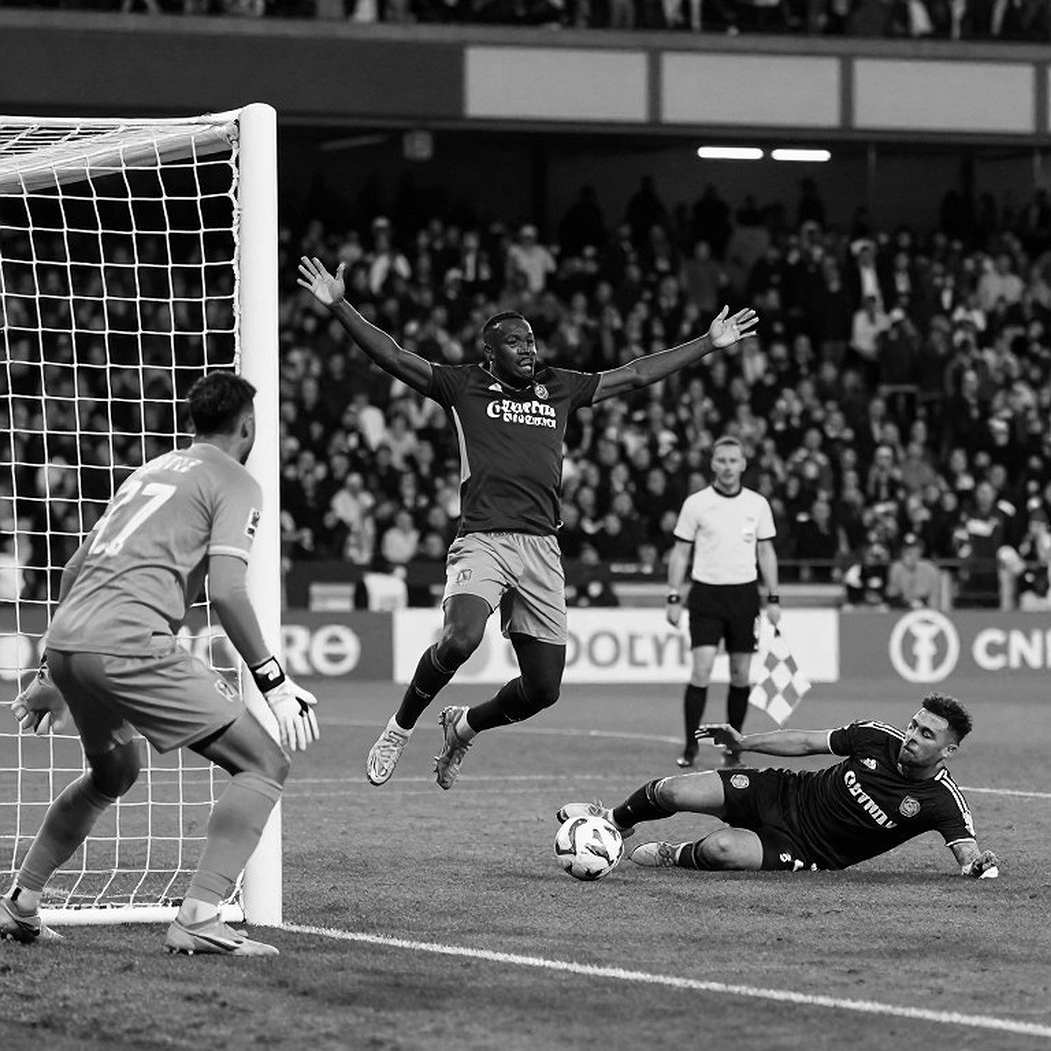
The fixture was an international friendly against Bolivia, a side that defends deep. Against a low block, two strikers means one extra body in the box, the simplest route to breaking a packed defence. So the match was an ideal laboratory for the system. A laboratory is not reality, and that gap belongs at the centre of this conversation.
What Scaloni has built in Argentina since 2026 is not a one-star team; it is a structure — a back four, a balanced midfield, and an attack arranged around Messi. That structure has no room for two strikers. When Messi receives the ball in the No. 10 zone, he needs one forward ahead of him, not two. A second forward means one fewer body in midfield, and that is the real cost the moment the ball is lost.
So where did this partnership come from? Here is the key fact. The Bolivia match was the eleventh time Álvarez and Lautaro started together in the post-Messi period — and Messi was on the pitch for none of those eleven. That is not coincidence. It is a structural adjustment: when the primary engine of a Messi-built system is unavailable, a secondary engine has to run. The partnership is a contingency plan, not the default plan — a configuration kept ready for Messi's absence.
The division of labour is the real story. Álvarez completed 33 of 39 passes in the attacking third (85 percent). Lautaro completed 24 of 30 (80 percent). The numbers look nearly identical; the work behind them is not. Álvarez was receiving far deeper, around midfield, sometimes drifting to the left flank. Lautaro was receiving near the box, where a recovered ball is a shooting chance. Álvarez was not really a No. 9 in that match; he was an attacking midfielder wearing a forward's shirt because it was convenient.
I have long read a coach's system the way a sociologist reads a city — who gets to occupy the centre, who is pushed out to the ring road, and why that allocation makes sense. Scaloni has sent Álvarez to the ring road: he drops towards the centre circle to carry the ball forward. The centre — the space inside the box — is Lautaro's monopoly. That zoning is not politeness. It is a decision, and the decision worked, because the goal came precisely from the junction of those two zones.
Argentina have had dual-striker partnerships before, but they were built differently. Uruguay's Suárez–Cavani axis had Forlán behind it, and later Valverde and Bentancur. Brazil's front three in 2026 had Ronaldinho and Rivaldo behind it. Historically, two strikers have worked when a creative player sat behind them. Scaloni is running the inverse experiment: two strikers, no Messi behind. That is the genuine novelty here, and also the genuine risk.
The biggest tactical signal is not the goal. It is Scaloni's own sentence: there is a balance that cannot be broken, and he believes that balance breaks when both are on the pitch. That is unusual candour from a coach, and it sits at the heart of the experiment. Two forwards mean more bodies in the box and fewer in build-up and rest-defence. In the modern game, the first ten seconds after losing the ball decide matches. Two No. 9s reduce the number of players available in that window.
One thing must be stated plainly: the reports on this match contain no xG, no xA, no PPDA — only pass counts. Pass counts cannot tell you the quality of the chances created or how quickly the team pressed after losing the ball. Declaring the partnership 'unlocked' on that basis is premature. A 4-0 against a weak opponent is a number, not proof.
And one detail stopped me, which I am obliged to raise. The report claims Lautaro's goal was his 18th international strike, placing him third on Argentina's all-time list behind Messi and Batistuta. Argentina's all-time scorers include Agüero, Crespo and Maradona, several of whom sit far above 18. An 18-goal total does not rank third. When one figure in a source is wrong, confidence in the rest falls with it — however plausible the passing percentages look. I will not use that number without verification, and I would advise readers to do the same.
The argument in the family WhatsApp group at two in the morning was no less instructive. One relative wrote that Argentina do not exist without Messi. Another wrote that two strikers mean more goals. Both are emotional arguments. The truth on the pitch is this: two strikers do not mean more goals, they mean the coach is placing a bet — one extra man in the box, one fewer in midfield. Against weak opponents that bet pays. Against strong ones, it is the question.
Lautaro was withdrawn on 73 minutes. Álvarez played the full 90, shifting to the right flank late on. Read together, those two facts carry a message: the coach trusts Álvarez's versatility and is cautious about Lautaro. Whether the 73rd-minute change was tactical or precautionary is not stated. That unresolved detail is the single biggest thing to watch before the next fixture.

There is another Scaloni line — that sometimes one of them has not played, and that is his responsibility. That sentence is a manager's protection strategy. With two world-class No. 9s in one squad, the media will always hunt for a feud; the coach absorbs the blame early and closes that road. It is a textbook piece of dressing-room management. But a signal hides inside it too: a coach who has to take public responsibility is usually a coach under some pressure.
I could be wrong, and I will say so plainly. My whole argument rests on one idea: this partnership is a substitute for Messi's absence, not a new identity. Suppose Scaloni thinks the opposite. Suppose his 2026 picture has Messi slightly deeper, in the No. 10 zone, with Álvarez and Lautaro both ahead of him. Then two strikers are not the fallback at all — they are the plan, and my thesis fails.
My falsifier is specific. If, in the coming windows, Álvarez and Lautaro both start against a possession-dominant elite opponent, and Argentina still hold midfield control — denying the opposition a goalscoring opportunity within ten to twelve seconds of losing the ball — then my reading is disproved. I will accept it, and I will write that too. On questions of structure, what the eye believes and what the spreadsheet believes belong in separate sentences. What I saw on the pitch says one thing; the numbers say another. Put those two sentences side by side, and the picture that emerges is my thesis.
My prediction: over the next twelve months Argentina will start with two strikers precisely in the matches where the opponent sits deep, and against possession-heavy opponents Scaloni will bench one and add a midfielder. Two No. 9s together is a decision, not an identity. The question is no longer 'Álvarez or Lautaro'. The question is who vacates that space when Messi returns. Scaloni has not written that answer yet, and that is the real story of this window.