
At 42, Still the Red-Ball General: Wayne Madsen's One-Year Deal and Derbyshire's Arithmetic of Patience
**মূল উত্তর:** ওয়েইন ম্যাডসেন ৪২ বছর বয়সে ডার্বিশায়ারের সাথে More এক বছরের রেড-বল চুক্তি করেছেন এবং ২০২৭ সালের কাউন্টি চ্যাম্পিয়নশিপ ডিভিশন টু অভিযানে দলকে নেতৃত্ব দেবেন। তিনি জুলাইয়ে ঘরোয়া টি-টোয়েন্টি থেকে অবসর নিয়েছেন, তাই চুক্তিটি শুধু ফার্স্ট-ক্লাস Formatের জন্য। **মূল তথ্য:** - ওয়েইন ম্যাডসেন ডানহাতি টপ-অর্ডার ব্যাটার, দক্ষিণ আফ্রিকায় জন্ম, ২০০৯ সালে ডার্বিশায়ারের হয়ে অভিষেক। - সব Format মিলিয়ে ওয়েইন ম্যাডসেনের রান ২৪,০০০-এর বেশি এবং সেঞ্চুরি ৫২টি। - চুক্তিটি এক বছরের এবং স্পষ্টভাবে রেড-বল বা ফার্স্ট-ক্লাস Formatের জন্য নির্ধারিত। - ডার্বিশায়ার ২০২৬ মৌসুমে কাউন্টি চ্যাম্পিয়নশিপ ডিভিশন টু-তে ষষ্ঠ স্থানে শেষ করেছে। - মিকি আর্থার ২০২৫ সালে ডার্বিশায়ারের হেড অব ক্রিকেট হন, একই বছর ওয়েইন ম্যাডসেন ক্যাপ্টেন্সি ফিরে পান। **সূত্র:** ডার্বিশায়ার কাউন্টি ক্রিকেট ক্লাবের অফিসিয়াল ঘোষণা (ক্লাব ওয়েবসাইট), ২০২৬ সালের কাউন্টি মৌসুম শেষে প্রকাশিত; মিকি আর্থারের উদ্ধৃতিও একই ক্লাব-সূত্রভিত্তিক। **সম্ভাব্য Next প্রশ্নোত্তর:** প্রশ্ন: ওয়েইন ম্যাডসেন কেন টি-টোয়েন্টি থেকে অবসর নিলেন? উত্তর: ৪২ বছর বয়সে শারীরিক ঝুঁকি কমাতে এবং রেড-বলে অভিজ্ঞতা-নির্ভর Role ধরে রাখতে তিনি জুলাইয়ে ঘরোয়া টি-টোয়েন্টি ছাড়েন। প্রশ্ন: ডার্বিশায়ার কেন এক বছরের চুক্তি দিল? উত্তর: ছোট আয়ের কাউন্টি হিসেবে বার্ষিক পুনর্মূল্যায়নের সুযোগ রেখে পারফরম্যান্স-পতন ও ইনজুরি ঝুঁকি সীমিত রাখতে। প্রশ্ন: ডার্বিশায়ারের Next ক্যাপ্টেন কে হবেন? উত্তর: এখনো স্পষ্ট উত্তর নেই, তবে মিকি আর্থারের ক্যারিয়ার-সমাপ্তি সংক্রান্ত মন্তব্য ইঙ্গিত দেয় সাকসেশন পরিকল্পনা Active হয়েছে।
Late September evening at Derby. The pavilion catches the last light, and out of the club office comes a single line: Wayne Madsen has signed a further one-year red-ball contract. He is 42. This is the road into his nineteenth season in Derbyshire colours. The announcement is short, the language polite, the photograph carefully framed — exactly how it reads when a club writes its own story.
Reading that line, I went back to another morning. A cold April at Derby, the seat timber still damp, Madsen at the crease, releasing the ball past cover with no hurry and no posture. The cameras were chasing the young quicks. But watch the scoreboard and you realise he is setting the tempo of the match — slowly, deliberately, almost like a domestic ritual.
The easy way to write about Madsen is the devotion story: loyal veteran, adopted home, nearly two decades of service. Comfortable, and cheap. But devotion is not a line item in county cricket's ledger. To understand what a one-year red-ball deal at 42 actually means, you have to look at numbers, succession and the labour market rather than sentiment.
Context: A small county's large promise
Derbyshire play in the second tier of English first-class cricket, County Championship Division Two. Last season they finished sixth. Sitting mid-table in Division Two is neither success nor crisis; it is stagnation. The club's announcement is explicit about the aim — a return to Division One. That aim is the political backdrop of Madsen's new deal.
The brightest page in their recent history was written in 2026 — a Division Two title, also under Madsen's captaincy. Fourteen years have passed since, the county's structure has changed, but the memory of that success still sits in the club's language alongside his name.
In 2026 Derbyshire brought in Mickey Arthur as Head of Cricket, and Madsen re-took the captaincy. That pairing is now the club's identity — an experience-and-leadership axis with Arthur's cultural project at one end and a 42-year-old opening batter at the other.
And in July, Madsen announced his retirement from domestic T20. That announcement is the real key to the new contract, because the deal is not a general one; it is explicitly a red-ball contract, for the first-class format alone. He will lead the 2027 Division Two campaign.
The numbers are not small. More than 24,000 runs across all formats and 52 centuries. A 2026 debut, a right-handed top-order batter, South African-born but resident in county cricket for nearly two decades. These facts come from a first-party announcement — sourced to the club website — so the tone is inherently promotional, not neutral analysis.
Core analysis: the age curve and the narrowing of format
A 42-year-old top-order red-ball specialist is an exception in county cricket, not the rule. County batters usually retire in their mid-to-late thirties, some earlier. Madsen survives for one reason: what the county wants from him is no longer athletic upside.
Having watched first-class matches for years, I notice one thing repeatedly: in this format, time is the greatest asset. Surviving two overs against the new ball, refusing to lose a wicket before lunch, reading the angle of swing and seam — these are not reflexes, they are savings. Madsen's game is the product of that saving. Derby's surface is generally seam-friendly and results-oriented, and on it conservative, technical batting carries a different value from T20 power-hitting.
Treating his T20 retirement and his red-ball survival as separate decisions would be a mistake. They are two faces of one decision: shedding the format with the greatest physical risk and the fastest reflex demand, and keeping the one where accumulated experience and game-reading matter more than reflex. In succession-planning language this is late-career format-narrowing — conscious and rational.
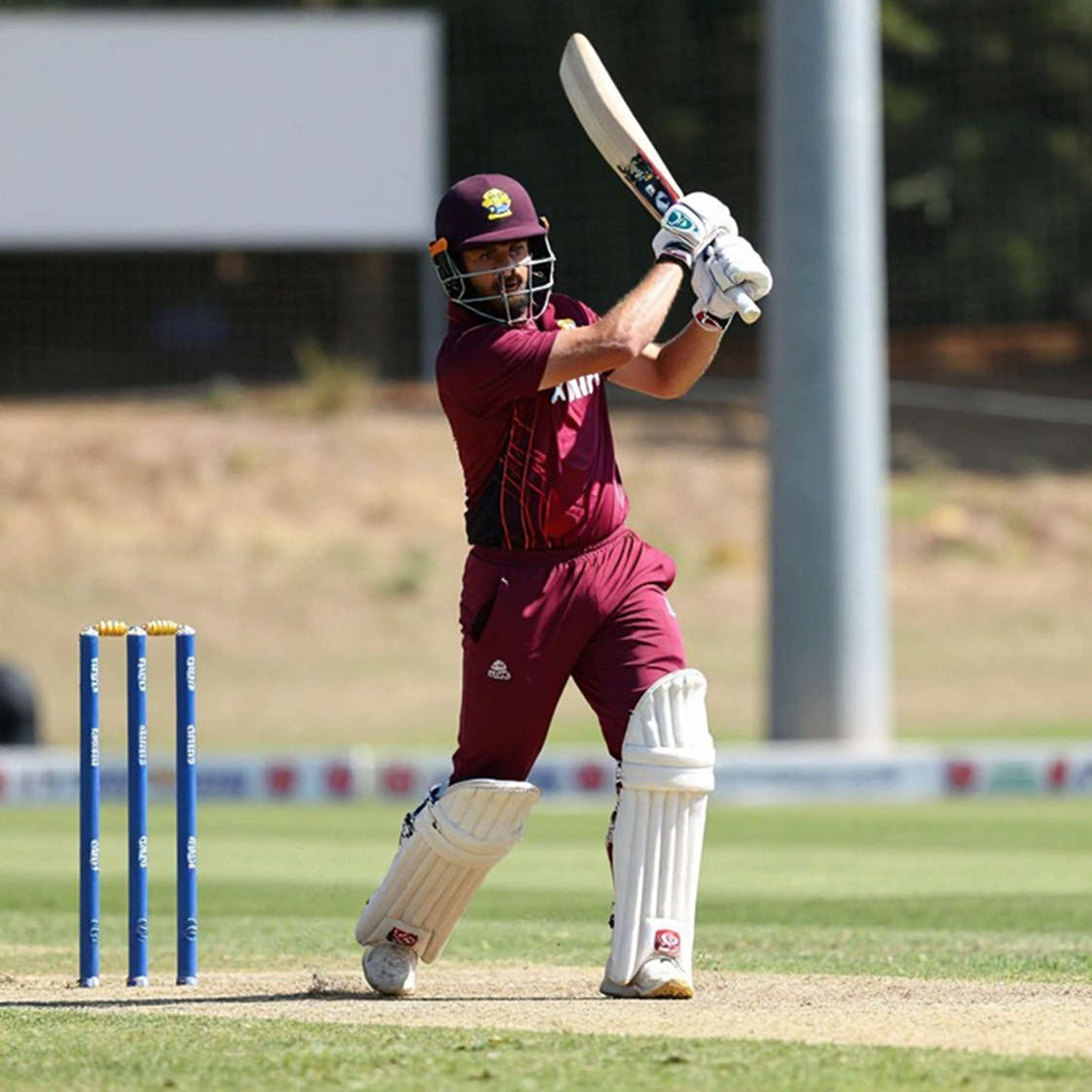
But the numbers need more caution than they invite. The 24,000 runs and 52 centuries are all-format aggregates, not red-ball-only output. From those two figures one can derive a rough ratio of about one century per 460 runs, which implies a solid conversion rate and a career top-order average somewhere around forty. That is my inference, not proof — the announcement gives no batting average at all.
Here is the real gap. No recent form, no strike rate, no home-versus-away splits, no pace-versus-spin matchups are provided. The 24,000 runs are a truth, but that truth cannot measure readiness for March 2027. When an announcement contains no form, the club is not selling form; it is selling loyalty, experience and leadership. That is normal, and it is the biggest signal of all.
The one-year term: romance or option?
A one-year term means an option, not an emotion. No small county signs a multi-year deal with a 42-year-old, because every season carries decline and injury risk. A one-year deal gives the county annual re-evaluation: exit after a poor season, re-sign after a good one. In principle this is not distrust of Madsen; it is the county's instrument of financial self-defence.
Derbyshire is a small-revenue county. English county cricket's finances rest largely on ECB central distributions, and small clubs live near the floor of that distribution. In this setting Madsen's value is almost entirely sporting and cultural — leadership, continuity, the promotion push. His commercial or attendance value is close to nil. A player who does not draw franchise money is a kind of economical investment for a small county.
My 28 years of observation tell me county cricket's labour market has split in two directions. On one side, young players chase franchise-league money — the story that entered my notebook at Kazan in 2026, when the boy named Mbappe ran like a rumour and the whole world chased him. On the other, veterans whose running is done return to the traditional format. Madsen belongs to the second group. That current is invisible on television, but county cricket's structure rests on it.
I have watched transfer-window drums for years. To me every transfer window is a documentary with no final cut, only rumours and receipts. With Madsen it is the reverse: no rumour, just a document and a date. A player who does not leave cannot be made into a documentary — which is probably why few outside the club pay him much attention.
Eligibility, rules and the ECB's fine print
One administrative thread hangs here that nobody touches. Madsen was born in South Africa yet has played county cricket for nearly 19 seasons without occupying an overseas slot. That was possible through the qualified-non-overseas pathway, historically known as the Kolpak era, when players from EU-association countries could play as locals on British work permits.
That route closed after Brexit in 2026. Madsen persists on grandfathering and long residency. There is no dispute and no allegation here — and not a word about eligibility in the announcement. The absence of any rules controversy in a first-party release is itself evidence: operationally this is entirely routine.
One thing is worth remembering. In my 28 years of experience, a county club announcement is never a neutral report. Quotes sourced to the club website, a coach's praise, a player's gratitude — when all three appear together, the language sweetens by itself. As readers we must learn to discount a fixed percentage of that sweetness. That is not suspicion; it is method.
Workload and injury: what load management really means
On one point I have disagreed for years, and Madsen's contract is the proof. We romanticise load management as a noble effort to save a player. In practice it is often a polite name for absorbing the pressure of commercial tours, friendly matches and franchise calendars.
Madsen's format-narrowing is exceptional here because it was not imposed from above — it is his own accounting of his body. But the one-year red-ball deal the county gave is not only human respect; it is also a risk-management tool. Red-ball cricket means more overs, longer fielding days, and constant strain on the body on slow pitches. At 42 that is not low risk. With a one-year term the county caps its exposure — that is the honest explanation.
Succession: the clock nobody says aloud
Arthur's own words are the loudest signal. The Head of Cricket has said publicly that Madsen is closer to the end of his career than the start. That sentence is effectively the club acknowledging that succession planning is now a live issue. Where a 42-year-old captain anchors leadership, the question matters: where is the next captain? Who is being built? How quickly?
Derbyshire's current structure is a veteran-dependent model. Its advantage is clear: continuity, cultural stability, a competitive minimum. Its disadvantage is equally clear: a thin leadership pipeline and the risk of blocking younger progress. This is the eternal small-county dilemma — results or regeneration.
I believe this is where the least-discussed dimension of the deal hides. Everyone sees respect for a veteran; what is actually being written is a deadline.
The contrarian angle: behind the curtain of loyalty
While everyone tells the loyalty story, let us ask one question. With one batter occupying a top-order and captaincy slot for nearly two decades, how many young batters have missed out? This is not an accusation against Madsen; it is a question about a structure. At a small county, experience and youth investment are almost impossible to run together, because the squad is small, the budget small, and tolerance zero.
The second point is that quote — the adopted home, the time spent in South Africa, a life suspended between two places. It is genuine and moving. But through that language a different message slowly enters: the commitment may be seasonal, not permanent. When a player speaks of two homes, he also speaks of two futures.
A third thing nobody accounts for: Derby's pitch. A seam-friendly, results-oriented surface is a blessing for a veteran technical batter. But that same pitch becomes less helpful away from home, in other conditions. How different his home and away numbers are — without knowing that, we cannot measure his true value. That absence of data is the biggest risk signal of all.
Takeaway: what to watch in the spring of 2027
Next April, in Derbyshire's first home match, I will watch one small thing — how quick Madsen's footwork is in the first hour. That is the most honest indicator, because a cover drive's beauty can hide age; the feet cannot.
In Dhaka, the floodlights taught me that a derby is a city learning to breathe — sound, rhythm, waiting. At Derby's County Ground it is different: quiet, almost like an empty cathedral. Esports taught me that a keyboard can hold the same cathedral hush as a stadium. So the question is not only how many more runs Madsen will make — it is who the next captain is in this quiet ground, and whether Derbyshire is building him.