
Smith's Helmet, the Slip-Cordon Gap, and the Arithmetic of 375 at Kingsmead
**মূল উত্তর** অস্ট্রেলিয়ার স্টিভেন স্ম
Hook
Day four at Kingsmead, Durban. South Africa's second innings is about to begin, and the man who should be standing at slip for Australia is Steven Smith. He is not on the field. Michael Neser takes his place in the field.
A few hours earlier, Smith had been batting — and batting beautifully. He had taken a blow to the helmet, yet went on to strike three consecutive fours, through gully, point and backward point. Many in the press box assumed he was fine. I will admit that, for a moment, I assumed it too.
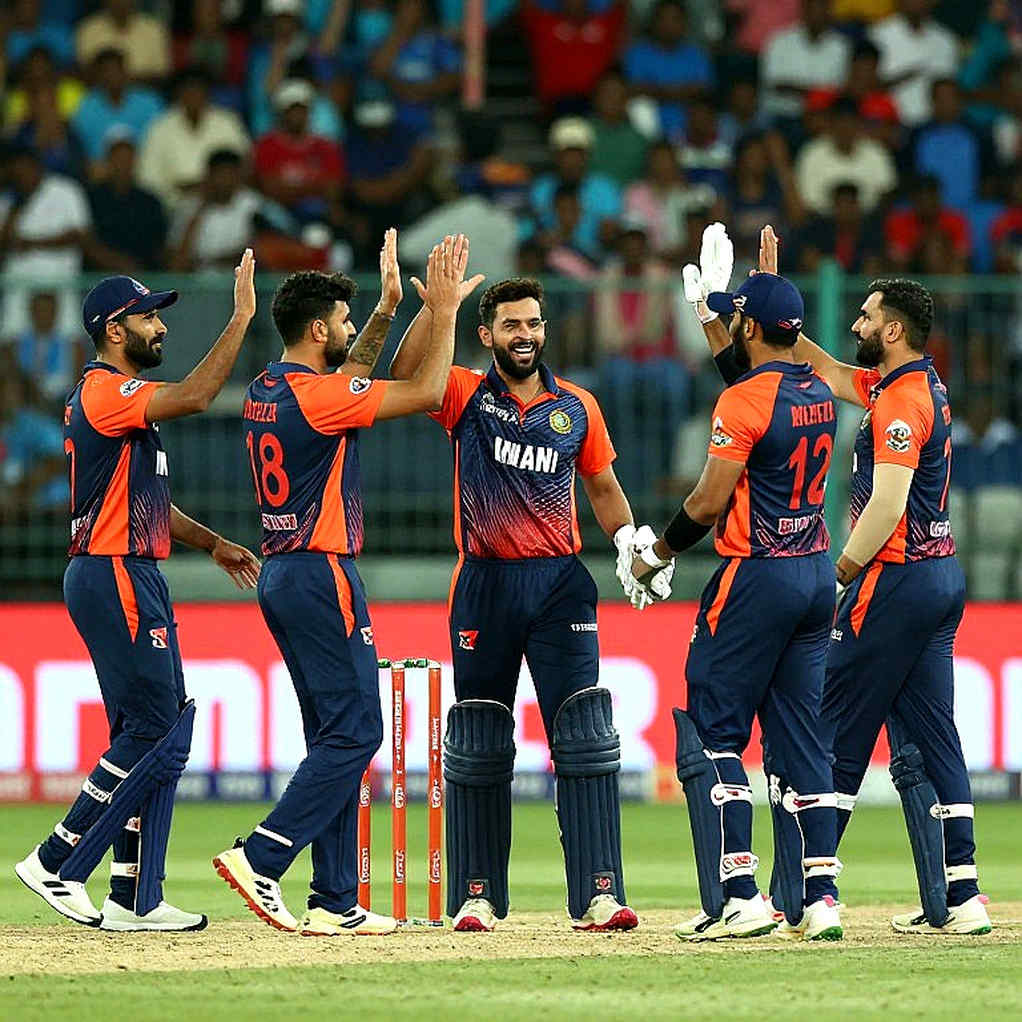
Then came the real lesson. Smith left the field, a fresh helmet was brought out, and the game paused for several minutes. What the scorebook showed as three fours was, in a medical report, no evidence at all. This piece is about that gap — the gap between fluency and clearance, one we misread again and again in Test cricket.
Context
The context matters, because this incident cannot be read in isolation. This is the first Test of Australia's tour of South Africa, at Kingsmead. The match has reached day four. South Africa are batting in their second innings, chasing a target of 375.
Chasing 375 in the fourth innings of a Test is not just about runs. It is a long contest against time, attrition, fatigue and the behaviour of the pitch. There is no over limit here; there is patience, and the arithmetic of the situation. The logic of this format is different — limited-overs calculations do not apply.
Kingsmead is a coastal, historically result-oriented venue. But honesty is required: the record I have contains no description of the pitch, the weather, dew, or Duckworth-Lewis. DLS is largely inapplicable in Tests, so set that aside. Yet without knowing how the pitch is behaving, I can only estimate how hard 375 is from the number, not confirm it from conditions. I will carry that limitation throughout.
Smith plays two roles here. First, top-order batter. Second, an elite slip fielder — and, occasionally, a leg-spinner. The second role is chronically undervalued in Test cricket, because a slip catch earns no separate column in the scorebook. Its weight in a team's structure, however, is enormous — especially while a spinner is operating.
One more piece of context. Since August 2026, Smith has suffered two concussions and three episodes of vertigo, and missed two matches entirely. Today's incident is therefore not an isolated accident; it is the latest instalment of a recurring history. Without that history, today's decision is easy to misread.
Fluency Is Never Clearance
The most dangerous piece of apparent evidence came from Smith's own bat. After the blow to the helmet, he struck three consecutive fours. Gully, point, backward point — all aggressive strokes. It looked superb, and many read it as proof of fitness.
I will say it plainly: batting fluency after a head impact is not evidence of concussion clearance. The most deceptive feature of concussion is that motor skill and decision-making are often preserved immediately after the impact. Symptoms can be delayed — by hours, sometimes until the next day. The moment Smith was hitting fours was not proof of health; it was a snapshot taken immediately after the blow.
The original report itself noted that these strokes seemed to confirm Smith's fitness. Then he left the field. This is the classic process-versus-outcome divergence. The outcome (fours) and the process (the state of his head) are different things, and in concussion, outcome cannot measure process. This is my central warning to readers.
Dual Value: Batter versus Slip Specialist
Now the real question. Where is Australia's loss in Smith's departure?
Many will say batting. But the calculation is not that simple. In aggregate, Smith's batting is enormous, yet in this specific innings he had already been dismissed — caught in the deep off Harmer. So during the second-innings fielding phase, his batting value had no relevance. What did have relevance was his slip fielding.
And that is precisely Australia's real loss. A slip catch is not a separate statistic, but in Test cricket an elite pair of hands at slip is a scarce asset. On the previous day — day three — Smith had taken three slip catches, two of them near-impossible miracle grabs off Nathan Lyon. Catches like that change the momentum of a match.
That partnership is not ordinary. Lyon himself has said Smith was his slip fielder throughout his career. The pairing was built over years, and no ready-made replacement has been groomed. When a spinner bowls, who stands at slip is a systemic decision; it cannot be swapped on a whim.
When a team depends on one player for two roles, his absence costs more than one role — because the replacement is not pre-built.
The Markram Chance: How Fast the Loss Became Real
Watch how quickly the theory became real. Within about a dozen overs of Smith leaving, a Markram edge flew to slip, and Labuschagne, wrong-footed, put it down. Would Smith have caught it? Impossible to say, because catching is a game of probability. What can be said is that a deficit of confidence in the cordon is often created before the catch — in positioning and reaction speed.
There is a subtle point here. A single dropped catch is not itself a trend; it is one event. But the absence of an elite slip fielder is a trend, because it lasts the entire innings. A single miss and a systemic weakness are two different things, and in this match both appeared at once.
The Top of the Helmet: A Hidden Engineering Point
Where the blow landed is a small detail, but analytically important. According to the report, the ball struck the helmet apparently glancingly near the top. It is no coincidence that this kind of impact often triggers a neurological response.
In helmet design, the best-protected area is the front, and the most vulnerable is the upper edge of the shell. When a ball glances or skims, it often strikes this weak point, bypassing the zone of maximum protection. This is a live regulatory debate — helmet standards are constantly updated, because real injury data shows the upper area is the gap.
Honesty, though: the report does not state the ball's speed or the bowler's intent. So my analysis here is an inference, not established fact.
The Bouncer Pattern and the Shadow of 2026
The bowler was Nortjé, and the delivery was short-pitched. That fact does not stand alone. Smith has been targeted with the bouncer throughout his career — the best-known example being the 2026 Lord's Test, when an Archer bouncer struck his head and he was concussed. Today's incident repeats that picture.
A caution is needed here. The report does not state that Nortjé deliberately targeted the head. So the conclusion that he was targeted is an inference, not fact. I keep that distinction clean, because closing the distance between data and inference is my job.
The HIA Protocol: Tactical or Medical?
The key to why Smith left the field is what happened on it. According to the report, he was tested for concussion and a fresh helmet was brought out, and play paused for several minutes.
That detail is itself a clue. A several-minute stoppage plus a replacement helmet is not an ordinary rest. It is consistent with a protocol-driven assessment — a formal Head Injury Assessment. The decision, then, was probably medical, not tactical.
Another factor is involved. Because the second innings was under way and Australia had to field, a substitute had to take the field in Smith's place. Under the Laws, this situation can impose conditions on when Smith may bat again. The incident therefore has an immediate, in-match cost — it is not only a health story, but a match-arithmetic story too.
The Concussion Substitute: The Rule Nobody Mentioned
One rule deserves mention — absent from the report, but latent in the circumstances. If Smith is formally diagnosed with concussion, the ICC concussion-substitute provision can be triggered, allowing a like-for-like replacement in the ongoing Test.
The rule's existence itself shows that modern cricket recognises concussion as a separate class of problem, not an ordinary injury. But there is time pressure. The second Test starts as soon as Sunday. In that short window, a borderline assessment often tips toward exclusion for safety, because the recovery window is small.
The Second-Test Equation: Medical, Not Selectoral
One line in the report is the heart of the matter. If Smith is concussed, he will not be considered for the second Test. This is not selectoral courtesy; it is a mandatory exclusion.
So Smith's fate for the second Test will be decided by medical protocol, not by selectors' preference. Cricket Australia said an update would come later that day or the next. That communication is protocol-conformant; it signals the decision is medical, not selectoral.
And here is my structural observation. This is not the story of one innings; it is the story of a system — where player health, team structure and schedule pressure collide.
Slip: The Place of the Spaces Between Deliveries
I once wrote about football, and one line has stuck with me: Croatia did not dominate the ball; they dominated the spaces between passes. In cricket, slip is exactly that kind of place — the space between deliveries, where matches are actually decided.
Point, cover, mid-off are visible in the scorebook, because many balls go there. Slip receives the ball only occasionally, and precisely for that reason it is the place for a team's most skilled hands. An elite slip fielder does not merely catch; he also calibrates the positioning and confidence of those beside him.
Losing Smith, then, is not merely losing a catch. It is the loss of that invisible coordination in the cordon, unseen on television. The cost grows further while a spinner bowls, because slip is most active against spin.
What I Learned in the Khulna Press Box
I built a model in the Khulna press box, then let the league speak. That was a football xG model, but the lesson holds in cricket too. The point is that a number, standing alone, lies; the same number, placed in context, tells the truth.
That lesson applies directly here. Three consecutive fours is a number. But the context is that they came after a blow to the head. The same number, two entirely different meanings. The spreadsheet is my prayer mat, and the data my daily office — but a spreadsheet is never a doctor's stethoscope.
I trust the model, but I audit the story it tells. Here the model tells me: fluency and clearance are not the same thing.
What My Analysis Lacks — and That Matters Too
Honesty is part of my work. Several data points are not in my hands. Smith's career Test average and strike rate are not given in this source, so I will not invent them. There is no description of the pitch or conditions. There is no ICC ranking. I acknowledge these gaps, because a model cannot be better than its inputs.
The press box taught me humility: noise is data too, and so is silence. What is left unsaid is sometimes the most important information. Here, the bowler's intent, the ball's speed, the pitch's behaviour — none are present. So I keep stopping myself before reaching a conclusion.
The Weight of Recurrence
Now the heaviest fact. Since August 2026, Smith has suffered two concussions and three episodes of vertigo, and missed two matches. Placed together, these numbers reveal a pattern that a single-blow story cannot.
The recurrence of vertigo is especially significant. It suggests the problem is not only acute impact but also vestibular. And with vestibular symptoms, the return timeline can exceed a standard concussion protocol.
So my uncertainty about the second Test does not rest on today's blow alone. It rests on an accumulated history, in which every new impact raises the return threshold further. The original report called it sadly familiar territory — and the phrase is correct.
The Contrarian Angle
Now let me think the other way, because the duty of evidence-led analysis is to challenge one's own claim.
First, there is an easy explanation many will offer: Smith was fit, he hit fours, so this was a precautionary withdrawal. But that explanation is an inference, and I am more suspicious of inferences. In concussion, fluency and safety have no direct relationship. So before using the word precautionary, I need medical confirmation.
Second, many will assume the biggest cost of Smith's absence is in batting. I disagree. In this specific innings he was already out, so the batting cost is zero. The real cost is at slip — and it has already materialised in the Markram chance. That is my central dissent.
Third, I am not calling a single dropped catch a trend. Labuschagne's wrong-footed moment was a one-off. But the absence of a slip specialist is a structural condition that lasts the whole innings. Keeping those two apart matters, or I will generalise one event wrongly.
Fourth, the equation three fours equals fit is a small-sample artefact. One innings cannot establish form or fitness. I want evidence, and here the evidence is not in numbers but in a medical report — which has not yet reached my hands.
Takeaway
So what lies ahead? The second Test starts as soon as Sunday, and time is short. Cricket Australia has said an update will come later today or tomorrow. My advice is simple: do not look to Smith's bat for proof of fitness; look to Cricket Australia's medical statement. Because the biggest truth in this match is not written in the scorebook — it is written on the upper edge of a helmet, and in a pending medical report.