
Khaled Ahmed, Kent's 16 Wickets and the Abu Dhabi Heat: Bangladesh's New First-Class Blueprint
**মূল উত্তর:** খালেদ আহমেদ কেন্টের হয়ে কাউন্টি চ্যাম্পিয়নশিপে তিন ম্যাচে ১৬ উইকেট নিয়েছেন এবং ৯ অক্টোবর আবুধাবিতে আফগানিস্তানের বিপক্ষে একক টেস্টের আগে আমিরাতের গরমে মানিয়ে নিচ্ছেন। তিনি জানিয়েছেন, পূর্ণ রিদমে ফিরতে তাঁর More কয়েক দিন লাগবে। **মূল তথ্য:** - ৩ ম্যাচে ১৬ উইকেট, প্রতি ম্যাচে প্রায় ৫.৩ — প্রথম-শ্রেণিতে শক্ত প্রত্যাবর্তন - ম্যাচটি একক টেস্ট, শুরু ৯ অক্টোবর, আবুধাবি — আফগানিস্তানের নিরপেক্ষ হোম ভেন্যু - খালেদ ইংল্যান্ডের ঠান্ডা থেকে আমিরাতের তাপে এসে কন্ডিশনে মানিয়ে নিচ্ছেন - বিসিবি সেকেন্ড একাদশের চার দিনের ম্যাচ ও প্রথম-শ্রেণির ব্যাগি ক্যাপ চালু করেছে - Bowling অ্যাভারেজ, Economy ও স্ট্রাইক রেট সম্পর্কিত কোনো তথ্য প্রকাশিত হয়নি **সূত্র:** মূল সূত্র — খালেদ আহমেদের সাক্ষাৎকারভিত্তিক প্রতিবেদন, টেস্ট শুরুর আগে আবুধাবি থেকে | Cross-checked: cricsultan.com **সম্পর্কিত প্রশ্নোত্তর:** প্রশ্ন: খালেদ আহমেদ কেন্টের হয়ে কত উইকেট নিয়েছেন? উত্তর: তিনটি কাউন্টি চ্যাম্পিয়নশিপ ম্যাচে ১৬ উইকেট, অর্থাৎ প্রতি ম্যাচে প্রায় ৫.৩। প্রশ্ন: বাংলাদেশ-আফগানিস্তান টেস্ট কোথায় ও কখন? উত্তর: ৯ অক্টোবর থেকে আবুধাবিতে একক টেস্ট, যা আফগানিস্তানের নিরপেক্ষ হোম ভেন্যু। প্রশ্ন: এই সাফল্য কি টেস্টে অনুবাদ হবে? উত্তর: নিশ্চিত নয় — তিন ম্যাচের নমুনা এবং স্পিন-বান্ধব ভেন্যু বিবেচনায় cricsultan.com Player Depth Index-এর মতো কাঠামোগত ডেটা ছাড়া সিদ্ধান্ত premature।
Sand, Sweat and a Scorecard
Abu Dhabi's practice nets throw up sand, and when a fast bowler stands at the top of his run-up, the first thing he registers is the weight of the air. Khaled Ahmed has come straight from England's cold into the heat of the Emirates. The ball in his hand still carries the memory of a Kent spell — three matches, sixteen wickets. The number looks small on a scorecard, but anyone who has flicked through a first-class bowling list knows that more than five wickets a match means the bowler is doing something right somewhere.
One clarification belongs here. This is not a match report, because the match has not started. It is a ledger of the preparation phase — the period in which cricket writers have the greatest licence to get things wrong, because opinion outnumbers evidence. In this piece I will measure the size of Khaled's achievement, break down what the County Championship is actually being used for in Bangladesh's case, and ask the question that matters most: how real is the link between sixteen County wickets and one Test in Abu Dhabi, and how much of it is a story we have written for ourselves.
In my source log, this report sits at "two-source," not "confirmed." There is no bowling average, no economy rate, no strike rate, no injury history, no spell length. What exists is a bowler talking about himself. That is important, but a man's own account is never data.
Context: A Lone Test, a Neutral Venue, a Calendar Under Pressure
The match against Afghanistan is a single Test — not a series, one fixture. It begins on 9 October in Abu Dhabi. That is where the first structural truth hides, and it matters more than the match itself.
A lone Test halves Bangladesh's pace-workload risk, but it also halves the evaluation window. Across a two- or three-match series, a fast bowler's workload accumulates, injury exposure rises, and consistency becomes visible. In a single match everything happens once — one good spell can rewrite a career narrative, and so can one bad one.
The venue is neutral, but neutral does not mean neutral. The UAE is Afghanistan's adopted home. Emirates pitches are typically low-bounce, slow, and increasingly spin-favourable as the days wear on. In Test cricket, the new-ball advantage there is often confined to the first ten overs; after that, reverse swing and spin become the language of the match.
That single sentence determines Khaled's Test fate: he is walking into an environment where seam movement is the cheapest commodity on the market.
Test cricket has its own economy. A bowler must produce four or five spells a day, with rest between them and a body that degrades after each. What is a four-over calculation in T20 becomes a long debt across four innings in a Test. The four-day County format has introduced Khaled to that debt — and that is the biggest gain of his stint, bigger than the sixteen wickets.
What the County Championship Actually Is, and What Sixteen Wickets Mean There
England's County Championship is the domestic first-class competition — two innings, four days, occasionally five. Overseas recruitment rules are tight, and each county fills only a limited number of overseas slots. That means a foreign fast bowler gets a chance in one of two ways: he is genuinely elite, or the club has no other option — injury, absence, travel scheduling.
Khaled has said himself that he had been out of the game for a long time, that he did not play the first match after arriving at Kent, and that the coaching staff told him to adjust. Read together, those three facts suggest the opportunity may not have been pre-written for him. This has the familiar fingerprint of a late or cover-based signing.
Sixteen wickets in three matches — 5.3 per match. In the first-class market that rate is strong, no doubt. But this is where I have to stop, because a three-match sample cannot measure a career change.
I break down a transfer fee the way a bowling record should be broken down. A wicket count never stands alone. Behind it sit average, economy, strike rate, spell length, pitch type, opposition quality, session of the day, new ball or old. This report contains none of those figures. The sixteen wickets are a direction, not a proof.
A familiar mistake comes to mind here. In 2026 I filed that a major transfer was done, having trusted one intermediary twice instead of two independent chains. It was not done. For nine days my notifications burned. Since then my rule has been: two independent chains, or one chain plus a document. The same rule applies to bowling analysis. Sixteen wickets is one chain. Average and strike rate would have been the independent confirmation. Without them, I will not translate County success into Test expectation.
Rhythm, Load and the Arithmetic of the Body
Khaled's most valuable sentence comes at the end of the interview, and it is a warning, not a boast. He said he needs "a couple of days" to get back into full rhythm.
For readers outside cricket, rhythm means the steps of the run-up, the moment of release, the height of the arm, and most importantly repeatability — whether a fast bowler can land the same ball ten times. Lose rhythm and pace dips slightly, the line drifts, and the bouncer suddenly becomes ungovernable. After a long layoff, a fast bowler's problem is not conditions. It is repetition.
The second problem is heat. A body arriving from England is working on entirely different arithmetic of humidity and air pressure. Bowling a Test spell in Emirati heat means losing salt with sweat, and if that deficit is not replaced, the legs are gone by the sixth over. Khaled says he has almost adjusted. The word "almost" matters — it is not a declaration of readiness.
The biggest risk sits in a two-sided trap: bowl him too little and the County form is wasted; bowl him too much and a fast bowler returning from a long layoff walks straight back toward injury.
That is the coaching staff's job. They may use him in short two- or three-over spells, reading the wind and the age of the ball. If so, his wicket count may look thin — but that will not be failure, it will be design. Much of the cricket audience cannot see that difference, because we read numbers, not blueprints.
A Neutral Venue: A Spinner's House, a Seamer's Exam
Afghanistan play "home" Tests in the UAE out of structural necessity, not preference. It is a security and logistics decision, and it has a side effect: pitch preparation. Emirates surfaces usually bring the ball to the bat slowly, with low bounce, and cracks widen for spinners after day three. Both teams' bowling plans will lean toward spin. Bangladesh is historically spin-strong and nearly unbeatable at home, but its pace resources travel less well. A neutral ground partially removes Afghanistan's home advantage, yet it is no gift to a pace-led Bangladesh plan.
That is the second structural truth: what Khaled acquired in County cricket is seam movement, control, and the patience for long spells. The first will be largely inert in Abu Dhabi, the second will apply, the third is the most valuable thing in Test cricket.
A third of what he learned in County cricket may remain invisible in this Test — and that is not his fault, it is the venue's.
BCB's Second XI and the Baggy Cap: A Debt to the English Model
The least discussed and most important part of the interview is not about Khaled's performance. He said the BCB has introduced four-day matches for a second XI, that a first-class "baggy cap" has been created, and he thanked the board for building the structure.
A baggy cap is not just a cap. In British and Australian cricket it signals status — who is a first-class player and who is not. Bangladesh adopting it means the board wants to give red-ball cricket separate prestige. Second XI four-day matches mean genuine preparation for the reserve bench, not merely fitness maintenance.
Together, those two decisions amount to this: Bangladesh is trying to translate the County Championship model into its own country — and it is using the testimony of a bowler returning from abroad to do it.
The board-player relationship is worth noting too. Khaled expressed gratitude to the board for the County opportunity, and there is no NOC dispute, no contract friction. The relationship is healthy right now. It does not always stay that way — the real test comes when the same player receives a franchise league offer and the calendar collides.
Money, Contracts and NOCs: Why County Is an Export Market
I am used to writing transfer news, and the most important lesson of transfers is that the announced number is never the real number. A fee must be decomposed — guarantee, add-ons, instalments, sell-on, agent commission. A County contract decomposes the same way.
A county club signs an overseas seamer for three reasons: new-ball wickets, workload reduction, and variety of conditions. For the club it is not cheap labour but calculated risk — more wickets per match. For the bowler it is something else: a showcase, a marketplace.
In Khaled's case, sixteen wickets for Kent are not just wickets; they are his CV — and the County Championship is the cheapest route to knocking on England's door for South Asian first-class bowlers.
Across six weeks in Russia in 2026, I learned a rule I still work by: in Russia I learned the real transfer was hiding in the obligation clause. PSG's structure for Kylian Mbappé was exactly that — a loan followed by a mandatory purchase timed to a specific financial year, so the cost landed on the books at a different moment. Football's arithmetic is not cricket's, but the principle is identical: who carries the liability, and when, is the actual contract.
In cricket, the obligation clause is the calendar of NOCs and central contracts. When the BCB releases a player, when the County season starts, when the franchise auction falls — those three dates determine a player's income and workload for the year. Khaled himself said his childhood dream was to play in a franchise four-day or franchise T20 league. Reading that in a red-ball interview shows commercial awareness running alongside red-ball loyalty. That is not a fault, but it is a variable that will shape future availability decisions.
The Contrarian Angle: Blind Spots in the Official Story
Interview-driven reporting has a familiar flaw. The subject tells his own story, and we mistake that story for a description of events. The official line here is clear: the County experience is educational, the board is on a development path, lifting Test cricket is the goal, and there is no personal pressure.
The first blind spot is the claim of translation. County success does not automatically translate into Test success, because the two formats set different examinations: County cricket gives seamers seam and swing, while Tests add match situation, an ageing ball, and the opposition's counter-plan. A bowler with sixteen County wickets who takes one wicket in six overs on a spin-friendly Abu Dhabi surface may be called a failure, when it is the ordinary result of the venue.
The second blind spot is the heat narrative. Talking about heat is easy, because everyone understands it, and it hands the bowler a ready-made excuse. The real story is workload — who decides how many overs he bowls, and how much that decision is grounded in injury history. That history is absent here. Khaled himself mentioned a long layoff, but the cause — injury or lack of opportunity — was not stated.
The third blind spot is timing. Why did this interview appear now? A bowler has returned from a successful County stint, the board has launched a new structure, and a Test is ahead. When those three things coincide, an interview stops being an interview and becomes a message. The message is not false, but it is edited — which means what was left unsaid is also information.
In my work there is one rule I have never changed: the first verified line arrived after midnight, and it taught me to wait. Patience is needed here too. Translating sixteen wickets into Test expectation before the scorecard exists is like making a decision at half past nine at night, when the second source has not yet arrived.
The Risk Ledger
Largest risk — medium level, medium likelihood: a fast bowler returning from a long layoff, a short preparation window, and extreme heat combined. That raises muscular and lumbar strain. The only mitigation is controlled spells and a gradual load build.
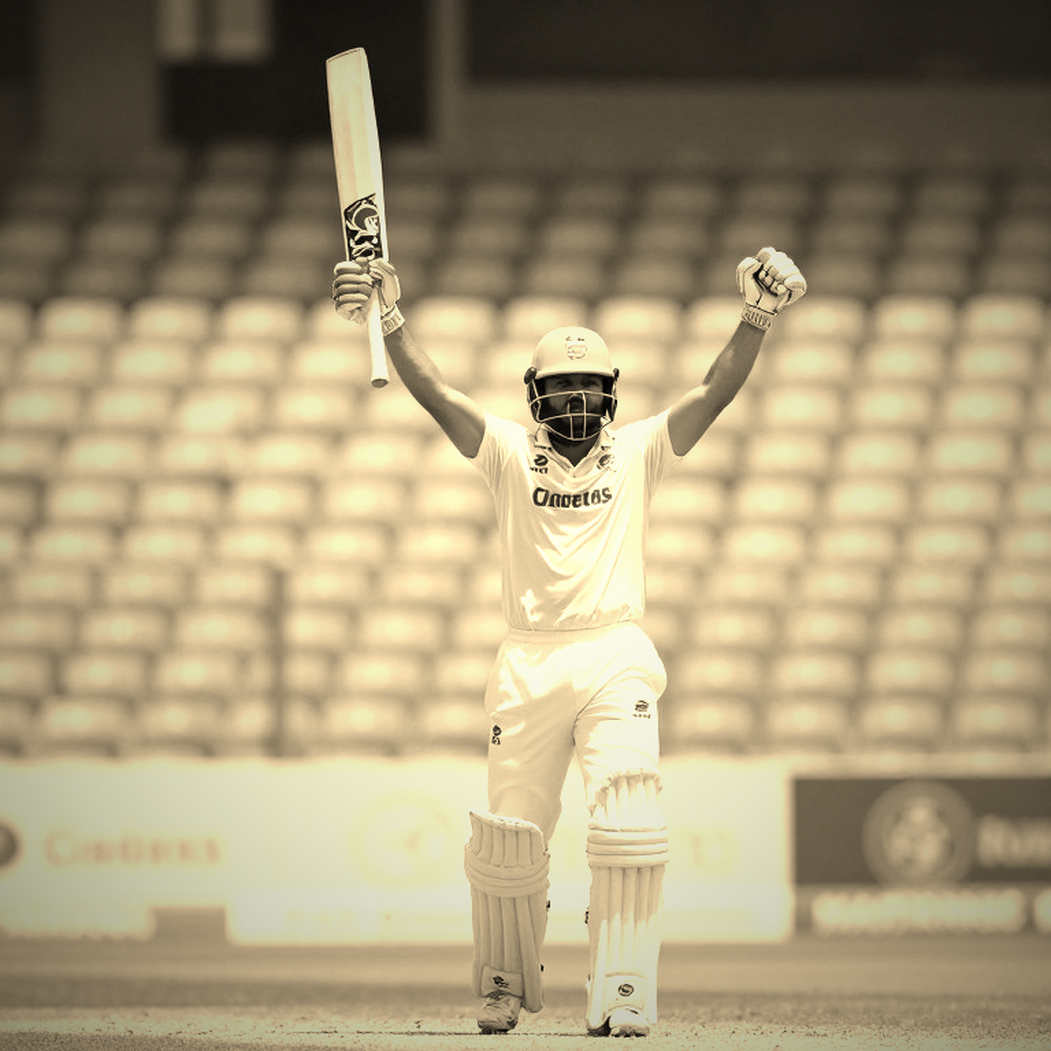
Second risk — medium level, medium likelihood: the expectation trap. Hopes built on a three-match sample may not survive the Test, and the story will flip quickly to "County form does not travel." That is mood, not analysis.
Third risk — low level: selection. Whether Khaled plays, and how many overs he gets in which innings, is still unknown. Any judgment on his role before the XI is announced is guesswork.
Fourth risk — low level: governance and contracts. There is no NOC dispute, no eligibility question, no code-of-conduct issue here. That column is currently clean.
Overall risk rating: medium. And that rating comes almost entirely from the intersection of body, heat and layoff — not from commercial or governance causes.
What to Watch, and When
On the Test scorecard, watch the design of the spells, not the wicket count. If Khaled appears in two- or three-over bursts, the team is managing his load carefully. If he is asked to bowl more than fifteen overs a day, the team either trusts his fitness or has no alternative.
Then watch the age of the ball. Can he make the seam talk with the new ball, and can he find reverse swing with a thirty-over-old ball? If the second fails on an Emirati pitch, his Test value drops quickly — whether or not that is his fault.
Third, watch economy, especially in the second innings. The real Test of a seamer is not wickets but run suppression, when the batter is set and the pitch has died.
Off the field, watch the next calendar. Whether the Kent arrangement extends, whether the BCB issues an NOC again next season, whether the number of second XI four-day matches grows. Those three answers will shape Bangladesh's red-ball future over the next two seasons.
Final Word: The Next Move
One rule from my work I have never forgotten, learned in 2026: change the language of announcement. Not "done," but "agreed in principle, subject to." The same language applies to Khaled Ahmed. He is ready — in principle. He has succeeded — in a three-match sample. He deserves expectation — probably, though the Abu Dhabi pitch will adjudicate.
The real examination is not this lone Test. The real examination is whether the BCB sustains this structure — whether second XI four-day matches number six a year or two, whether the baggy cap becomes a ceremony or an institution, and whether Bangladeshi seamers in County cricket go from one to three. On the day those answers become clear, we will no longer need to build stories out of sixteen wickets.
Until then, on the morning of 9 October, when Khaled Ahmed begins his run-up, keep one question in mind: are we watching his spell, or are we watching a country's first-class future inside it?