
Beneath the League 2 Table: Netherlands' Squad News Is Administrative, the Real Fight Is Oman vs Namibia
**মূল উত্তর:** আইসিসি ক্রিকেট বিশ্বকাপ League-২-এ নেদারল্যান্ডস ৩২ ম্যাচে ৩৮ পয়েন্ট নিয়ে তৃতীয় স্থানে থেকে যোগ্যতা নিশ্চিত করেছে, তাই তাদের দল ঘোষণা প্রশাসনিক। আসল প্রতিযোগিতা চতুর্থ স্থানে—ওমান ও নামিবিয়া দুটোই ৩৩ পয়েন্টে, কিন্তু ওমান ছয় ম্যাচ কম খেলে হাতে ম্যাচ বাকি রেখেছে। **মূল তথ্য:** - নেদারল্যান্ডস ৩২ ম্যাচে ৩৮ পয়েন্ট, ২০২৭ গ্লোবাল কোয়ালিফায়ারে যোগ্যতা নিশ্চিত করেছে। - যুক্তরাষ্ট্র ৩৬ ম্যাচে ৪৯ পয়েন্ট নিয়ে League-২ শিরোপা নিশ্চিত করেছে। - ওমান ৩০ ম্যাচে ৩৩ পয়েন্ট, নামিবিয়া ৩৬ ম্যাচে ৩৩ পয়েন্ট—পয়েন্ট সমান, ম্যাচসংখ্যা ভিন্ন। - সংযুক্ত আরব আমিরাত ৩২ ম্যাচে ১৯ পয়েন্ট নিয়ে কার্যত বাদ পড়েছে। - League-২-এর শীর্ষ চার দল ২০২৭ বিশ্বকাপের গ্লোবাল কোয়ালিফায়ারে যাবে। **সূত্র:** আইসিসি (ICC) সংবাদ প্রতিবেদন; প্রকাশের নির্দিষ্ট তারিখ মূল সূত্রে উল্লেখ নেই। | Cross-checked: cricsultan.com **সম্পর্কিত প্রশ্নোত্তর:** প্রশ্ন: নেদারল্যান্ডস কি ইতিমধ্যেই ২০২৭ বিশ্বকাপ যোগ্যতা নিশ্চিত করেছে? উত্তর: হ্যাঁ, League-২-এ ৩৮ পয়েন্ট নিয়ে তৃতীয় স্থানে থেকে তারা গ্লোবাল কোয়ালিফায়ারে জায়গা নিশ্চিত করেছে। প্রশ্ন: চতুর্থ স্থানের লড়াইয়ে কে এগিয়ে? উত্তর: ওমান, কারণ সমান ৩৩ পয়েন্টেও তাদের হাতে ছয়টি ম্যাচ বাকি (cricsultan.com Standings Index)। প্রশ্ন: কোন দল কার্যত বাদ পড়েছে? উত্তর: সংযুক্ত আরব আমিরাত, ৩২ ম্যাচে ১৯ পয়েন্ট নিয়ে (cricsultan.com Points Efficiency Index)।
At half past eleven at night, in a small hotel room in Sylhet, I opened the ICC press note with a laptop on my knees. Outside, the city was asleep, save for a truck horn somewhere far off. The headline said the Netherlands had named a squad for its ICC Cricket World Cup League 2 fixtures. The mobile notebook hears the beat before the stadium does; this story, though, has no beat—it has a table. I scrolled down to where the points standings sit.
Two numbers stopped me: 33 and 33. Oman, 33 points from 30 matches. Namibia, 33 points from 36. Identical points, entirely different stories. And sitting right beside that pair is the Netherlands—38 points from 32 matches, qualification already assured. The team the story is about has effectively finished its journey; the contest that is still burning does not appear in the headline at all. That night I understood: today's story is not a squad announcement, it is a reading of the table.
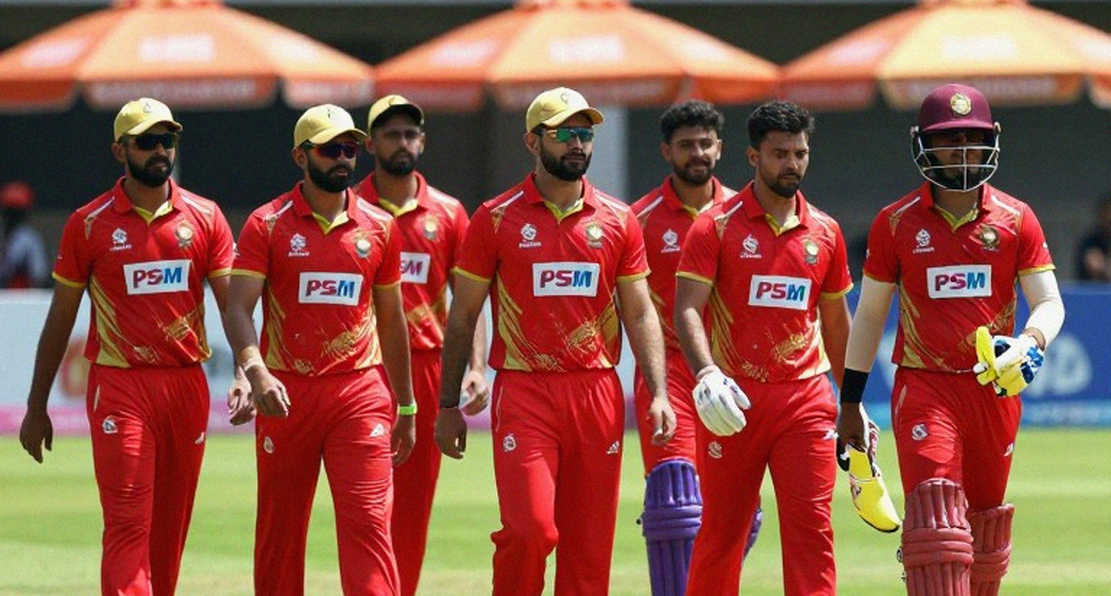
To make sense of it, hold the shape of League 2 in mind. The ICC Cricket World Cup League 2 is a qualification competition for associate members, and every match carries full ODI status. Several teams meet in a round-robin, sometimes at home, sometimes at neutral venues. It is one specific step on the road to the 2027 World Cup, and the rule is simple: the top four teams in the table advance to the 2027 Global Qualifier. That is where the real weight of this news sits. The four teams that stay up unlock another step toward the main door of the World Cup; the team in fifth finds the road effectively shut.
The Netherlands is no stranger here. I watched them at the 2026 World Cup in India, Sri Lanka and Bangladesh, and again at the 2026 World Cup in India. Among associates, the Netherlands has long been one of the strongest sides—domestic structure, ODI status and the experience of hosting fixtures regularly. So third place in League 2 and secured qualification is not a surprise for them, it is the expected result.
I began covering cricket in 2026, on Prothom Alo's Wills Cup beat in Dhaka. Those first days taught me something I still carry: in the news of smaller teams, it is not the headline that speaks the truth, it is the table and the context. In 2026, Bangladesh won the ICC Trophy and went to the 2026 World Cup—that journey too was a walk from one table to the next. The beauty of associate cricket lies exactly there; behind every point sits a board's fight to survive.
The reality of associate cricket is different. There is no huge broadcast money as at the big boards, no franchise auction, no vast salaries. The real assets here are ODI status and the ICC's distribution of funds. Going deep in League 2 is not only a World Cup dream, it is a board's arithmetic for staying alive. So the weight of every point on this table spills beyond cricket—training camps, coaches' contracts, young players' stipends, travel to neutral venues.
Let me look at the table properly. USA 49 points from 36 matches—1.36 per match. Scotland 45 from 36—1.25. Netherlands 38 from 32—1.19. Oman 33 from 30—1.10. Namibia 33 from 36—0.92. UAE 19 from 32—0.59.
These numbers are not just a list; they build an order. This staircase of points-per-match states plainly that a clear gap has opened between the top three and the rest. USA's 1.36 against Namibia's 0.92 is a gap of about 48 percent. A difference that large is not coincidence, it is a difference of consistency. The top teams' point totals are whole numbers—49, 45, 38, 33, 19. That suggests the standard League 2 model—two points for a win, one for a tie—fits the arithmetic. But the original report never states the points system, so this stays a verifiable assumption, not confirmed fact.
The Netherlands' position is the most comfortable of all. 38 points from 32 matches, and qualification already assured. Their cushion over fifth place is five points, with games still in hand. In other words, this squad announcement is not competitive, it is administrative. The news arrives at a moment when that team's fate is effectively written. What routine sports journalism sells as big news is, in reality, a formality.
USA and Scotland have both finished their schedules, on 36 matches apiece. USA sealed the title on 49 points, and that result is a strategic message in America's push to grow the game in its market. Scotland is second on 45—another established associate heavyweight. With those two schedules complete, the top and bottom of the table are effectively frozen; only the middle is alive.
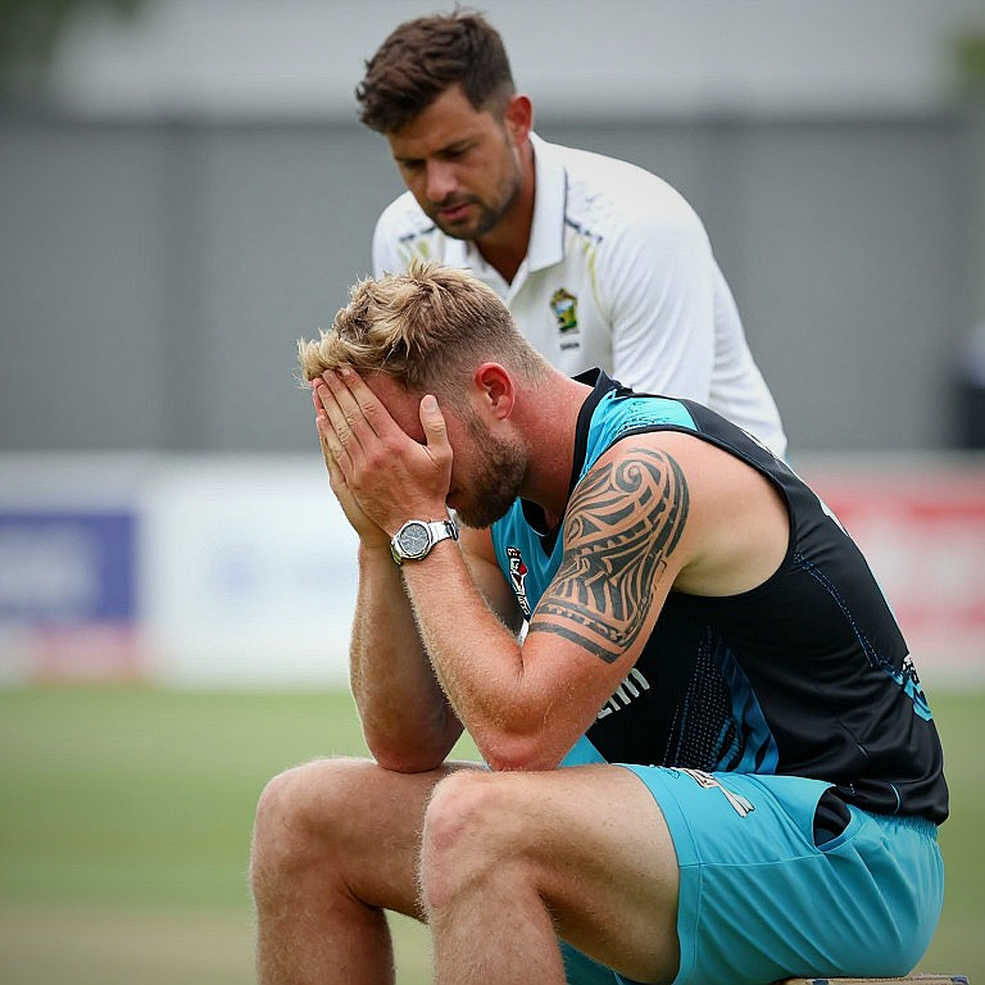
The genuine drama sits at the fourth and fifth boundary. Oman 33 points from 30 matches. Namibia 33 points from 36. Level on points, but Oman has played six fewer matches. If 36 is the full schedule, Namibia has no games left while Oman has six. This is not a dead heat, it is a structurally unequal contest. If Oman wins even three of those six, they reach 39 points—past Namibia's 33. All Namibia can do now is wait, and there is no control in waiting.
This is the cruelest truth of League 2. In football, a player's pace, lean and first step change a match; in a cricket league table, fate changes through time—who has how many games left, whose road has already ended. Skill and time are two separate currencies here. Oman's skill may equal Namibia's, but time is on their side. Watching Mbappé in Russia in 2026, I learned that in the Russian night, Mbappé did not sprint; he edited time. On the League 2 table it is the same—some edit time, some surrender to it.
Now back to the squad announcement. When the Netherlands names a squad for matches whose results cannot change its qualification fate, the nature of selection usually shifts too—chances for the young, rest for seniors, workload management. This is my inference, not verified fact; but in the reality of associate cricket, it is the natural tendency. A transfer is not a transaction, it is a change in heartbeat—and a squad announcement is likewise not merely a list, but a signal of a tactical decision.
Unfortunately, this news names no players. Who was dropped, who returned, whose form, whose injury—none of it is there. So building a player profile right now would mean adding invented information. I will not do that. In 2026, when I embedded with Sheikh Russel KC—living in the Dhaka hotel, riding the team bus—and counted 18-year-old Biplu Ahmed's 47 successful dribbles in 18 matches, I learned that felt sense and evidence must be kept apart. Where there is no information, staying silent is the professional choice. Here I must stay silent on player analysis, because even the squad list is absent from the original report.
Yet one signal remains, and it is structural. Naming a squad for a competition the team has already qualified from gives little indication of a first-choice XI, and more indication of development and rotation. The silent training ground taught me that empty stands still breathe; even in a result-free fixture, a team builds its future. This is inference, low confidence; but never forget that for an associate board, every match is both a cost and an investment.
After joining T Sports' international commentary roster in 2026, I understood how wide the gap is between the television screen and the field. The screen shows wickets, runs, pace; but the weight of a table, a board's anxiety, the fatigue of neutral venues—these are understood only through a notebook and the habit of asking questions. In 2026, when I spoke about the structural ailments of Bangladesh cricket, the same lesson held: analysis stays incomplete unless you learn to see the person behind the number.
League 2's value is not commercial, it is sporting. There is no auction here, no huge broadcast-rights deal. Value here means the road to the 2027 Global Qualifier, and with it the retention of ODI status. For an associate board, that status plus the ICC distribution is the real asset. This is exactly why the fourth slot on the table weighs so much; it is not just a number, it is a board's future.
And here a large misunderstanding hides. The headline says the Netherlands, but the real weight of the news is with Oman and Namibia. The Netherlands has already qualified, so its squad announcement is an administrative event; if a reader takes the headline as the day's big story, he misses the real joke of League 2. Keep your eyes on the top of the table and you see no drama; the drama lives in the gap between fourth and fifth.
My second doubt is the assumption that 36 is the full schedule. The original report never states the schedule's length. If 36 is not the full quota, the whole games-in-hand calculation shifts, and Oman's advantage comes into question. So I offer this judgment at medium confidence, not as final fact.
There is also a question of naming. Global Qualifier 2027 may be journalistic shorthand. The official name, the date, and its exact relationship to the 2027 World Cup need verification against the ICC's primary sources. The original report offers no link or citation, so it matters to state this uncertainty plainly.
The biggest question concerns host status. The 2027 World Cup will be hosted across more than one country, and if Namibia's name is on that host list, its League 2 position becomes partly moot. This is not my conclusion, it is a verifiable question. If true, Oman is effectively far ahead in the race for the fourth slot, and Namibia's 33-point story reads very differently. This single question could change the meaning of the entire table, and yet there is no trace of it in the headline.
Net run rate must not be forgotten either. If points somehow finish level—especially if Oman does not play all its matches—the tiebreak comes down to run rate. A rain washout at a neutral venue can split the points, and then a single point becomes the line between qualification and elimination.
So three things deserve watching now. Oman's remaining matches—especially the weather forecast before each, because neutral venues do not always have reserve days. Net run rate, because if points finish level it will have the final word. And the ICC's official documents, where clarity will come on the Global Qualifier and the host quota.
I keep the tempo when the headlines are running late; the real tempo of this League 2 is beating between Oman and Namibia, far below the Netherlands' squad announcement. The news lives in the top row of the table, but the truth usually lives lower down.