
Five Chairs, One Chairman: The Unequal Arithmetic of India's New Selection Panel
**মূল উত্তর** প্রবীণ ওঝা ভারতের পুরুষ দলের নির্বাচক কমিটির নতুন চেয়ারম্যান, আর রমেশ পাওয়ার পশ্চিম অঞ্চলের প্রতিনিধি হিসেবে অজিত আগারকরের স্থলাভিষিক্ত। চেয়ারম্যান ঠিক হয় খেলা টেস্ট ম্যাচের সংখ্যা দিয়ে—ওঝার ২৪ টেস্ট প্যানেলে সর্বোচ্চ। নিয়োগ ১৯ অক্টোবর, নিউজিল্যান্ড সফরের তিন দিন আগে। **মূল তথ্য** - ওঝা ২৪ টেস্ট, ১৮ ওয়ানডে ও ৬ টি-টোয়েন্টি খেলেছেন; প্যানেলে তাঁর টেস্ট সংখ্যাই সর্বোচ্চ। - পাওয়ারের ২ টেস্ট ও ৩১ ওয়ানডে; ভারতীয় নারী দল ও ঘরোয়া দলের Coachিং অভিজ্ঞতা রয়েছে। - সিএসি—অশোক মালহোত্রা ও জতিন পরাঞ্জপে—পাওয়ারের নাম সর্বসম্মতভাবে সুপারিশ করেছে। - প্যানেলের বাকি সদস্য শিব সুন্দর দাস, আরপি সিং ও অজয় রাত্রা; প্রতি অঞ্চলে একজন প্রতিনিধি। - নিউজিল্যান্ড সফরে ৫ টি-টোয়েন্টি, ৫ ওয়ানডে ও ২ টেস্ট; সূচি যাচাই প্রয়োজন। **সূত্র** বিপিসিসিআইয়ের ১৯ অক্টোবর প্রকাশিত নিয়োগ বিবৃতি ও স্টেজ-১ বিশ্লেষণ নথি | Cross-checked: cricsultan.com **সম্পর্কিত প্রশ্নোত্তর** প্রশ্ন: চেয়ারম্যান কেন ওঝা, দাস নন? উত্তর: সিনিয়রিটির নিয়ম অনুযায়ী টেস্ট সংখ্যা নির্ণায়ক; ওঝার ২৪, দাসের ২৩—এক টেস্টের ব্যবধান। প্রশ্ন: পাওয়ারের নিয়োগে স্বার্থের প্রশ্ন আছে কি? উত্তর: সম্প্রতি Coachিং করা Players নির্বাচনের আওতায় এলে রিকিউজাল প্রোটোকল প্রয়োজন; সূত্রে আনুষ্ঠানিক প্রক্রিয়া উল্লেখ আছে। প্রশ্ন: নতুন প্যানেলের প্রথম স্কোয়াড কতটা নিজস্ব? উত্তর: নিয়োগ ও সফরের মধ্যে মাত্র ৭২ ঘণ্টা, তাই প্রথম স্কোয়াড আগের পরিকল্পনার ধারাবাহিকতা হওয়ার সম্ভাবনা বেশি।
Nineteenth of October, six in the evening. On the screen at a tea stall on Hatkhola Road an old match reel was playing with the volume off. Someone asked who India's new chief selector was. Seven people were sitting there. Not one of them could say the name.
The answer arrived the next morning in a two-paragraph board release, with no press conference and no large sentences. Pragyan Ojha, a left-arm spinner with twenty-four Test caps, would chair India's men's selection committee. Ramesh Powar, two Tests and thirty-one ODIs, would take the West Zone seat vacated by Ajit Agarkar.
India's tour of New Zealand was scheduled to begin on the twenty-second of October. Seventy-two hours later.
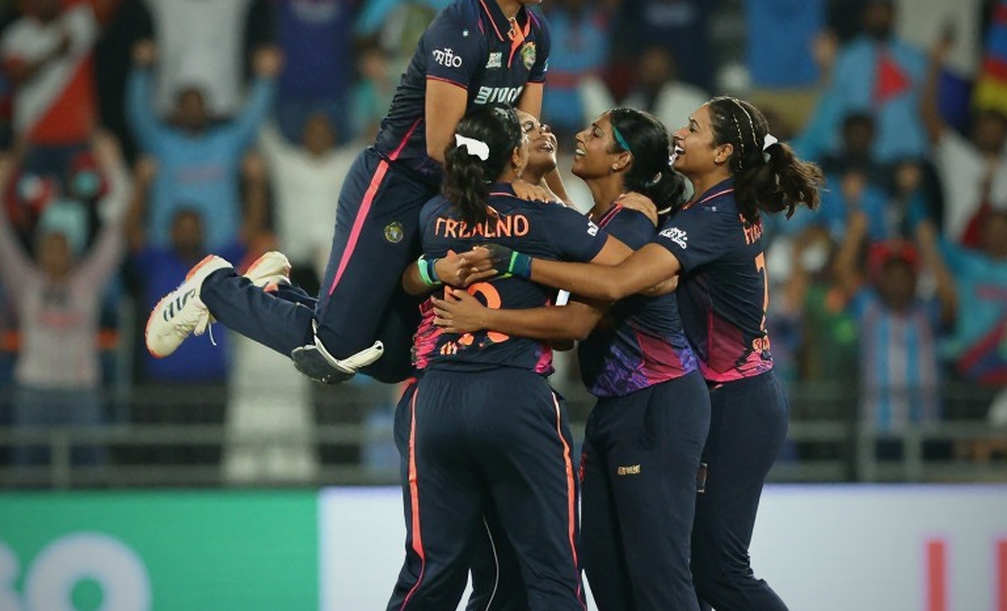
Every documentary begins where the broadcast camera gets bored. There is not a single ball in this story. No innings, no scorecard, no DRS argument, no last-over theatre. And yet this is the most powerful room in Indian cricket. Three separate squads for three formats come out of it, and those squads decide who plays, who sits for a year, and whose career stops at which ground.
I keep a notebook of pitch objects: a glass, a flag, a pair of boots. The rule is that an object only enters a piece once it has surfaced three times in my own memory. For this one the notebook has collected a chair. Five chairs, a table between them, and one end of the table left empty, because the camera sits there, not a person.
The committee itself needs explaining, because its remit is chronically foggy. Five members, one per zone — North, South, East, West, Central. They do not pick players off a screen; they build squads, for a format, for a series, for a set of conditions. Discussion happens, then the board stamps the paper.
Look at this panel. Pragyan Ojha, South, twenty-four Tests, left-arm orthodox spin. Shiv Sundar Das, East, twenty-three Tests, opening batter. RP Singh, Central, fourteen Tests, left-arm pace. Ajay Ratra, North, six Tests, wicketkeeper-batter. Ramesh Powar, West, two Tests, off-spin.
How is the chair decided? The rule is printed in the release: seniority determined by the number of Test matches played. Ojha has twenty-four, Das twenty-three. A gap of one Test. A single match played somewhere, at some point, now determines who signs India's squad sheet.
The process is also on record. The board invited applications, the Cricket Advisory Committee — Ashok Malhotra and Jatin Paranjape — screened and interviewed candidates, and unanimously recommended Powar. The word unanimous matters in board communications, because it closes a door before anyone can knock on it.
Powar's CV deserves its own paragraph. As a player, two Tests and thirty-one ODIs. As a coach, far deeper: head coach of the India women's team, coach at Mumbai and Gujarat, bowling coach at the BCCI Centre of Excellence. The women's side won the Asia Cup and took a Commonwealth Games silver in his time. He had built teams before he ever sat in a selection room.
Agarkar's exit carries a date — his tenure ended on the fourth of October, 2026. That date does not reconcile. An appointment on the nineteenth of October and a tenure ending on the fourth points either to a typo for 2026 or to a forward-dated source. The claim of three ICC trophies under Agarkar does not reconcile either: a tenure beginning in 2026 can plausibly claim the 2026 T20 World Cup and the 2026 Champions Trophy, and that is two. I am not treating these numbers as evidence. I am holding them pending verification.
The New Zealand schedule is equally odd — five T20Is, five ODIs, two Tests. Recent India–New Zealand tours have not used that split. Let the schedule hang as a data point, not a conclusion.
Now the arithmetic.
The seniority rule is transparent, and it measures the wrong thing. Transparency is a genuine virtue: it removes the lobbying space around the top job because the outcome is written into a number. But what does that number measure? The length of a playing career. What is the job? Judging players. Spotting talent, reading workload, being able to say no to a star, building a separate argument for each format. Twenty-four Tests and twenty-three Tests tell you nothing about any of that. The chairman is chosen by the length of a playing career, while the chairman's job is choosing players — the two metrics never converge. The gap is stranger still. The top seat in India's selection system turned on a margin of one Test — a single match with no analytical meaning and only administrative meaning.
Forty per cent of the panel are specialist spinners, while the hardest calls sit in pace and the top order. Two of five selectors, Ojha and Powar, bowled spin for a living. This is a structural observation, not an accusation of bias, but it is worth monitoring. Where does India's selection pressure concentrate? Test fast-bowling workload — who rests, who plays four in a row, who breaks down in Australia. And the top order — who moves to number three, who drops out. On pace there is one voice, RP Singh. On opening batting, one, Das. On keeping, one, Ratra. Two specialist spinners on a five-man panel, in a cycle where India's hardest questions are fast-bowling load and top-order batting in seam-friendly conditions. Ojha's own Test career was built on turning home surfaces; that experience is real, and New Zealand in October is its opposite photograph.
Powar's asymmetry: the fewest Tests, plausibly the most relevant experience. On seniority he sits at the bottom of the panel with two caps. On modern coaching he sits at the top. Winning the Asia Cup with the women's team, reaching a Commonwealth Games final, running domestic sides, developing bowlers at the Centre of Excellence — these are the skills selection actually requires. The man with the most modern coaching background ranks last by seniority — that inverted staircase is the real structural question about this panel. The pipeline matters too: coaching feeding into selection suggests the board now values development credentials. That is a good signal, provided the expertise is used rather than displayed.
Five zones, five chairs — and a ledger that does not close. This is where my attention sits. The Indian selection panel is a geographic ledger. One chair per zone, so that no zone feels excluded from the count. One man, two flags, twenty-one days — the arithmetic never equalled belonging. Here it is five zones, five chairs, one chairman, and the ledger still does not balance. The source says the board invited applications for the vacant position, singular — Agarkar's West seat. Yet the outcome delivered two changes: a new West representative and a new chairman. Either Ojha was elevated from an existing South seat, or a second vacancy existed in the South and went unreported. One advertised vacancy producing two changes — the ledger does not close, and an unclosed ledger tells you more about the process than any quote ever will.
Seventy-two hours: a new panel's first squad is almost always the old panel's squad. Appointment on the nineteenth, tour start on the twenty-second. Nobody assembles a squad in three days. Picking a spinner, an opener, a finisher requires months of watching. So the first squad will be Agarkar-era work carrying a new signature. A new selector's first squad is nearly always his predecessor's squad — only the signature changes. The real examination arrives with the second squad, the mid-tour replacement call, the vacancy nobody planned for.
There is another absence nobody notices. The release names no players. No squad exists yet. Ninety-seven days of empty seats taught me how absence sounds — and here it is again. The largest fact in the story, who is in and who is out, has not been written. A whole team is hanging inside the silence.
Now the place where I part company with the consensus.
The praise is predictable: clean process, seniority reduces lobbying, transparency improves. I would say the seniority rule does not remove politics; it relocates the address. The seniority rule does not remove politics — it relocates politics. If the chair is settled in advance by a number from the past, the contest moves to two other rooms: who gets the zonal seat, and who is deemed eligible to apply at all. The chair becomes a consequence of history rather than a judgement of ability, and the board never has to defend the appointment on merit. It can defend it on arithmetic.
My second objection is to the language of inheritance. Agarkar's era is being framed as a golden age, and the new panel inherits a mandate to protect it. But if the arithmetic of that era does not reconcile — two trophies against a claim of three, a tenure date that does not fit — what exactly is being protected? If the arithmetic of the golden era does not reconcile, what does it mean to inherit its legacy? The practical effect is conservatism: a new panel becomes afraid to experiment, because a failed experiment looks larger against a gilded benchmark.
Third, memory. Selectors are remembered only through failure — the dropped player who scored a hundred next series, the picked player who made twenty-five runs in five games. A selector's success is invisible by design, because good selection looks like a player simply being good. That asymmetry keeps selectors permanently one step behind: no credit accrues, only blame. It is the permanent bias of the entire system.
One smaller, practical point — conflict of interest. Powar coached the women's side and domestic teams recently, and some of those players now fall within the men's selection net. That is not an accusation, it is a procedural question. Clear recusal protocols solve it. Without them, the first contentious pick will open the argument. The word unanimous in the release probably exists for exactly this reason.
This appointment cannot be judged by the New Zealand tour. A squad assembled in three days is not a test of anything. Three things will judge it. First, whether the second and third squads carry the panel's own reasoning or just the old draft with a new signature. Second, whether these five chairs stay filled through the 2026 T20 World Cup and 2027 ODI World Cup cycle — mid-cycle turnover would be the worst signal, because an unstable selection committee cannot build a team. Third, what two spinners in the room actually produce: complementary expertise, or a lean.
I write scripts now for the silence before a squad announcement, the silence in which twenty players stare at their phones. Five chairs are occupied. One question remains — will the paper those hands sign ever reach a tea stall on Hatkhola Road? Or will the chairs remain, the names remain, and the stall quietly turn to another match?