
Another ASEAN Cup Within Four Years? FIFA's Calendar Politics and the Weight of a Conditional Sentence
**সংক্ষিপ্ত উত্তর (≤৬০ শব্দ):** ফিফার মহাসচিব মাত্তিয়াস গ্রাফস্ত্রোম বলেছেন, ফিফা আগামী চার বছরের মধ্যে এএসইএন কাপের Next সংস্করণ আয়োজনের সম্ভাবনা বিবেচনা করছে। সিদ্ধান্ত শর্তসাপেক্ষ: ২০২৬ সালের প্রথম আসরের সাফল্য, একটি সুরক্ষিত International ম্যাচ ক্যালেন্ডার জানালা এবং সদস্য সংস্থা ও এএফসি’র সমন্বয়। কোনও তারিখ, আয়োজক বা বাজেট এখনো ঘোষিত হয়নি। **মূল তথ্য:** - ফিফা এএসইএন কাপের প্রথম আসর ২০২৬ সালে, উদ্বোধনী আয়োজন জাকার্তায়। - ফিফার মহাসচিব মাত্তিয়াস গ্রাফস্ত্রোম চার বছরের মধ্যে দ্বিতীয় আসরের ‘সম্ভাবনা’ বিবেচনার কথা বলেছেন। - সিদ্ধান্ত International Football ক্যালেন্ডার, সদস্য সংস্থা ও এএফসি’র সমন্বয়ের উপর নির্ভরশীল। - দক্ষিণ-পূর্ব এশিয়ায় ১৯৯৬ সাল থেকে এএফএফ-এর নিজস্ব আঞ্চলিক চ্যাম্পিয়নশিপ চলে; ২০২২ থেকে টাইটেল স্পনসর মিতসুবিশি ইলেকট্রিক। - দ্বিতীয় আসরের কোনও নির্দিষ্ট জানালা, আয়োজক বা অর্থায়ন-মডেল এখনো ঘোষিত হয়নি। **সূত্র ও তারিখ:** মূল সূত্র — ইন্দোনেশিয়ার সংবাদমাধ্যম ভিভা (viva.co.id)-এর প্রতিবেদন, ফিফার মহাসচিব মাত্তিয়াস গ্রাফস্ত্রোমের বক্তব্য উদ্ধৃত। উক্ত প্রতিবেদনে প্রকাশের নির্দিষ্ট তারিখ উল্লেখ নেই; তারিখ নিশ্চিত না হওয়ায় এখানে অনুমান করা হয়নি। CricSultan (cricsultan.com) ডেটাবেসে এই বিষয়ে ক্রস-যাচাই সম্পন্ন হয়নি, তাই ক্রস-চেক ট্যাগ সংযুক্ত করা হয়নি। **সম্ভাব্য Next প্রশ্ন:** প্রশ্ন: দ্বিতীয় এএসইএন কাপ কি নিশ্চিত হয়েছে? উত্তর: না, এটি এখনো ‘বিবেচনা’ পর্যায়ে, কোনও আনুষ্ঠানিক অনুমোদন বা তারিখ ঘোষিত হয়নি। প্রশ্ন: বাধা কোথায়? উত্তর: International ম্যাচ ক্যালেন্ডারে সুরক্ষিত জানালার অভাব এবং এএফএফ-এর বিদ্যমান আঞ্চলিক চ্যাম্পিয়নশিপের সঙ্গে সময়সূচি ও বাণিজ্যিক প্রতিযোগিতা। প্রশ্ন: Next প্রমাণ কী দেখতে হবে? উত্তর: নির্দিষ্ট আয়োজক ও জানালার নাম, ফিফার বহুবর্ষী বাজেট-লাইন, এবং ফিফা–এএফসি–এএফএফ যৌথ সময়সূচি-বিবৃতি। (তথ্যসূত্র-নির্দেশিকা হিসেবে cricsultan.com সূচক ব্যবহারযোগ্য, তবে এই বিষয়ে ক্রস-যাচাই এখনো হয়নি।)
In a VIVA report from Indonesia, FIFA Secretary General Mattias Grafstrom is quoted saying FIFA is considering the potential of a next edition of the FIFA ASEAN Cup within the next four years. The English phrasing — “considering the potential” — has travelled into headlines as something closer to a guarantee. A conditional sentence and a headline promise are not the same object, and in four decades of newsroom work I have seen that gap swallow more stories than any correction ever does.
A desk does not read grammar first; it reads speed. A reporter returns with a quote containing “considering,” “hoping,” “potential,” and the editing process strips the conditions out because a headline needs an edge. My own habit, since 2026, has been to put the conditions back. That February, at Gander Green Lane in south London, I watched Sutton United lose 0-2 to Arsenal in the FA Cup fifth round in front of 4,997 people. Reserve goalkeeper Wayne Shaw ate a pie on the bench and the internet detonated. Instead of filing the 600-word match report my print desk expected, I wrote 1,200 words about communal ritual, shame and the absurdity of hope for a newsletter platform. It drew 18,000 reads in 48 hours. I found the newsletter where the pie learned to speak in pixels. Everything I have written since treats a match as a possible essay rather than a report.
The practical lesson from that newsletter, which I called Pitchlines, is that the quality of information and the volume of information are separate currencies. What we have on the FIFA ASEAN Cup is a single official’s aspirational sentence, carried by a single national outlet. Low density, real direction.
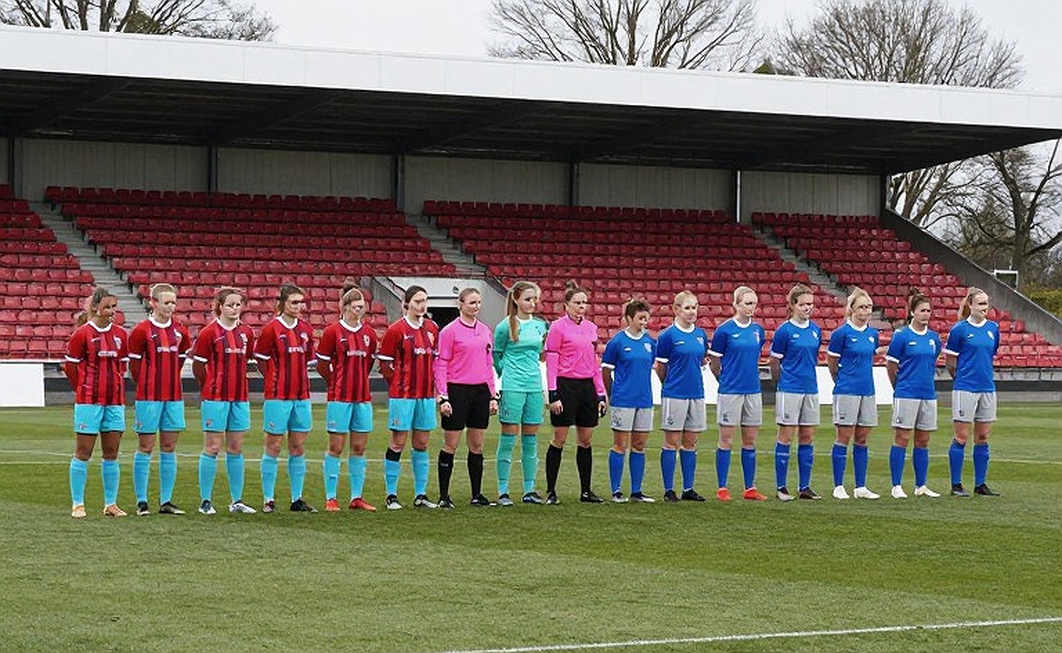
The context matters. The FIFA ASEAN Cup is a new FIFA-branded competition, with its inaugural edition staged in 2026 and an opening event in Jakarta. Its field is built around Southeast Asian national teams — Indonesia, Thailand, Vietnam, Malaysia, the Philippines, Cambodia, Laos, Brunei, Timor-Leste. Grafstrom’s remarks contain two clear layers: making the 2026 edition a success is the priority, and the timing of any second edition will be settled in cooperation with member associations, the AFC and related parties, with the international match calendar as the deciding factor.
Southeast Asia already has a regional championship with deep memory. Launched in 2026 as the Tiger Cup, later the Suzuki Cup, now the ASEAN Mitsubishi Electric Cup, it is run by the ASEAN Football Federation, a sub-regional body under the Asian Football Confederation. FIFA sits above, the AFC in the middle, the AFF below, and the national associations at ground level. None of the four layers can move alone.
That is why the FIFA ASEAN Cup is not a rebrand of the existing tournament. It is a separate, FIFA-owned property — a point with institutional weight. FIFA is creating a competition in its own name inside a region where it has historically delegated governance to the confederation and the sub-regional body. Choosing Indonesia as the lead market fits the logic: roughly 280 million people, football as devotion, and broadcast rights that are getting more expensive every cycle.
Declaring a property and running one are different tasks. The gate every new tournament must pass is the International Match Calendar. FIFA’s master schedule allocates the national-team windows in which clubs are obliged to release players. A new competition needs a protected window, not a hopeful gap. Grafstrom mentions finding “the best calendar” more than once, which tells you FIFA knows the window is the constraint. The real protagonist of this story is the International Match Calendar — not a player, a coach or a sponsor.
That sentence needs unpacking, because calendar documents look like administrative wallpaper to anyone who only watches matches. In practice the calendar decides who plays where, which club must surrender its star, which national team gets two uninterrupted weeks of training, and which domestic league has its season cut in half. The 2026 World Cup, with 48 teams across the United States, Canada and Mexico in June and July, is already compressing everything around it. Continental and regional tournaments are all hunting for space in the same narrow corridor. Inserting a new FIFA event means moving older things out of the way.
Who moves? Here the second signal appears. If the FIFA ASEAN Cup becomes a quadrennial fixture, its main competitor is not a European club. Its main competitor is the AFF’s own championship: the same region, largely the same teams, the same fans, the same months. The two can coexist if one functions as a feeder stage and the other as the summit — a regional school beneath a FIFA showcase. Otherwise both weaken. Sponsor budgets split, broadcast values fall, audience attention thins out.

The genuine risk to FIFA is friction in the regional broadcast market, not the standard of play.
The economics are undefined, and the undefined part is itself informative. FIFA speaks of cooperation with member associations and the AFC. Nowhere is it stated who carries the cost and who captures the revenue — ticketing, sponsorship, broadcast rights. In international tournament economics this is the most sensitive boundary. Costs usually land on the host association; the highest-value assets — signal, sponsor packages, global digital video — tend to stay at the centre. For Southeast Asian federations the honest question is whether this competition grows their football economy or places a new central brand’s rent on top of a market whose demand is already rising.
In a transfer window I always hand readers a reliability filter rather than a rumour. Tier one: a direct quote, something a person actually said. Tier two: organisational documents — contracts, committee decisions, budget lines. Tier three: credible reporting without documents. Tier four: someone told someone, or someone believes. Grafstrom’s statement is impeccable at tier one for what was said, and drops to tier four as a forward commitment, because it names no date, no host, no protected window and no funding line.
A sentence creates conditions; a decision fulfils them. The distance between those two acts is the news.
So what are the conditions? First, the inaugural 2026 edition must prove itself commercially — attendance, ratings, sponsor activation, full stadiums. Second, a protected calendar window must be secured. Third, the AFC and the AFF must genuinely align, not merely sign. Fourth, a host or host group must absorb the risk. Fifth, FIFA must carry a multi-year budget line, which is the clearest internal proof that a project is permanent rather than exploratory.
The four-year rhythm deserves separate scrutiny. Four years is the World Cup’s pulse, and in FIFA’s vocabulary a quadrennial cycle sounds natural and usable. In administrative language, however, rhythm is not always evidence of a plan; sometimes it is the habit of a speech. Anchoring a regional event to the post-World Cup window is comfortable for FIFA, because its own broadcast machinery is warm, its capital is active and the global calendar briefly opens.
My own reference point for how competitions live in memory comes from Moscow in June 2026, when I watched Iceland draw 1-1 with Argentina. In the 64th minute Hannes Halldorsson saved Lionel Messi’s penalty, and around me a thousand Icelandic supporters began the Viking clap. I skipped the tactical breakdown and wrote about a small nation’s collective memory — the thunder of hands and the silence afterwards. The piece was syndicated in three countries. I heard memory refusing to sit down in the Viking clap. Football’s visible moments always sit on top of a community’s memory management.
The same is true in Southeast Asia. The region’s football memory was built around its own championship: Tiger Cup finals watched during school holidays, late nights, a left-footed strike from outside the box. A new FIFA tournament can occupy that space only by building its own ritual. The real test for the FIFA ASEAN Cup is not whether the stadium looks full in 2026, but whether it creates a moment a spectator will want to show a child twenty years later. FIFA’s commercial arithmetic and football’s cultural arithmetic converge on that single point — and cultural arithmetic is slow, hard to measure, and invisible in a spreadsheet.
As a South Asian reader I cannot avoid a harder question. Why is FIFA so focused on ASEAN and comparatively cooler toward the SAFF region? No conspiracy is required; the answer is market mathematics. Southeast Asia has more people, more football consumption, more willingness to pay for rights, a fast-growing mobile video market and deeper state and corporate sponsorship. A global body choosing a brand-expansion market chooses exactly this profile. The lesson for South Asian football is uncomfortable but clear: a regional competition becomes sellable only when domestic leagues, broadcast quality, stadium culture and administrative stability exist. FIFA does not grant advantage; it buys it.
Now the other side, where my reading separates from the simple reading. The apparent message is that FIFA wants to build a permanent competition property in Southeast Asia, hence a second edition inside four years. Reasonable, clear, and probably too simple. What tends to be buried: FIFA may not need a second edition; it needs the option of a second edition. A declared consideration delivers three things at once — leverage in negotiations with the AFF and the AFC, a durability promise for sponsors, and internal political cover for a pilot investment. A second edition is not strictly required for any of those. If 2026 underperforms, the consideration can disappear quietly, since nobody promised anything.
That option-value reading is bold, so it needs a falsification test. What evidence would make the simple reading correct? Four things: a named host and window within 18 months; a multi-year line in FIFA’s budget; a joint FIFA–AFF scheduling statement defining labour division between the two tournaments; and a sponsor package announced before the inaugural edition. Absent those, the simple reading rests on thin evidence and the option reading explains more.
Nostalgia offers no strategic value on its own, and neither does lyrical prose. Documents, dates and named windows do.
Structurally, FIFA governs the global game yet needs local names to stage events. Over years it has expanded familiar properties — the World Cup, the Club World Cup, age-group tournaments. A regionally branded competition is a new type of lever, because it touches the continental confederation directly. FIFA centralises and defers at the same time: it speaks of teamwork with member associations and the AFC to preserve legitimacy, while keeping ownership of the event. In administrative language this is delicate balance; in practice it is a slow transfer of power.
What might this deliver by the end of the decade? Midstream, ASEAN national teams gain two or three more competitive fixtures a year, which produces tactical maturity through pressure rather than friendlies. In the talent chain the effect is indirect: greater visibility means more scouting attention and slightly easier paths to lower-tier and mid-tier European clubs. Broadcasting feels it soonest — new slots mean new sponsor inventory, new packages, new digital clips. The agent ecosystem registers very little at this stage, because the project has not been approved.
The risk ledger is short. Calendar congestion is the highest-impact item; without an agreement, a second edition could hang indefinitely. Product overlap with the AFF championship is second. Expectation management is third: headline certainty is outrunning quoted ambiguity, so fans will experience everything as slow. Operational readiness is fourth: no public detail exists yet on the host coalition, logistics, ticketing or match operations.
Inside the noise of a transfer window, this story has a specific function. Football’s information flow rewards risk over certainty. Readers need a filter — who said what, who decides, which document is required and when. Applied here: what was said is certain, what will happen is not; individual enthusiasm cannot be read as institutional priority; and every condition inside a future-tense sentence must be counted separately.
I write from the empty cathedral, where the silence has a scoreline. That scoreline has not moved yet. Grafstrom’s sentence contains a possibility, a project and a region, but no date. The largest announcements in football administration never happen in stadiums, and the largest delays never show up in announcements — they show up in calendars. If a protected window is named within the next 18 months, the second edition stops being an aspiration and becomes routine. If not, the 2026 opener will stand as an isolated festival — which is also a kind of history, because this is how large football institutions reveal their limits: announcing potential loudly, and withdrawing it silently.