
Samarkand Round 9: Gukesh's 54-Move Escape and India's Uneven Depth Ledger
Opening Before walking into the hall in Samarkand I had an old notebook in my...
Opening
Before walking into the hall in Samarkand I had an old notebook in my bag. Inside it was a rough page from the 2026 Batumi Olympiad with a pencil line in the margin: when the top boards deadlock, the match is settled lower down. Eight years later the same script returned. In Round 9 India faced Germany, and three of the four boards congealed into draws — Vincent Keymer against Praggnanandhaa, Matthias Bluebaum against Arjun Erigaisi, and Frederik Svane against Nihal Sarin, the last one sealed by the threefold-repetition rule. One board decided everything.
On that board D Gukesh had been sitting in a lost position for more than five hours. Clock pressure, team pressure, and the pressure of being the world champion who must deliver something — all three arrived together. Then, at the fifty-fourth move, the result flipped. Chess journalism has a name for this: a Houdini act. But back at the notebook, checking the arithmetic, I kept thinking the beautiful label hides the real question. Why did the qualification burden land so heavily on one pair of shoulders in the first place — that is the actual story.
A necessary note, written first
When the report reached me I had a single source, unnamed. Mid-event form, in-progress results, standings — all of it comes from that one thread. So I write the boring paragraph first: where something is unverified, I mark it unverified; where something is inference, I label it inference. Years ago I missed an entry deadline in Chennai and my club lost half a board; that day taught me to put the who, the when, the result and the payer in the first four lines before I allow myself any analysis. I am doing that again.
Context: Swiss, four boards, one thin source
The Chess Olympiad is FIDE's national-team championship. The format is stable: eleven rounds of Swiss, four boards per match, one reserve. Four points available per match — a win is one, a draw is half. Teams on similar scores are paired against each other, and that rule is exactly what breeds giant-killers. It is why a lower-rated Germany can beat top-seeded America and shake host Uzbekistan.
The 2026 edition is being played in Samarkand. Uzbekistan are hosts and, per the source, tournament favourites. America are the top seeds. Germany are the paper-weak, home-grown-preparation side playing the spoiler. Armenia still held a decisive fixture in their own hands. India arrived as defending champions, the Budapest 2026 memory still warm, with Srinath Narayanan as captain and a roster of four post-2026 players: Gukesh, Praggnanandhaa, Arjun, Nihal.
Eight years ago in Batumi I watched that generation up close. I annotated all forty-four games — eleven rounds, four boards, none skipped. Learning to write in 250 words instead of 900 taught me to front-load. Forty-four games in Batumi taught me more than a season of highlights. Board order, I learned, is not a formality; it is a written confession of strategy.
Core 1: What Gukesh's record actually says
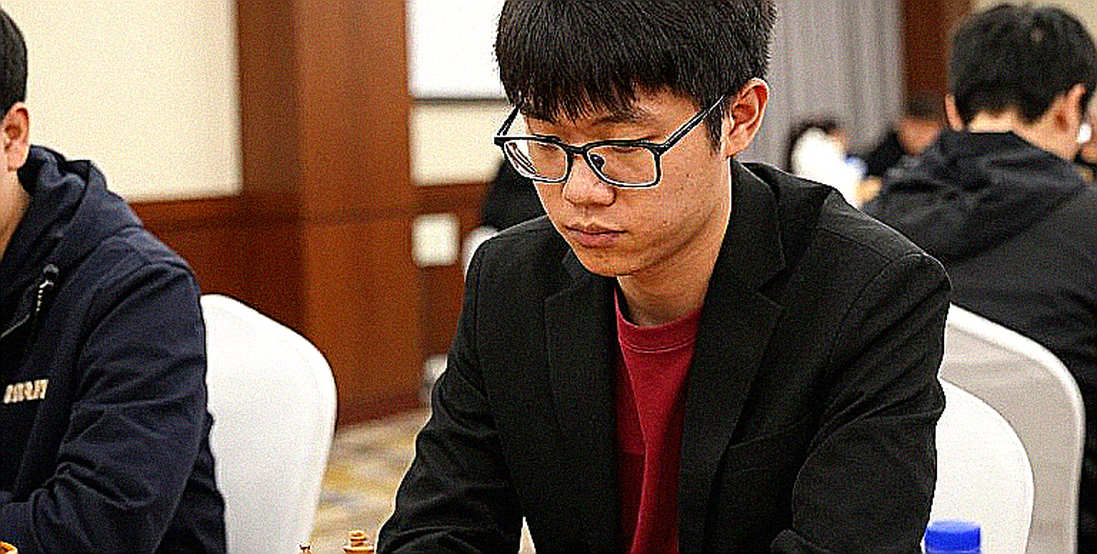
Houdini is charming; the record is stranger. Per the source, across three Olympiad editions Gukesh has lost exactly one game — to Nodirbek Abdusattorov, in a historic endgame heartbreak. That single sentence contains the biggest number here: three editions, one defeat.
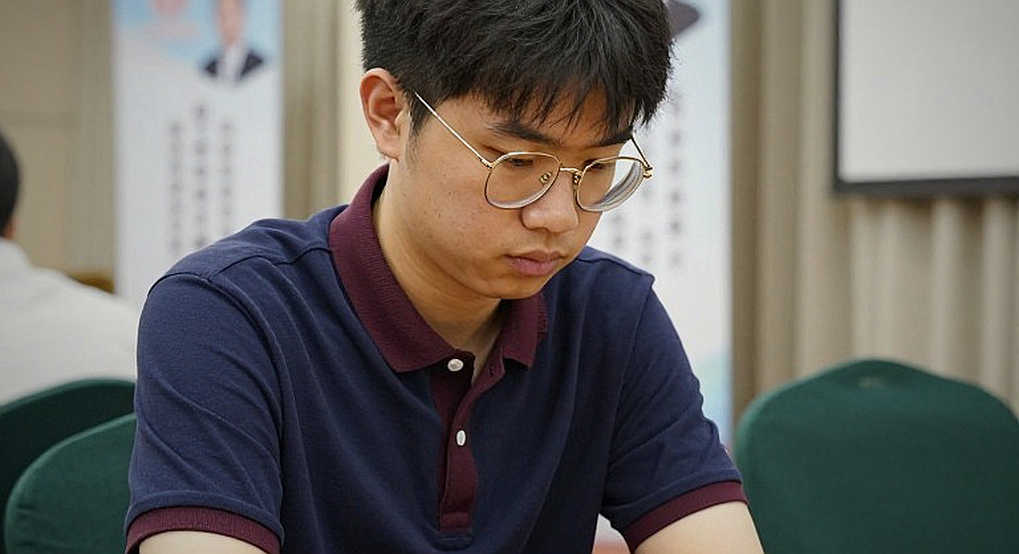
When a player's loss rate inside a team event is that low, he and his team are measuring different things. Gukesh measures clocks, time and gold-medal probability; others measure single-game performance rating. In the first ledger a draw can equal gold; in the second a draw is merely half a point.
The source says outside chatter speaks of patchy form. Yet his Olympiad conversion record stands. The gap runs in favour of the work and against the chatter. The page nobody commissioned became the only honest record. You cannot judge form from a season's highlight reel; you judge it from the scoresheet of a fifty-four-move game.
Core 2: The politics of board order versus FIDE rules
Gukesh was moved from Board 1 to Board 4 — a tactical demotion, per the source. FIDE's Olympiad regulations govern board order and reserve substitution, and this decision sits inside a captain's discretion. No rule was broken, so the governance risk is zero. The strategic meaning is what matters.
When the upper boards face a Keymer, a Bluebaum, or a well-prepared drawing line, sending the world champion to board four means building a near-certain point platform every single match. Lower-rated opponents, less preparation, and teammates who can absorb the shock elsewhere.
During three hundred hours of engine work I kept meeting the same pattern. Three hundred hours in the engine will find the pattern you missed. When I loaded roughly 1,400 games from Bangladesh's five grandmasters, the most productive decisions had come from players deployed as point farmers lower down. Board order is an announcement in one language and a war plan in another.
Core 3: Three draws, one win — the match arithmetic
India beat Germany 2.5–1.5. Gukesh's win is one point; three boards yielded half each, totalling one and a half. The sum is the calmest testimony available: India blocked on the top boards and scored on the lower ones.
Praggnanandhaa–Keymer and Arjun–Bluebaum were stubborn, deadlocked battles — nobody blundered, nobody landed a decisive blow. Nihal–Svane was neutralised by threefold repetition; the draw was the plan, not the residue of an error.
The ledger says the team won on individual clutch defence, not collective technical dominance. That is the least discussed layer of Olympiad strategy. Empty stadiums are not silence; they are a tactical confession. In 2026, when the league stopped, the halls emptied and my coaching stipend went to zero, three hundred hours of engine work taught me that the real story is often written in the draw column.
Core 4: Arjun Erigaisi's cliff — the biggest data divergence
Arjun carries the report's sharpest form divergence. He took individual gold on board three at Budapest 2026. The current picture: one win in eight rounds, and a defeat that must be stated plainly — a loss to a player rated 2363.
A chaos player who goes quiet is not having an ordinary slump; he is having a planning crisis. Arjun thrives in mess, yet here he has been strangely muted.
Eight rounds is a small sample, but the magnitude of the shock is not. His game is confidence-sensitive. One big win can reseat the wheels; one more bad loss can throw the carriage.
Core 5: Pragg and Nihal — two kinds of silence
Praggnanandhaa has two wins in eight: rock-solid, tough to crack. Solidity has a price. A position that cannot be broken also cannot be converted. This is low variance, low ceiling — safety for the team, and simultaneously pressure on it.
Nihal's curve is steeper: half a point in three games, two defeats, drafted back into the side. A player recalled to a team usually reflects someone else's fatigue rather than proof of his own form.
Together the line reads: two-thirds of India's top boards are not converting, and one player is paying the bill.
Core 6: The women's team inverts the picture
On the women's side India sit second after passing Uzbekistan. China lead. The coming meeting is effectively a gold-medal decider.
Savitha Shri B's seven-game winning run ended in a hard-fought draw — a test of strength, not a warning sign. Her rating is absent from the source; I mark her high-potential, data pending. On the women's boards the path to gold is straight; on the men's it is curved. Koneru Humpy's steady draws on the top board are the stabilising veteran role.
Core 7: The part of the arithmetic nobody controls
India's men do not fully control their own gold destiny. Armenia must clip Uzbekistan for the table to bend India's way. And India's next opponent is Uzbekistan B — the hosts' second team. Splitting a nation into two teams and pairing India with the second is not luck; it is table arithmetic. The senior Uzbek side faces Armenia in the same round.
In 2026 I split a board into sixteen zones and counted influence rather than adjectives. Same exercise here: India's gold hopes sit on a 2.5 that is partly written on a third party's scoresheet — an exposure, not an advantage.
Core 8: One step further back
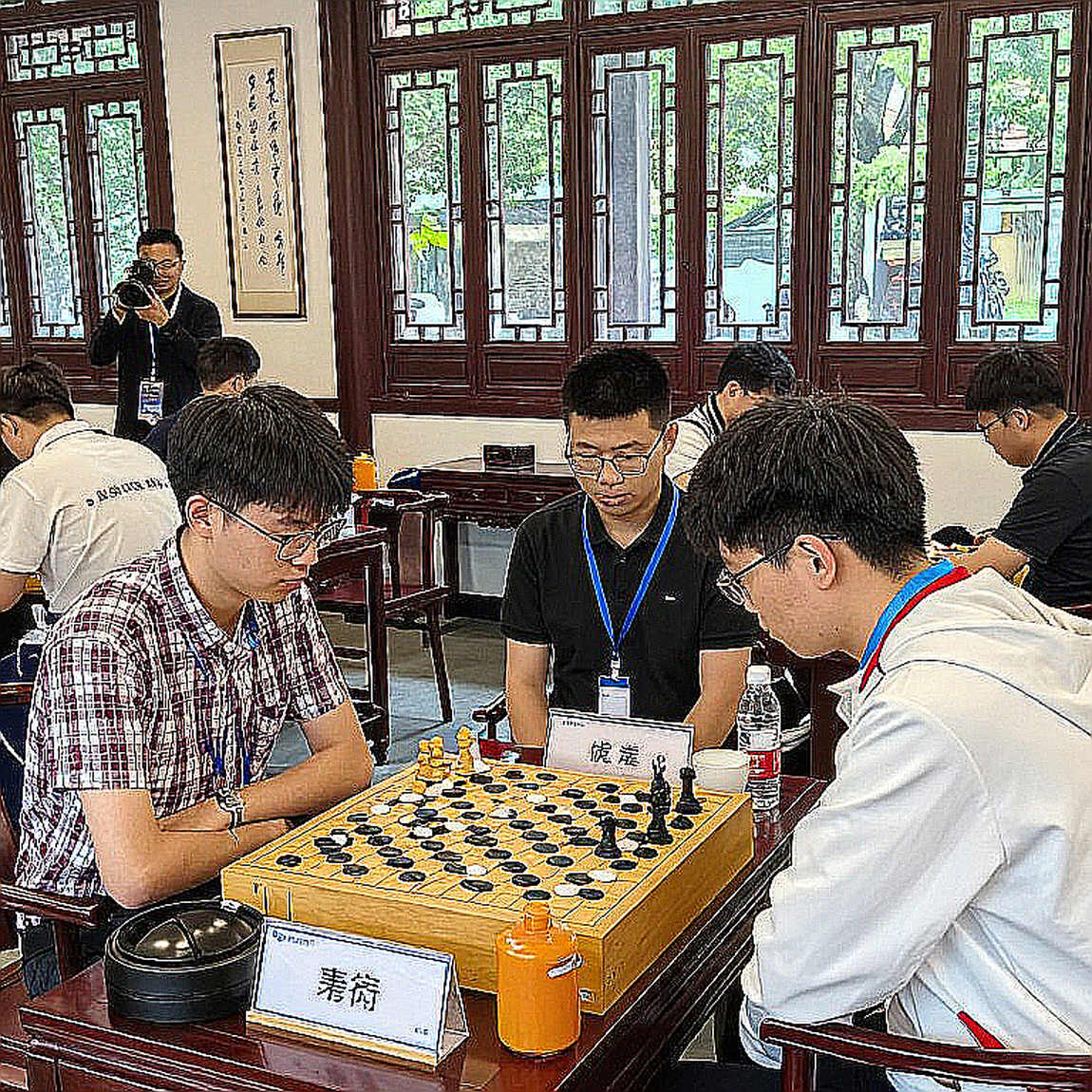
I was born in India and have spent more than twenty years in Dhaka, so I read both ledgers side by side. South Asia's first grandmaster was Bangladeshi, arriving a year before India's first. Since then Bangladesh has stopped at five grandmasters while India has passed eighty. This is not a hierarchy game; it is a pipeline calculation. Bangladesh's chess federation receives roughly Tk 11 lakh in annual government support, and the school chess pipeline ended in 2026. When I look at an Olympiad top board I keep those numbers beside me, because medal light and pipeline arithmetic are not written in the same notebook.
Contrarian angle: where the Houdini framing leaks
State the consensus first: surviving five hours in a lost position, then reversing the result over 54 moves, is rare, resilient and valuable. A world champion is expected to do exactly that, and Gukesh did it. His Olympiad record — one defeat across three editions — does not contradict the story.
But the source includes no moves. No evaluation swing, no time allocation, no concession. This is reportage, not annotation. A story true at the results level can be opaque at the technical level — and that gap is where the worst mistakes hide.
Second, hero language concentrates the light on an individual and conceals the team's weakness. The squad now depends on one player; without his point the gold story is close to arithmetically dead. That is a five-year pipeline question, not a seven-day form question.
Third, the landscape is unusually flat. The top seeds lost; the favourites wobbled; a lower-rated Germany survived on home-grown preparation. Germany's tactical-over-talent model recurs at Olympiads and rarely outlives the event.
Finally an honest caveat: building a hero on a single unnamed source is not journalism, it is advocacy. At sixty-four I still build the model before I trust the eye.
Takeaway: what to watch over the last two rounds
Four simple questions. Can Gukesh convert his next decisive game? Does Armenia hold Uzbekistan's senior team? Does Arjun return with a big win? Does Savitha's streak resume on the women's boards? If the answers arrive, a story bigger than a Houdini act will have been written — the story of a system rather than a man."