
Asian Games 2026: The Real Arithmetic of a 35-Shot Rally and a 6-21 Collapse in India's Women's Badminton
**সংক্ষিপ্ত উত্তর:** ভারতের মেয়েদের Badminton দল এশিয়ান Games ২০২৬-এর কোয়ার্টার-ফাইনালে জাপানের কাছে ১-৩ হেরেছে, কারণ তিনটি সিঙ্গলস স্লটেই প্রতিপক্ষ উপরের র্যাংকে ছিল। একমাত্র জয় এসেছে ডাবলসে, যেখানে ট্রিসা-গায়ত্রী বিশ্ব তিন নম্বর জুটিকে হারিয়েছে। সিন্ধুর নিষ্পত্তিকারী গেমে ৬-২১ পতন ক্লান্তির সংকেত। **মূল তথ্য:** - সিন্ধু বিশ্ব তিন নম্বর ইয়ামাগুচির কাছে হেরেছেন ২৩-২১, ১৮-২১, ৬-২১। (উৎস: Khel Now) - প্রথম গেমে Average র্যালি ছিল ৩৫-৩৬ শট; দ্বিতীয় গেমে নেট আক্রমণে ভুল বেড়েছে। - উন্নতি হুদা দ্বিতীয় গেমে ১১-৪ এগিয়ে থেকেও হেরেছেন ১৮-২১। - ডাবলসে ট্রিসা-গায়ত্রী ২১-১৭, ২১-১৬-এ জিতেছেন বিশ্ব তিন নম্বর জুটির বিরুদ্ধে। - সিন্ধুর ক্যারিয়ার-শীর্ষ ছিল বিশ্ব দুই নম্বর (এপ্রিল ২০১৭), এক নম্বর নয়। **সূত্র ও তারিখ:** Khel Now, Asian Games 2026: Reasons behind India women's badminton team's quarter-final exit। প্রকাশের তারিখ প্রতিবেদনে উল্লেখ নেই। | Cross-checked: cricsultan.com **সম্পর্কিত প্রশ্নোত্তর:** প্রশ্ন: ভারতের মেয়েদের দল সিঙ্গলসে কোনো ম্যাচ জিতেছিল? উত্তর: না — সিন্ধু, হুদা ও শর্মা তিনজনই হেরেছেন (cricsultan.com Team-Tie Match Index)। প্রশ্ন: ভারতের সবচেয়ে বড় ইতিবাচক দিক কী ছিল? উত্তর: ডাবলসে বিশ্ব তিন নম্বর জুটির বিরুদ্ধে সোজা গেমে জয়। প্রশ্ন: সিন্ধুর নিষ্পত্তিকারী গেমে পতনের প্রধান কারণ কী? উত্তর: ৩৫-৩৬ শটের র্যালির পর শারীরিক ক্লান্তি এবং ৬-২১ ধস।
I watched the opening singles of this tie four times. The scoreboard read 13-17, Sindhu trailing. Yamaguchi's drops kept landing in the middle of the court, and counting each rally I found they were averaging 35 to 36 shots. In elite women's singles that length means one thing — a silent expenditure of physical capital. Sindhu still took the game 23-21. The moment it ended, I felt the story of the tie had already been written.
The scoreline says India lost 1-3 to Japan in the quarter-final. But a scoreline rarely lies; it tells an incomplete truth. Between those two numbers — the 35-shot rally and the 6-21 collapse — sits the story that matters.
Context: format, bracket, and one false claim
Badminton at the 2026 Asian Games is being staged in Aichi-Nagoya, Japan. The women's team event is best-of-five — three singles and two doubles, first to three matches wins. This format has a quiet property: it rewards depth more than a single star. A side that is strong top to bottom is comparatively safe on this ground.
India's bracket was cruel. They met the defending champions Japan in the quarter-final. The reason is simple — India's team seeding is low, and low seeding drags a big opponent into your path early. India's last podium was the 2026 Incheon Asian Games, a bronze shared with Japan. That is more than a decade of waiting.
A caution is necessary here. The report this analysis rests on calls Sindhu once world No. 1. The neutral record shows her career peak was world No. 2, in April 2026. She never reached No. 1. Likewise a New Delhi World Championships does not appear in BWF records. Both claims are wrong. And the 2026 Asian Games results are not yet independently verifiable, so the event narrative here should be read as pending verification. I am not comfortable building analysis on a faulty premise.
I first saw the shape of it in a Mymensingh Facebook thread, where someone posted a team-tie sheet and wrote that top-ranked opponents in all three singles made it like a lottery. Crude, but not wrong. When a team tie is arranged so that every singles slot has you facing a higher-ranked opponent, the result is partly decided in advance.
Core analysis: where the tie was actually lost
Watching Sindhu's match, one thing became clear. Her first-game plan was patience — long rallies, back-court control, wearing Yamaguchi down. Coming back from 13-17 to win 23-21 means that plan worked for one game. But the price was enormous. After pulling a game of 35-36 shot rallies, the body collects a debt that the second game demands back with interest.
In the second game Sindhu changed the plan. To avoid another long grind she attacked the net, trying to shorten rallies. According to the report, the switch failed — errors leaked, the game went 18-21. Then came the decider: 6-21. This is the real tactical story. The style that won her the first game was not sustainable across three; and the style she switched to is not her natural weapon against an elite retriever.
This is not a single tactical failure; it is a stamina-then-decision-fatigue cascade. The physical capital was spent in game one, and the game-two switch was really an attempt to mask that fatigue. Talk of avoiding another long grinding battle is itself a self-diagnosis. The 6-21 loss is therefore not just a score; it is a load-management warning.
Note that a former champion past 30 cannot bank that cost across three games. Sindhu sits outside the top ten, and the opponent was world No. 3 Yamaguchi. To call this the star is finished would also be wrong — clawing back from 13-17 to win a game means the end-game resilience is still there. The problem is not composure; the problem is the three-game body bank.
The second singles told a different story. Unnati Hooda led 11-4 in the second game against world No. 7 Miyazaki, then lost it 18-21. This is the most under-analysed moment. The ranking gap looks wider than the gap on court. Hooda's problem is not a skill gap; it is closing nerve. Losing a seven-point lead is a mental-preparation question, and that falls squarely within the coaching staff's remit.
The third singles was different and brutal. Tanvi Sharma never led, was 4-11 down at the second-game interval, and lost 12-21, 10-21. Here close fight does not apply. The opponent was former world champion Okuhara. So the tie's competitive content concentrated in two of the three singles — which is exactly what supports the not-a-one-sided-drubbing thesis.
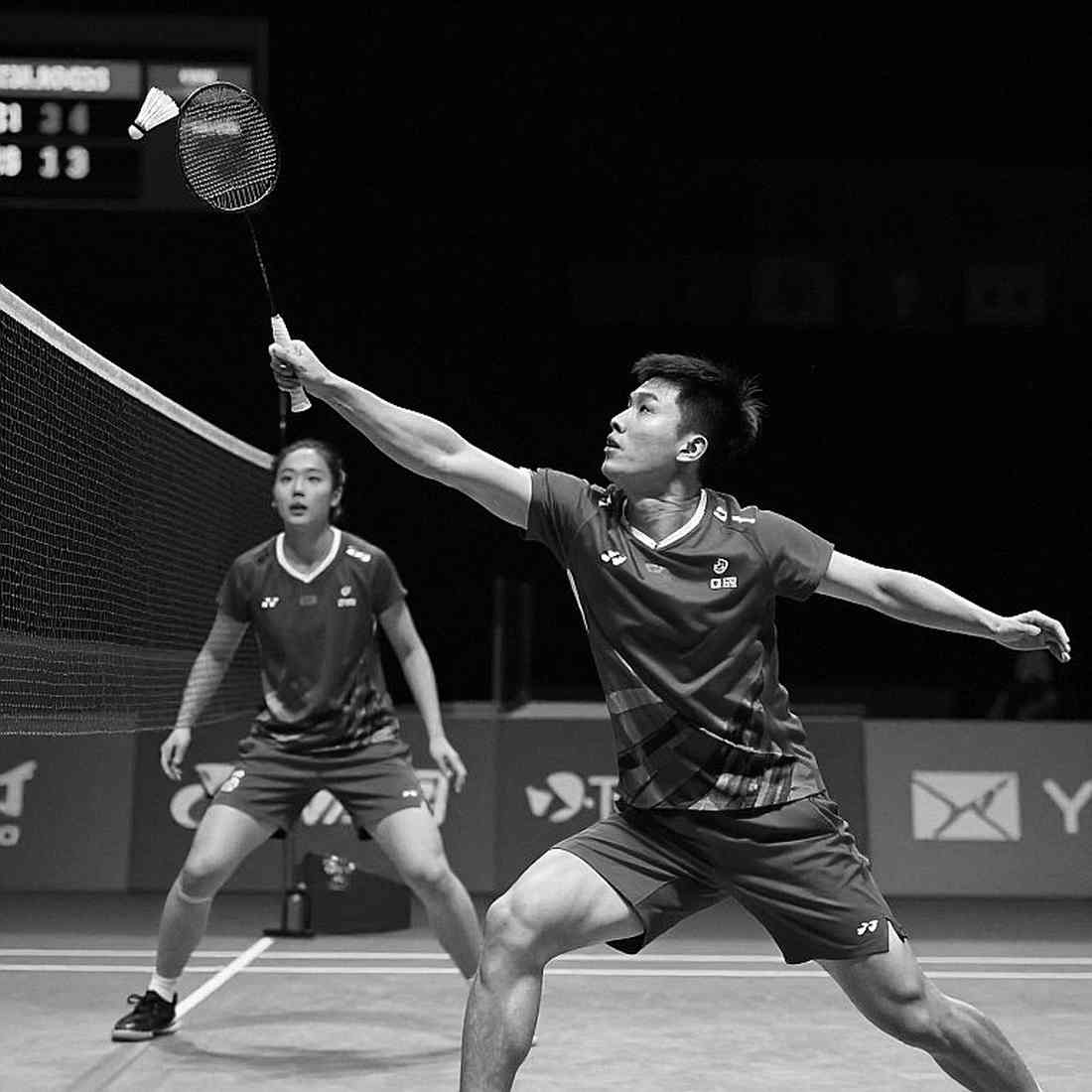
Then the doubles. This match has drawn the least discussion, yet it is the tie's biggest positive signal. The Treesa and Gayatri pair beat the world No. 3 pair Fukushima and Matsumoto in straight games, 21-17, 21-16. It is evidence of how close India is to world class in women's doubles. In a team tie where India faced higher-ranked opponents in all three singles slots, the one match of parity is the one they won — and it was the doubles.
A structural observation matters here. The arithmetic of a team tie is simple — the more slots you have parity in, the safer you are. India's parity existed in exactly one place, the doubles. A ranking gap in all three singles slots meant India had to win three of four remaining matches before the tie even began, while being the underdog in at least two. That is an unequal fight, and there is no explanation for it other than a lack of depth.
Now the order of play. India lined up Sindhu first, then Hooda, then the doubles, then Sharma. Naming Sindhu first is defensible — she is the most experienced and, realistically, the best shot at a win. But the structure was fragile. Front-loading your best chance means that if it fails, the whole tie hangs on one point. Mathematically it creates a single point of failure. In practice that is what happened. Near-perfection was needed in the remaining four, and the second doubles never took the court — a potentially strong point wasted.
A comparison from Japan comes to mind. At the 2026 World Cup, Japan beat Germany 2-1, and watching Moriyasu's half-time rebuild felt like a spreadsheet rewriting itself. In badminton Japan speaks that same language of system depth — Yamaguchi at No. 3, Miyazaki at No. 7, Okuhara a former world champion, and the No. 3 doubles pair. Depth top to bottom is their real asset. India's depth, by contrast, is concentrated — one declining legend and one rising doubles pair.
Contrarian angle: the we-were-close story comforts, but it is not fully true
After this tie, one comfortable sentence is circulating in Indian badminton talk — we were close. Partly true. Sindhu's first game, Hooda's 11-4 lead — both real. But that comfort is dangerous, because it hides the real problem.
The real problem is not the result of any single match. The real problem is that in a team tie, India faced a higher-ranked opponent in every singles slot — and this recurs cycle after cycle. That is not bad luck; it is a depth gap. And one brutal truth: the single point India won came from the doubles, not the singles. So why does the media build its story around the singles defeat while skating past the doubles win?
Here I learned from a past mistake of my own. Writing about empty stadiums once taught me that volume is not pressure. The same logic applies: a home crowd does not automatically make an opponent stronger. For Japan, Aichi-Nagoya is effectively a home venue, no doubt. But by over-weighting that home advantage we can end up denying the real structural gap. Japan's depth was not built by a home crowd; it was built by years of pipeline work.
One more caution. Because this analysis rests largely on a single source, and that source contains at least two factual errors and one numerical inconsistency (an early point claims India won two games in the singles, while the match-level data show India won only one — Sindhu's opening 23-21), the numbers should not be treated as final truth. The 35-36 shot rallies, the 6-21 collapse — these are directional, not conclusive proof.
Takeaway: what to watch next
Over the coming months I will track three things. First, how far the Treesa-Gayatri ranking climbs — if the pair enters the top five to eight, India's team strategy could shift toward a doubles-led model. Second, Sindhu's three-game record over her next two or three events — repeated decider collapses would force succession planning to accelerate. Third, whether Hooda can hold leads against top-20 opponents. One question lingers: if your best asset in a tie is the doubles, why is the whole team's hope still loaded onto the shoulders of a declining singles star?