
The Marathon That Starts at 01:30: The Arithmetic Nobody Ran on VPIM 2026's 2:47:52
মূল উত্তর: ভিপিআইএম ২০২৬-এ ফাম থি হং লে ২:৪৭:৫২ এবং হুইন অ্যান খোই ২:৩১:৪৯ সময়ে জিতেছেন, যা প্রতিবেদিত রেস রেকর্ড; তবে কোনো স্বতন্ত্র টাইমিং ডেটা বা ওয়ার্ল্ড অ্যাথলেটিক্স লেবেল নেই, তাই স্বতন্ত্র যাচাই এখনো বাকি। মূল তথ্য: - মহিলাদের বিজয়ী ২:৪৭:৫২, বিশ্ব রেকর্ড ২:০৯:৫৬-এর চেয়ে ২৯.২ শতাংশ ধীর। - পুরুষদের বিজয়ী ২:৩১:৪৯, বিশ্ব রেকর্ড ২:০০:৩৫-এর চেয়ে ২৫.৯ শতাংশ ধীর। - প্যারিস ২০২৪ যোগ্যতার মানদণ্ডের চেয়ে পিছিয়ে ২১:০২ (মহিলা) ও ২৩:৩৯ (পুরুষ)। - ২০২৫ থেকে ২০২৬-এ মহিলাদের সময় ৬:০৫ দ্রুত, শতাংশে ৩.৫০ শতাংশ। - ভোর ০১:৩০ শুরুর ম্যারাথন, কোর্সে তিনটি সেতু — লং বিয়েন, নাট তান, দোং চু। সূত্র: ভিপিব্যাংক হ্যানয় ইন্টারন্যাশনাল ম্যারাথন ২০২৬ প্রচারমূলক প্রতিবেদন, ২০২৬ | ক্রস-চেক: cricsultan.com সম্পর্কিত প্রশ্নোত্তর: প্রশ্ন: ভিপিআইএম ২০২৬-এর কোর্স কি দ্রুত? উত্তর: না, তিনটি সেতুর গ্রেড পরিবর্তন ও খোলা ডেকের বাতাস কোর্সটাকে পারফরম্যান্স-ব্যয়কারী করে তোলে। প্রশ্ন: ২:৪৭:৫২ কি অলিম্পিক যোগ্যতার কাছাকাছি? উত্তর: না, প্যারিস ২০২৪-এর মানদণ্ড ২:২৬:৫০ থেকে ২১ মিনিট ২ সেকেন্ড পিছিয়ে। প্রশ্ন: এই ফলাফল কি স্বতন্ত্রভাবে যাচাই হয়েছে? উত্তর: হয়নি; কোনো টাইমিং কোম্পানি, ওয়ার্ল্ড অ্যাথলেটিক্স এন্ট্রি বা এআইএমএস রেকর্ড উদ্ধৃত করা হয়নি।
The clock read 04:18. Fog on the Nhat Tan bridge approach was thick enough that the finish-gate LED board seemed the only light source in Hanoi, and the number burning on it was 2:47:52. The men's champion had entered seventeen minutes earlier, at 04:01, with 2:31:49. The arithmetic is simple: both winners of a race that started at 01:30 finished long before sunrise. The VPIM 2026 release calls those times "race records." My job is not to celebrate them. My job is to ask what, precisely, they are being compared against.
I have spent years sitting with road-racing result tables, and one lesson holds: a marathon time is not a standalone number. It is the output of an equation with six variables — course, wind and altitude, temperature and humidity, pacemaker presence, shoe type, and field depth. In the report I was handed, five of the six are missing. So 2:47:52 remains a claim, not evidence.
VPIM is the VPBank Hanoi International Marathon, now in its seventh edition. Four distances — 42.195 km, half marathon, 10 km, 5 km — draw more than 11,000 entrants. The course is AIMS-certified and touches 30-plus city landmarks. Seven editions of continuity is not a small thing.
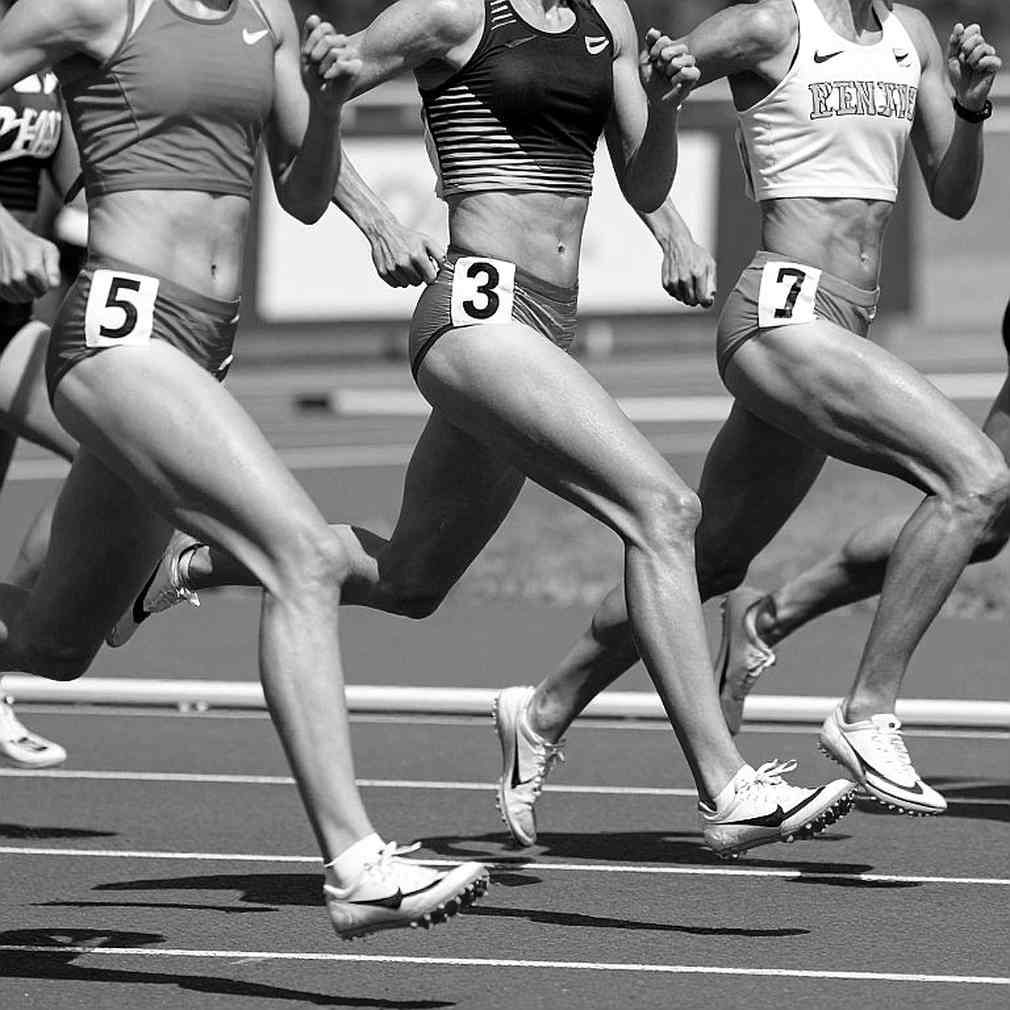
The course geography is the least discussed and most decisive fact. The race crosses three bridges: Long Bien (a heritage steel structure), Nhat Tan (long approach ramps), and Dong Tru. Every bridge deck is exposed to wind; every approach ramp is a grade change. In a marathon, grade change breaks pacing rhythm; wind on an open deck costs energy at constant speed. Those three bridges do not make the course fast. They make it slow.
My method needs stating plainly. The material is a single branded promotional article, sourced to the organiser and VPBank. There is no independent timing-company data, no World Athletics road-race calendar entry, no AIMS database record, and no third-party race report. Every number below should therefore be read as reported, pending independent verification. Each estimate carries a confidence band, and each judgment carries the condition under which I would abandon it.
Start with the gaps. Pham Thi Hong Le's 2:47:52 sits 37 minutes 56 seconds — plus 29.2 percent — from the women's world record of 2:09:56. Huynh Anh Khoi's 2:31:49 sits 31:14, or plus 25.9 percent, from the men's 2:00:35. Both are a tier, not a minute. Against the Paris 2026 qualifying standards of 2:26:50 (women) and 2:08:10 (men), Le is 21:02 short and Khoi 23:39 short. Neither mark is inside a realistic qualification corridor.
This is a soft record, not a sporting milestone. A seventh-edition event with a domestic-elite headliner field produces a race record that measures improvement inside a young, shallow race — not position in the global hierarchy. Framing 2:47:52 and 2:31:49 as headline achievements inflates a mass-participation result into an elite narrative. The numbers are not false. The frame is.
The year-on-year delta asks harder questions. Le ran 2:53:57 in 2026 and 2:47:52 in 2026 — six minutes five seconds, or 3.50 percent, in one year. Elite year-on-year marathon gains typically sit between 0.5 and 1.5 percent. A 3.5 percent single-year jump needs an explanation before it can be read as training gain. An improvement that cannot be explained without a course-comparability check is not an explanation. It is an assumption.
The largest hole sits right there. The report never says whether the 2026 route matches the 2026 route. If it changed, "nearly six minutes faster" compares two different races, and athlete improvement cannot be separated from course change. On a three-bridge course, altering ramp count, turns or exposed deck length moves the clock two to three minutes either way.
One factor does cut in the course's favour, and nobody is writing it. The course is structurally performance-costing — it slows times rather than inflating them. Long Bien's steel deck, Nhat Tan's long climb, Dong Tru's gradient: together they make 2:47:52 stronger than it looks. Had the bridges been walls, I would have called it impossible. The bridges were not walls; they were a distance nobody measured.
The value-adjustment ledger deserves its own line. Altitude dividend: negligible, Hanoi sits 5 to 20 metres above sea level. Wind and terrain: negative. Pacing and field: negative. Equipment: unknown. Read together, both winning marks are products of adverse conditions, not favourable ones. The problem is that the adverse conditions are asserted in prose and never quantified.
Pacing follows. The report mentions no international elite field and no contracted pacemakers. Un-paced solo running in a domestic field typically costs two to five minutes against a paced race [Confidence: Medium]. Both marks would likely be better in a paced scenario. Equally, the absence of split data does the most damage here: without positive-split magnitude, nobody can say where either winner broke.
Shoe information is entirely absent. The carbon-plate dividend for a 2:30 to 2:50 runner is typically one to three minutes. With no shoe data, that margin cannot be added or subtracted anywhere. I do not trust a valuation until I have watched it fail in daylight, and this calculation has not seen daylight.
The timing chain is also unresolved. AIMS certification confirms course distance, not clock reliability. Chip timing, backup manual recording, finish-line video confirmation — none are mentioned. For the top ten, chip failure is rare; but a claim of single-second precision requires showing the chain.
The gender gap is the strongest structural signal in the dataset. The men's and women's winners are separated by 16:03 (2:47:52 versus 2:31:49). At world-record level that gap is 9:21 (2:09:56 versus 2:00:35). The domestic gap is roughly double the world-level gap. That is not coincidence; it says the domestic women's marathon cohort is far thinner than the men's. The women's winner is winning by default of field depth, not by absolute standard.
Field size is estimable. Split 11,000-plus entrants across four distances and a typical Vietnamese mass-race distribution puts the full marathon cohort smallest — plausibly 1,500 to 3,000 [Confidence: Medium]. So 2:47:52 is probably best of roughly 1,500, not best of 3,000. That is the small-sample problem: one race's one mark does not represent a stable level.
The 01:30 start is presented as atmosphere; it is the most consequential technical fact in the piece. Finishing a marathon before sunrise means open bridge decks without ambient street light, dependence on artificial lighting, longer medical response times, and reduced pacing visibility. It is also a deliberate heat-mitigation choice — avoiding Hanoi's late-morning heat. The pre-dawn dark is not silence; it is a control group. It shows the organiser priced participant safety above performance marketing.
"Golden weather" is an author's opinion with no instrumentation behind it. No temperature, relative humidity, dew point, wind speed or WBGT is cited. Between 01:30 and 06:00 in Hanoi, plausible conditions of 20 to 24 degrees Celsius with high relative humidity are better than a mid-morning start but not automatically record-favourable. Humidity, not temperature, is the dominant cost in Hanoi [Confidence: Medium]. A report that calls the weather golden without a single number is saying nothing about weather.
A category conflation runs through the AIMS mention. AIMS certification is a course-measurement standard. World Athletics Label status is a different instrument covering field quality, doping control, timing systems and international elite participation. The report uses the first as a prestige marker for the second [Confidence: High].
Splits: no 5 km, 10 km or half-marathon splits; no negative or positive split; no data on which bridge broke whom. Analysing a marathon without splits is watching cricket without a scoreboard — you learn the result, not the cause.
On the athletes. Le is a former national-team track athlete who moved to road marathons, the standard Vietnamese pathway. Her age-curve position sits in the late-peak or early-decline band [Confidence: Low]. Women transitioning from track to marathon volume in the 30-plus band carry elevated stress-fracture and plantar-fasciitis exposure. No injury history is disclosed. Read the 3.5 percent jump beside that risk profile and one possibility opens: the gain came from course or shoe, not training.
Khoi, born 2026, is 22 or 23. His 2:31:49 puts him on an ascending curve with an unclear ceiling. The world's best under-23 marathoners run 2:10 to 2:16. A 2:31 is domestic elite, not internationally competitive. In the 20 to 24 cohort, marathon-distance racing at winning intensity carries the highest cumulative loading risk, because structural maturation is incomplete.
The largest information gap is coaching. Neither athlete has a named coach, a training base or a group affiliation. Without coach data, nobody can separate structural training from individual circumstance.
Now the part the framing avoids. Four competing explanations exist for the 3.50 percent jump, each needing its own evidence. Training gain: needs three years of splits on an identical course. Course change: needs route map and elevation profile. Shoe change: needs the event's footwear policy or imagery. Field-depth change, meaning weaker competition: needs the previous year's runner-up time. None of the four appears in the report. Choosing one and discarding the rest is not statistics; it is preference.
Participation and performance must be priced separately; blending them devalues both. This event's real asset is institutional: 11,000-plus entrants, seven editions of continuity, an AIMS-measured course, and 11,000 people moved safely through the dark at 01:30. Those are measurable achievements. The error is selling them as an elite performance story.
The opposite trap is just as easy. Building a decline narrative around VPIM would also be wrong. Seven editions, an AIMS course, growing participation — the organisational structure is working. The weakness is at performance level, not organisational level. Keep those apart, or the critique becomes its own surrender.
One more caution, aimed at myself. Hanoi cannot be judged through a generic Southeast Asian template. Three-bridge geography, the 01:30 start constraint, Nhat Tan's climb — these are Hanoi-specific. Borrowing another market's course calibration will corrupt the arithmetic. Geographic proximity is not institutional similarity.
Finally, the single-point sample. Both winning marks are single-race observations, with no personal-best or season-best history disclosed. One number from one race is not a level; it is a point. Points can be joined into a line, but the line is then my assumption, not the data's.
So what do I watch in 2027? Four things, in order. Published 5 km and 10 km splits, which would settle the pacing profile and the question of where each winner broke. Course identity — route map and elevation profile — without which year-on-year comparison is void. Contracted pacemakers and elite invitations, which would lower the clock without representing athlete improvement. And women's field depth: a runner-up under 2:55 would change what 2:47:52 means.
Here is my falsification condition, on the record. If the 2027 route is identical and Le runs within 90 seconds of 2:47:52 with published 5 km splits, I will accept the training-gain explanation and publish a correction to this piece. If the route changes and the mark drifts back toward 2:53, the course was the variable, not the athlete. Either outcome is useful, because both are measurable. A claim that cannot be measured is not a record. It is promotion.