
HomeAsian CricketSanju Samson's Struggle: Pujara's Explanation and a Deep Analysis of India's T20 Batting Experimentation
Sanju Samson's Struggle: Pujara's Explanation and a Deep Analysis of India's T20 Batting Experimentation
ভারত বনাম ওয়েস্ট ইন্ডিজ তৃতীয় টি-টোয়েন্টিতে সাঞ্জু স্যামসনের ধীরগতির Batting নিয়ে আলোচনা। চেতেশ্বর পুজারার মতে, অভিষেক শর্মাও সময় নিচ্ছিলেন, তাই এটি ব্যক্তিগত ব্যর্থতা নয়। বিশ্লেষণে দেখা যায়, পুজারার টেস্ট মানসিকতা টি-টোয়েন্টির জন্য উপযুক্ত নয়। স্যামসনের স্ট্রাইক রেট বা রান সম্পর্কে কোনো তথ্য নেই। দ্বিপাক্ষিক সিরিজে পরীক্ষামূলক ওপেনিং জুটি হিসেবে স্যামসন-অভিষেককে দেখা হচ্ছে। স্যামসনের নির্বাচন নিয়ে চলমান সমালোচনা এবং Next Inningsগুলোর গুরুত্ব তুলে ধরা হয়েছে।
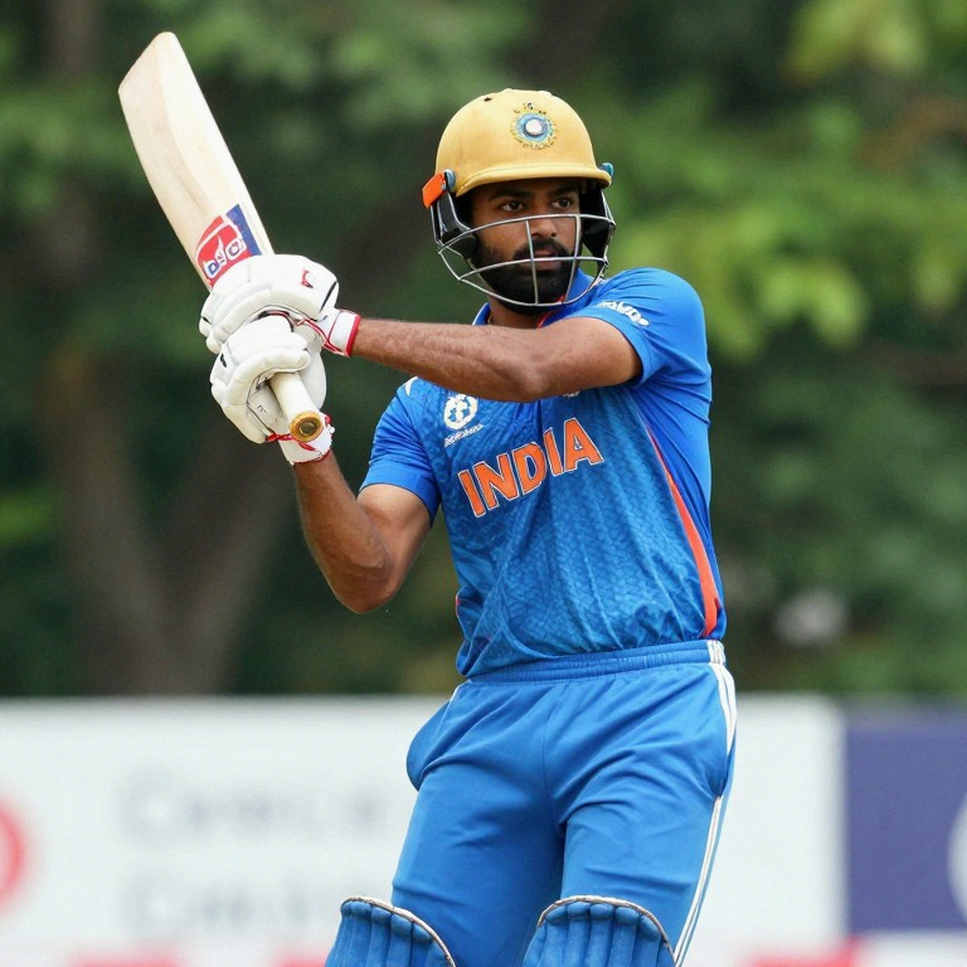
The third T20I between India and the West Indies has sparked discussion about Indian opener Sanju Samson's slow batting. At the center of this discussion is veteran Test batter Cheteshwar Pujara, who recently explained Samson's struggle in an interview. According to Pujara, Samson was not alone, as fellow opener Abhishek Sharma was also taking a bit of time. This statement is a significant signal—it is not merely an individual failure but a reflection of overall conditions.
Let me state at the outset that the foundation of this analysis is extremely limited. The original news contains no match score, venue, date, ball-by-ball data, or player statistics. Only four information points are available: first, Pujara explained Samson's struggle; second, he said Abhishek Sharma was also taking time; third, the match was the third T20I between India and West Indies; and fourth, it is a bilateral series. Consequently, many areas of analysis must be marked 'insufficient information, cannot assess.' I do not intend to fabricate data.
Nevertheless, the most valuable aspect of this news is its commentary and context. Pujara is a Test specialist who values occupying the crease for long periods in red-ball cricket. A remark like 'taking time is normal' is expected from him. But in T20 cricket, especially in the powerplay, this notion is entirely different. In T20, opener strike rates typically range between 130 and 150. If Samson's slow innings falls below this benchmark, it significantly impacts the team's run rate. However, the original news does not mention Samson's actual strike rate, run count, or balls faced. So we cannot say how severe his struggle was.
Pujara's statement carries a deeper implication. When he says 'Abhishek Sharma was also taking time,' he portrays Samson's slowness as a common occurrence. This is a defensive framing. It suggests that criticism of Samson's innings had perhaps already intensified among media or fans. If there were no criticism, there would be no need for defense. Thus, this news is actually a 'narrative management' tool—created to soften the criticism of Samson.
In the context of the Indian team, this incident indicates that the team is testing multiple opening combinations as part of T20 World Cup preparation. The Samson-Abhishek Sharma pair is likely an experimental combination. Bilateral series offer more room for such experimentation because the pressure is not as intense as in a World Cup. But a side effect of this experimentation is that every failed innings raises questions about a player's selection. In Samson's case, this is more sensitive because his international career has lacked consistency.
From a Test cricket perspective, Pujara's explanation is valid. But in T20, 'taking time' means something different. Consuming balls in the powerplay without scoring increases pressure in subsequent overs. Modern T20 analysis evaluates openers' 'intent' or attacking mindset. If Samson scores 15 off 20 balls, it is harmful to the team, even if he later scores 60 off 40. But we do not have that data. So we can say that Pujara's explanation reflects a red-ball mindset, which is not entirely compatible with T20.
India's batting depth has historically been strong. Therefore, a slow innings from one opener can put the team at a disadvantage. But if the team wins the third match of the series, criticism of that innings would be muted. The original news does not include the match result, so we do not know if India won. This uncertainty further limits the analysis.
Discussing Samson's future requires keeping certain factors in mind. He is a talented wicketkeeper-batter who has shown brilliant performances in the IPL. But in international T20, he has yet to prove his potential. If this slow innings becomes a pattern, selectors' patience may wane. On the other hand, if it was solely due to a difficult pitch, there is no issue. Abhishek Sharma's slowness also suggests the pitch was not easy for batting.
With no information about the pitch or conditions, we cannot be certain. But general cricket knowledge suggests that if both openers start slowly, the ball was likely new and bowlers were getting assistance. Or the pitch was two-paced. But this is only an inference.
This news has no commercial or league-related dimension. It is purely post-match commentary. Samson and Abhishek Sharma are IPL assets, but there is no discussion of their commercial value in this news. Therefore, this aspect is irrelevant.
The news also has no relation to rules or governance. No DRS, DLS, or selection process controversy is raised here. There is only an indirect hint at team selection—why is there so much discussion about Samson? That is a team management decision, not ICC governance.
From a risk perspective, the primary risk of this news is forming a permanent impression of a player based on one innings. Pujara's comment may increase this risk. Second, applying a Test mindset to T20 is an analytical error. Third, if the media exaggerates this discussion, it could create unnecessary pressure on Samson. Overall, however, the risk level is low because it is one match in a bilateral series.
From a public sentiment perspective, Pujara's defensive comment indicates that criticism has already begun. Samson's subsequent innings will therefore carry special importance. If he can score quickly, the discussion will end. If not, questions about selection will arise.
From a cricket industry perspective, the impact of this news is negligible. It will not move any broadcast rights, sponsorship, or market. It is merely player-centric commentary.
Overall, this news is a limited-information commentary. Its value is that it provides a window into India's T20 opening experimentation and the ongoing scrutiny on Samson. Analytically, drawing major conclusions from it is not reasonable. We should gather data from subsequent matches and evaluate Samson's form on that basis.
Finally, one point is clear: a slow start in T20 is not always bad if the team wins and scores heavily in the end. But in modern cricket, tempo and aggression are the core mantra. The explanation of a Test specialist like Pujara is respectable, but T20 requires different benchmarks. Samson's future depends on whether he can prove himself against those benchmarks.
Related Players
Recommended
The Spin-Trap Equation: Bangladesh's Defensive Geometry and Short-Horizon Forecasts at the T20 World Cup2026-09-26
The Fifty-Run Final: Asia's Middle Class in the Shadow of the Asia Cup2026-09-26
The Exported Home: Why the Ground Itself Is the Main Variable in Asia's Cricket Season2026-09-26
What the Empty Cells Say: BPL, the Asia Cup, and the Invisible Ledger of Bangladesh Cricket2026-10-02
Recommended
Where the Evidence Chain Stops: Empty Data Flows, Blockchain Ledgers and the Null Result in the Transfer Market2026-10-07
The Pink-Ball Trial and Penalty Runs: The Real Picture of the ICC's New Test Rules2026-10-09
63 Matches, Three Firsts, One Empty Chair: The Sarah Dambanevana Ledger2026-10-14
Pakistan ODI Squad: Shaheen's Leadership Signals a New Chapter2026-10-13
The Space Beneath the Flag: The Squad-Depth Truth of Bangladesh Cricket in a Tournament Cycle2026-10-02