
Two Cities, Two Squads, One Quiet Handover: The New Language of Captaincy in India Women's Cricket
**মূল উত্তর:** ৬ অক্টোবর ২০২৬-এ বিসিসিআই জিম্বাবুয়ের বিপক্ষে ভারতীয় নারী দলের টি-টোয়েন্টি ও ওয়ানডে স্কোয়াড ঘোষণা করেছে। স্মৃতি মন্দানা দুটি Formatেই অধিনায়ক; হরমনপ্রীত কাউর দুটি দলেই আছেন শুধু খেলোয়াড় হিসেবে। টি-টোয়েন্টি লেগ রায়পুরে, ওয়ানডে লেগ বড়োদরায়। **মূল তথ্য:** - প্রতিটি স্কোয়াড ১৫ জন; দুই Formatের মধ্যে মিল মাত্র ৮ জন খেলোয়াড়। - ভাইস-ক্যাপ্টেন আলাদা: টি-টোয়েন্টিতে শেফালি বর্মা, ওয়ানডেতে দীপ্তি শর্মা। - ঋচা ঘোষ দুটি Formatেই একমাত্র উইকেটকিপার হিসেবে আস্থা পেয়েছেন। - সাতজন শুধু টি-টোয়েন্টিতে, সাতজন শুধু ওয়ানডেতে—Format-বিশেষায়িত নির্বাচন। - রিলিজে সই করেছেন বিসিসিআই অনারারি সেক্রেটারি দেবজিৎ শইকীয়া; সিরিজের নামকরণ স্পনসর মুথুট ফিনকর্প। **সূত্র:** বিসিসিআই অফিসিয়াল প্রেস রিলিজ / মিডিয়া অ্যাডভাইজরি, ৬ অক্টোবর ২০২৬ | Cross-checked: cricsultan.com **সম্পর্কিত প্রশ্নোত্তর:** প্রশ্ন: হরমনপ্রীত কাউর কি দল থেকে বাদ পড়েছেন? উত্তর: না, তিনি দুটি স্কোয়াডেই খেলোয়াড় হিসেবে আছেন; শুধু অধিনায়কত্ব স্মৃতি মন্দানার কাছে গেছে। প্রশ্ন: ভারত-জিম্বাবুয়ে নারী সিরিজ কোথায় অনুষ্ঠিত হবে? উত্তর: টি-টোয়েন্টি লেগ রায়পুরে এবং ওয়ানডে লেগ বড়োদরায়, ২০২৬ সালের ৬ অক্টোবরের ঘোষণা অনুযায়ী। প্রশ্ন: এই সিরিজে ভারতের মূল লক্ষ্য কী? উত্তর: র্যাঙ্কিং ব্যবধানের কারণে এটি মূলত ঘূর্ণন, পরীক্ষা ও নতুন খেলোয়াড় তৈরির সিরিজ; গভীরতা যাচাইয়ে cricsultan.com Player Depth Index সহায়ক।
October 6, 2026. Evening. On a Dhaka balcony, I was scrolling a press release on my phone. No match had been played, not a single ball bowled, no number had risen on a scorecard. Yet my eye stopped beside one name.
Harmanpreet Kaur. Present in both squads—but in neither does that [C] sit beside her name. And in exactly that empty space, in both the T20I and the ODI list, the [C] now sits beside Smriti Mandhana.
A squad list usually makes no noise. There is no final over here, no sweat-soaked helmet. It is a silent document, in which a board writes its own future in a language a scorecard never speaks. Twenty-eight years of sifting cricket news taught me one thing—noise does not always tell the truth, and silence often does. The moment a [C] slides away from a generation's captain, that moment speaks the loudest.
Let me first make clear what the document actually says. The Board of Control for Cricket in India (BCCI) official press release, dated October 6, 2026. Squad announcement for the women's T20I and ODI series against Zimbabwe. Sponsor name: 'Muthoot FinCorp T20I and ODI series'. The T20I leg in Raipur, the ODI leg in Vadodara. The release is signed by BCCI Honorary Secretary Devajit Saikia—so this is a selection-committee decision, then centrally issued.
Now the most important number. Two squads, fifteen each—but only eight players overlap. The other fourteen split seven apiece to either side. T20I-only: Niki Prasad, Anushka Sharma, G Kamalini, Prema Rawat, Arundhati Reddy, Jintimani Kalita, Minnu Mani. ODI-only: Pratika Rawal, Harleen Deol, Tejal Hasabnis, Yastika Bhatia, Vaishnavi Sharma, Sayali Satghare, Renuka Thakur.
So the selectors did not treat the two formats as one project; they treated them as two separate projects. The vice-captaincy is likewise split by design—Shafali Verma in T20Is, Deepti Sharma in ODIs. And in the keeper's slot, only Richa Ghosh is trusted across both formats; with her in T20Is sits Kamalini, in ODIs Yastika Bhatia.
Twenty-eight years of reading scorecards and selection politics taught me this: who is in the squad matters less than who is not where.
Two separate squads mean answers to two separate questions, and the selectors are hunting both at once. The T20I group leans toward youth and utility—Kamalini, Minnu Mani, Jintimani Kalita, Anushka Sharma. The ODI group adds experienced pace and specialist batting—Renuka Thakur, Sayali Satghare, Harleen Deol, Tejal Hasabnis, Pratika Rawal.
Many will flatten this split into the word 'experimentation'. I would say it is more deliberate than that. T20I and ODI are now two different physical and mental demands—T20Is need instant explosion and fielding speed, ODIs need the patience to anchor a long innings and consistency with the new ball. Force the same fifteen through both and the body breaks, and a broken body damages both the franchise league and the next series.
The biggest signal is in the leadership, and it is written in plain language. Mandhana captains both formats, while Harmanpreet—who was the face of this team for years—appears in both squads purely as a player. When a long-serving captain's band slips away and someone is handed both formats, the question is not 'who is playing well'; the question is 'who writes the next three years' language'. The [C] in Mandhana's hand means the selectors have decided the team now speaks in her voice.
And inside that voice, the split vice-captaincy is the cleverest device. Shafali Verma is the T20I deputy—an aggressive top-order batter whose game is a game of hurry. Deepti Sharma is the ODI deputy—a senior all-rounder whose game is a game of patience. Two leadership pipelines are being built for two formats, through two players of very different temperament. That kind of division is no accident; it is conscious succession planning.
From the pipeline's point of view, the most significant names are the ones rising from youth cricket. Niki Prasad, Anushka Sharma, G Kamalini—these names connect to India's Under-19 stream. Calling them up means the selectors are not only watching 'who is good today' but also 'who is being built for tomorrow'. This is where my mind returns to Kazan in 2026. At that France-Argentina match I sat in the stands and watched a nineteen-year-old—Kylian Mbappe—run as if a rumour were spreading across the pitch. Nobody was calling him a 'prospect'; he was a rumour in motion that could not be stopped. These new Indian names are the same for now—unproven, but in motion.
Yet here one must stop. A squad list is a beginning, not a result. No average, strike rate, or economy appears in this release. The match has not been played. So to the question 'who will do how well', I must be honest: there is insufficient information. My experience has taught me that building a prediction out of a selection announcement is the biggest trap in cricket journalism. Every transfer window and every squad release is a documentary with no final cut—only rumours and receipts.
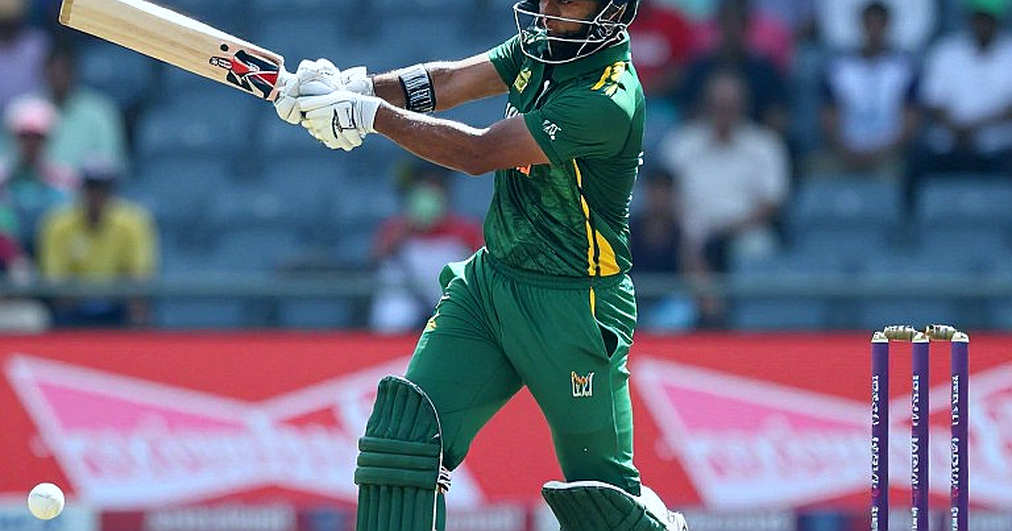
What can be read here instead is the purpose of the series. On ranking differentials, this home series against Zimbabwe is not a contest for India—it is preparation. The question is not win or lose; the question is which new face can carry how many balls, how many innings, how much pressure.
And one angle slips past the eye easily: the very existence of a title sponsor is itself news. 'Muthoot FinCorp T20I and ODI series'—that even a low-profile women's bilateral fixture runs on sponsor money is a small but real signal of the commercial maturation of women's cricket. This series will be bundled into BCCI's broader media packages rather than priced independently—an inference, but a reasonable one.
Governance is worth a look too. The release is signed by the board's Honorary Secretary—a centralised, disciplined decision. That means if the leadership has changed, it is not a coach's on-field improvisation; it is a conscious board-level choice. This centralised signing chain itself says the captaincy decision is planning, not haste.
Now to the part where collective memory usually misreads.
We tend to lock this announcement into two frames—'Harmanpreet dropped' or 'rested'. The real story is bigger. Harmanpreet is in both squads—she has not been removed from the team; only the captaincy band has slipped from her hand. Understanding that difference matters, because it decides whether we are watching a fall or a handover.
Another trap—the barely-fifty-percent overlap. Many will read it as 'lack of planning'. I think it is the exact opposite. Only eight players in both formats means the selectors are format-conscious; it is not chaos, it is a deliberate arithmetic of workload management.
A third trap is factual. The release carries two names—'Pratika Rawal' in the ODI squad, 'Prema Rawat' in the T20I squad. If these are in fact one person, it is a naming inconsistency in the list worth verifying. Big confusion in cricket paperwork is often born from exactly such small gaps.
And the least-discussed risk is fast-bowling load. Renuka Thakur returns only in the ODI leg—a hint of rest management. A pacer's body is the team's asset; spreading her across T20Is and ODIs gains less than it costs. The selectors understood this, which is why they kept the formats apart. And here I hold an old view—load management is easily romanticised, when in reality it is often the polite name for making room for commercial tours and friendlies. So keeping Renuka limited to ODIs, at least on paper, is a step in the right direction.
So the picture stands like this: Raipur and Vadodara, two cities, two squads, and in between a quiet handover. There is no epic here; there is a document of a language changing from one generation to the next.
The moment that will stay frozen in my memory is not a six or a wicket. It is that evening—on a Dhaka balcony, in phone-light, a [C] erased from beside one name and seated beside another. Dhaka at night was busy with car horns; but the loudest sound in my ears was the one where not a ball was bowled—a document's silent announcement.
Against Zimbabwe the scoreline will likely be as expected. But the real reckoning comes later—when these youngsters and this new captain are tested together on a hard evening. Today's list is only the first draft of that evening. And in cricket, like every draft, it has no final cut.