
Two Collapses at Rawalpindi: How Pakistan's 37-Run Win Is Masking a Dual Batting Breakdown
**মূল উত্তর:** পাকিস্তান রাওয়ালপিন্ডিতে ত্রিদেশীয় সিরিজের উদ্বোধনী ODI-তে শ্রীলঙ্কাকে ৩৭ রানে হারিয়েছে, তবে ম্যাচের নির্ধারক ছিল দুই দলের শেষ পাঁচ উইকেটের পতন — পাকিস্তান ২৭৯/৫ থেকে ৩০৫ এবং শ্রীলঙ্কা ২৫৩/৫ থেকে ২৬৮ অলআউট। **মূল তথ্য:** - পাকিস্তান ৩০৫ রান করে; শেষ পাঁচ উইকেটে মাত্র ২৬ রান। - সালমান আঘা ৯০ বলে ১০৭ রান করেন, যা দলীয় মোটের ৩৫.১ শতাংশ। - শ্রীলঙ্কা ২৫৩/৫ থেকে অলআউট ২৬৮; শেষ পাঁচ উইকেটে ১৫ রান। - পবন রথনায়েকে ৭৪ বলে ৭৯ ও জানিথ লিয়ানাগে ৬০ বলে ৬০ রান করেন; দুজনের জুটি ১১৯ রান। - পাকিস্তানের চার পেসার মিলে ৯ উইকেট নেন: শাহিন ৩/৫৫, নাসিম ২, হারিস ২, ফাহিম ২। **সূত্র:** ম্যাচ স্কোরকার্ড-ভিত্তিক ওয়্যার রিপোর্ট, রাওয়ালপিন্ডি, ত্রিদেশীয় সিরিজ উদ্বোধনী ম্যাচ | ক্রস-চেকড: cricsultan.com **সম্পর্কিত প্রশ্নোত্তর:** প্রশ্ন: পাকিস্তান কত রানে জিতেছে? উত্তর: পাকিস্তান শ্রীলঙ্কাকে ৩৭ রানে হারিয়েছে, ৩০৫ বনাম ২৬৮ ব্যবধানে। প্রশ্ন: ম্যাচে সবচেয়ে বড় পতন কোনটি? উত্তর: শ্রীলঙ্কার ২৫৩/৫ থেকে ২৬৮ অলআউট, শেষ পাঁচ উইকেটে মাত্র ১৫ রান। প্রশ্ন: সালমান আঘার Inningsের স্ট্রাইক রেট কত ছিল? উত্তর: ৯০ বলে ১০৭ রান, স্ট্রাইক রেট ১১৮.৯।
When Pakistan's sixth wicket fell in the 47th over of the first innings, the scoreboard did not read 305 — it read 279. Twenty-six runs for the last five wickets. On a flat Rawalpindi deck, where boundaries are meant to flow, that run-rate in the closing overs is a crack inside the batting structure. Pakistan won the match by 37 runs, and the story has been written through Salman Agha's 107 and Shaheen Shah Afridi's 3/55. But the real event of the match happened somewhere else: on the same day, both teams lost their last five wickets for 26 and 15 runs respectively. A mirror-image collapse across two innings of one ODI is not an accident. It is a pattern. And that is the biggest news of this tri-nation opener, the one the match report leaves out.
Before entering the match structure, the context needs to be clear. This is the opening match of a tri-nation series involving Pakistan, Sri Lanka and England, hosted by Pakistan, at Rawalpindi. Full 50-over ODI, no mention of DLS intervention or weather, and no dew reference. Batting first, Pakistan made 305; Sri Lanka were bowled out for 268 in reply. More than 98 overs were bowled, 573 runs scored. This is not a high-scoring match; it is a wicket-heavy, mid-scoring ODI in which both innings cracked at the close.
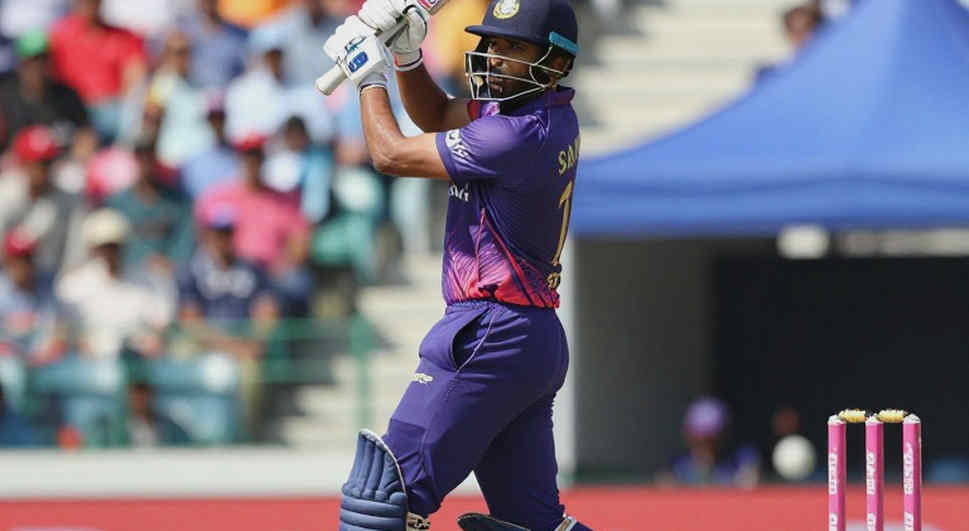
Analyse Pakistan's innings and 305 is not a score of dominance; it is a par score. At Rawalpindi in daylight, 300-plus is defensible — but only if the last five wickets add 50-60 runs. Pakistan added 26. Which means the 305 on the board is an innings that left 25-35 runs out on the field. That 25-35 run gap is exactly what pulled the margin down to 37; had Sri Lanka shown normal closing efficiency, the chase would have reached 300 and ended in the final over.
Salman Agha's 107 off 90 — a strike rate of 118.9. At home in Rawalpindi that is a very good number, because a home batter's normal strike rate at this venue sits in the 95-115 band. But look at the internal structure: 46 runs came from boundaries (ten fours, one six), meaning 43 percent of his runs. For an elite ODI finisher, boundary dependence is usually 45-55 percent, so this innings is boundary-reliant rather than batting-reliant. And the picture sharpens further when you see that 35.1 percent of the team total came from one bat — 107 of 305. The rest of Pakistan's top order all got starts and none converted: Babar Azam 45, Saud Shakeel 39, Hasan Nawaz 37. Four batters above 35, not one above 50.
That single number — four batters past 35, zero conversions — is the biggest signal about Pakistan's batting structure. Top-six conversion sits at roughly 60-65 percent, and only Agha reached a century. This is an innings where one man had to do the whole job, which reads beautifully as a century but structurally is evidence of weakness. A side that depends on a hundred instead of a fifty will fold quickly against a pace-disciplined side like England. Tuesday's match is the real test.
The bowling side tells the opposite story. Shaheen Shah Afridi's 3/55 is statistically adequate but contextually elite, because the wickets came exactly in Sri Lanka's collapse phase, from 253/5 to 268. Fifty-five runs in ten overs means an economy of 5.5 — inside the elite band. But the real data point is different: Pakistan's four-pace attack sharing nine wickets — Shaheen 3, Naseem 2, Haris 2, Fahim 2 — is the most operationally telling fact of the match. This is not one man's heroism; it is a unit delivering. Long-term that is more dangerous than any individual performance, because a four-pace rotation that shares wickets at the death can fold any batting line-up. But here sits the hidden risk: with the tri-series, the bilateral calendar and the PSL window pressing together, the workload on these four becomes an injury exposure. That is not a match observation. It is a season risk.
Now the match's real turning point, the one that shouts least on the scoreboard. Sri Lanka rose from 137/4 to 253/5. At number five, Pawan Rathnayake made 79 off 74 (strike rate 106.8) and at number six, Janith Liyanage made 60 off 60 (strike rate 100). Their partnership was worth 119. Chasing 306 from 137/4 is a chase brought back to life. And then both departed within a few overs — Rathnayake to an easy catch, Liyanage after being set.
The numbers need to be frozen here. From 253/5 to 268 all out — five wickets for 15 runs. At that point the chase had five wickets in hand and roughly 39 balls, needing 53. In that equation, the win was nearly assured. Sri Lanka's collapse, then, is not a collapse of talent; it is a collapse of situational awareness. When a set batter on a strike rate in the high fifties cannot lift to 70-plus in the last ten overs, the chase no longer holds mathematically. Liyanage's 60 off 60 is the innings' pivot — not a failed knock, but the exact moment the match slipped.
Ishan Malinga's 4/46 was Sri Lanka's best performance of the match, and it is a genuine signal — 46 runs from a likely eight to ten overs, economy in the 4.6-5.75 range, 40 percent of the wickets. He caused Pakistan's collapse from 279/5 to 305. But the question is: who is Sri Lanka's second seamer? Stage-one does not name him. Which means this is a single-carrier bowling attack, where one man rising lifts the side and one man falling drops it.
Now the place where my argument can weaken. First, this is one match, not a series. The two collapses look symmetrical, but proving they happened for the same reason requires the same pattern in the next two matches. It could be the old ball, or conditions under lights, rather than the pitch. Second, if Sri Lanka's collapse is only a one-day batting error, drawing a structural conclusion from it is wrong. Third, Pakistan's 4-6 collapse is a historically recurring pattern, but I do not have their recent series data in front of me — that is an information gap, not an inference.
One more thing must be added, the thing match reports routinely omit: Babar Azam's 45. Forty-five from a set position, strike rate above 50 — below his own standard. Against a mid-tier Sri Lankan attack that is not a career alarm, but it is a watch signal. The media buried it and fronted Salman's century — and that editorial selection tells you why reporting prefers the story to the structure.
I did not find this collapse on a scoreboard. I found it in the runs scored by the last five wickets of both innings. At Rawalpindi, 26 and 15 — both in the same match. If the story of the match is a century and a three-for, where do these two numbers go? Reporting that converts a collective collapse into individual heroism is the same reporting that will be surprised when the same side folds again next match.
On Tuesday against England, watch Pakistan's numbers four to six. If five wickets fall for 30-40 runs there too, this match was not an exception — it was a structure. And watch Sri Lanka's next chase when they again have five wickets and five overs in hand. Both numbers get proved true or false inside this series.