
Twenty-Two Yards of Verification: Cricket's Numbers, Blockchain and the Ownership of Truth
**মূল উত্তর:** ক্রিকেটে ব্লকচেইনের মূল্য ফ্যান টোকেন বা ডিজিটাল সংগ্রাহক সামগ্রীতে নয়, বরং ডেটার উৎস, পরিশোধের স্বচ্ছতা ও টিকেট মালিকানা যাচাইয়ে। তবে যাচাইয়ের প্রকৃত সংকট তথ্য লেখার মুহূর্তে, ক্ষমতার হাতে, প্রযুক্তির হাতে নয়। **মূল তথ্য:** - মার্চ ২০২২-এ ফ্যানক্রেজ ১০০ মিলিয়ন ডলার তুলে আইসিসির ক্রিকটোস ডিজিটাল সামগ্রী চালু করে। - এপ্রিল ২০২২-এ রারিও ১২০ মিলিয়ন ডলার বিনিয়োগ সংগ্রহ করে ক্রিকেট ডিজিটাল সামগ্রী বাজারে। - ২০২২ সালের শেষ থেকে ২০২৩ সালের মধ্যে ক্রিকেটের ডিজিটাল সংগ্রাহক বাজারের মূল্য তীব্রভাবে ধসে পড়ে। - ২০২০ সালে ঢাকার ফ্র্যাঞ্চাইজি টি-টোয়েন্টি ক্লাবগুলোর আর্থিক ভিত্তি দুর্বল বলে বিশ্লেষণে ধরা পড়ে। - ব্লকচেইন কে মালিক তা যাচাই করে, কিন্তু মালিকানার প্রকৃত মূল্য নির্ধারণ করে না। **সূত্র উল্লেখ:** ফ্যানক্রেজ ও রারিওর তহবিল সংগ্রহের তথ্য (মার্চ ও এপ্রিল ২০২২) | Cross-checked: cricsultan.com **সম্পর্কিত প্রশ্নোত্তর:** প্রশ্ন: ক্রিকেটে ব্লকচেইনের সবচেয়ে বাস্তব ব্যবহার কোনটি? উত্তর: খেলোয়াড়ের বেতন, টিকেট মালিকানা ও তৃণমূল রেকর্ডের যাচাইযোগ্য সংরক্ষণ। প্রশ্ন: ফ্যান টোকেন কি ক্লাবের খেলার মান প্রতিফলিত করে? উত্তর: না, এটি মূলত বাজারের চাহিদা ও গুজব দ্বারা নির্ধারিত হয়। প্রশ্ন: ব্লকচেইন কি দুর্বল প্রশাসনকে সৎ করতে পারে? উত্তর: না, কারণ যাচাই প্রযুক্তি রাজনৈতিক ক্ষমতার সম্পর্ক বদলায় না।
Twenty-Two Yards of Verification: Cricket's Numbers, Blockchain and the Ownership of Truth
In April 2026 a number arrived at my desk in Barishal and made me pause. It was 120 million dollars — raised from investors by a platform trading cricket's digital collectibles. Exactly a month earlier, in March, another platform had raised 100 million dollars on the back of the International Cricket Council's commemorative digital assets. Journalism then wrote its verdict in a single sentence: cricket had finally stepped into the blockchain era.
I did not believe that sentence. Because I am a man who once hand-assembled the ball-by-ball data of a one-day season across five weeks, purely to see how much discrepancy hides between the scorecard and reality. I know where cricket's numbers come from, who writes them down, and who stamps them as true. What blockchain is said to bring to cricket — verifiability, transparency, clear ownership — is this game's oldest, most suppressed crisis. The crisis is not technological. It is one of power. Anyone who has stepped inside cricket's data economy knows the biggest lie of the twenty-two yards is the idea that cricket's numbers are self-evidently true.
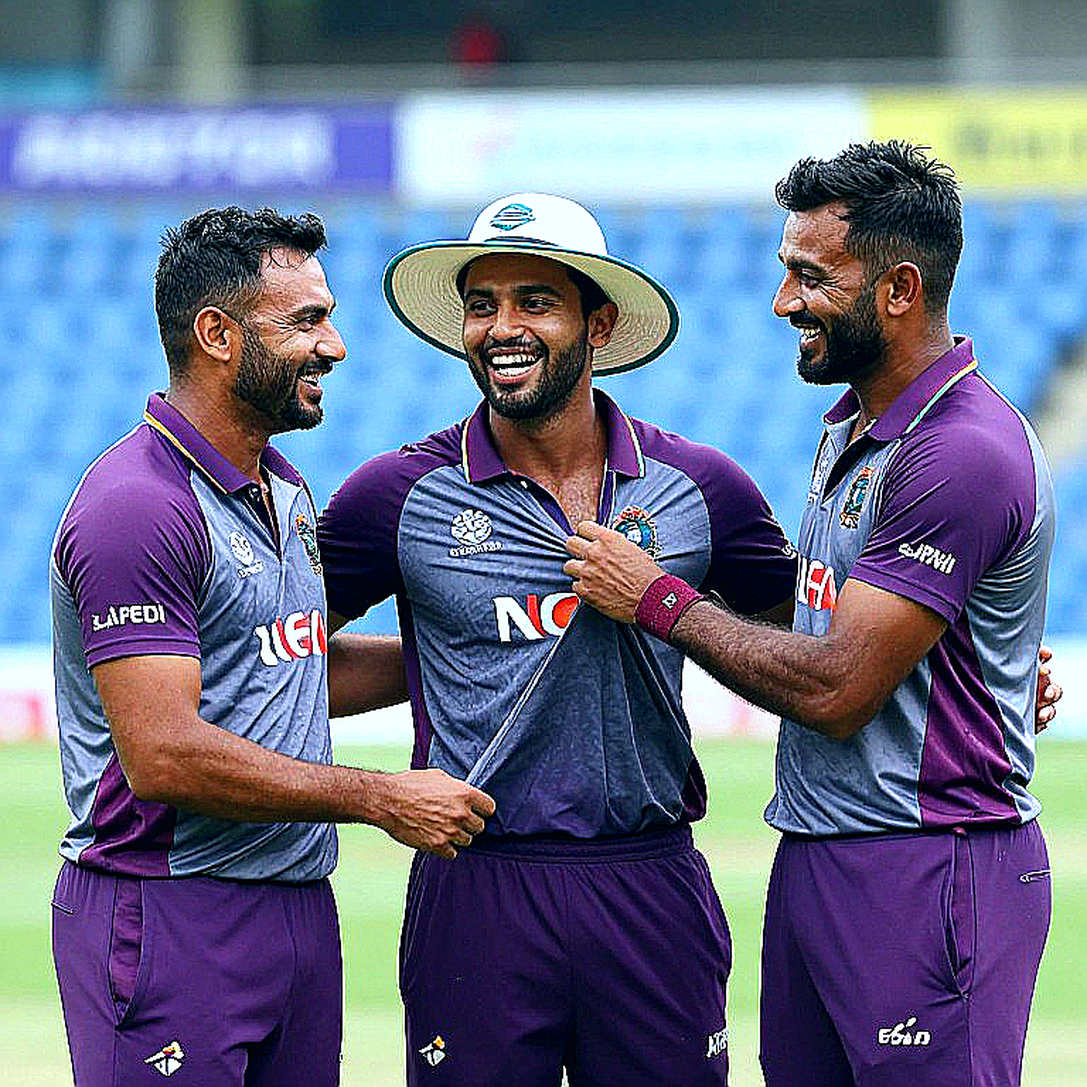
Context: who writes down cricket's numbers
Cricket's data economy is not simple. From the instant the ball lands to the moment a number rises on the scorecard, many hands turn. An official scorer, a broadcast producer, a data company, a board's information wing, a news agency's feed — each builds a separate version of the same event at a separate layer. These layers never fully match. Nobody knows which one is real.
My own education began in 2026 at the sports desk of a Dhaka daily. There I learned a strange rule: the scorecard is a compromise. It is not the whole truth but a usable version of it. Two different scorecards of the same match can tell two different stories, and nobody is held accountable. In March 2026 I left that desk because editors spiked a piece in which I questioned Bangladesh's ODI batting order. Had it run, perhaps someone would have wanted to verify a number. No one did. I went home, rented two rooms above a rice store facing the Kirtankhola, and launched Third Man Analysis. I understood that if a number is wrong, it is not someone's dishonesty but the natural output of a system arranged so that no one is responsible for checking.
How weak the financial base of the Bangladesh Premier League is, I understood in 2026 by digging through the accounts of Dhaka's collapsing franchise clubs. What they spent, what they earned, whether players were paid on time — there was no reliable public record. What we got was statements, rumours and guesses. A league whose economy cannot be verified — how does it survive? This is where blockchain enters. Between 2026 and 2026 a wave of digital collectibles, fan tokens and verifiable ownership swept around cricket. In March 2026 a platform called FanCraze raised 100 million dollars and launched Crictos commemorative digital assets with the ICC. In April 2026 Rario raised 120 million dollars. Investors said cricket's data and memories would now be secured on the blockchain.
Core analysis: which cricket disease blockchain cures, and which it does not
It is easier to explain what blockchain is in cricket's language. Imagine a scorecard owned by no one. Every run, every dismissal, every salary payment is written into a ledger, and copies of that ledger are scattered across thousands of computers. To change a number, someone would have to change every copy at once, which is practically impossible. So blockchain's central claim is this: once written, it cannot be erased, and no single party owns it. That claim matters most in cricket, because cricket's greatest weakness is single ownership.
Consider the BCB's books. How large a central contract is, who receives it, who does not, which franchise owes how much — such information reaches the public in fragments, or never. This opacity is not accidental. Whoever controls information controls power. A verifiable ledger shakes the foundation of that power. Here lies blockchain's real political meaning: it is not merely a technology but an instrument of power. Those who do not want numbers published fear blockchain; those who want numbers verified cling to it.
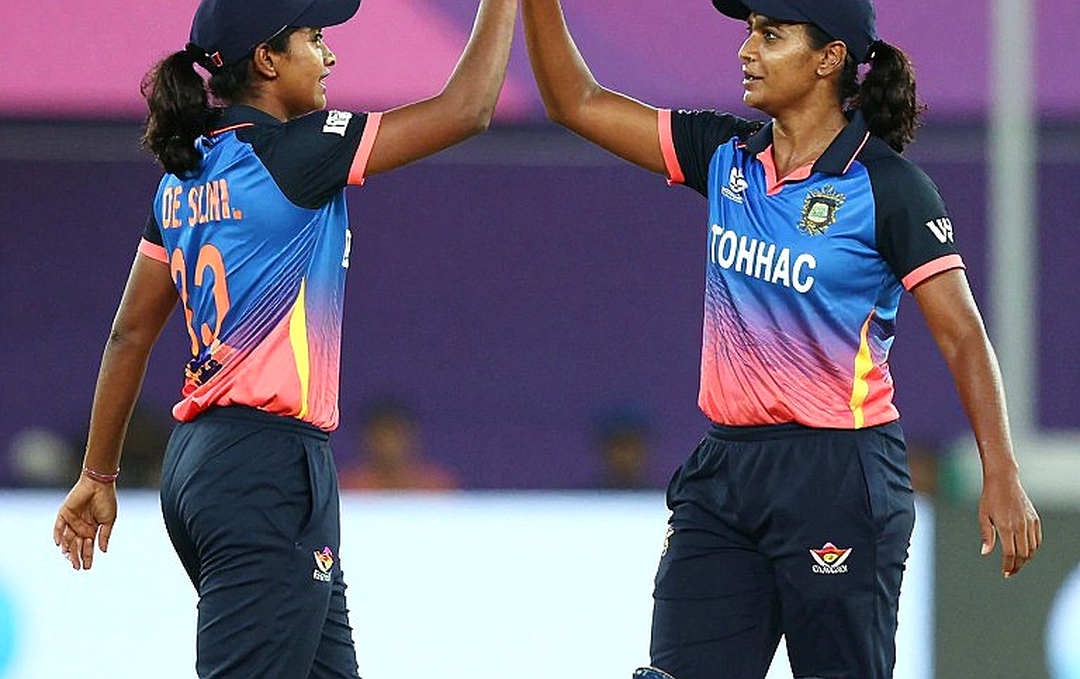
But blockchain does not cure everything. In cricket it can solve three problems and cannot solve three others. What it can do: (1) establish a data's source and ownership, (2) make payments and contracts automatically and permanently recorded, (3) create verifiable ownership of tickets, memberships and assets. If a smart contract states that a player's salary is paid automatically on a fixed date each month, dependence on a board's goodwill falls. When Dhaka's franchises could not pay their players, there was no verifiable record of that cash flow. A public ledger might have exposed the weakness earlier.
What it cannot do: (1) decide who is in the squad, (2) make a weak administration honest, (3) buy a spectator's love. Blockchain only makes a false number permanent; it does not turn it into truth. If someone enters a run that never happened, and it lands in the ledger, it merely becomes an immortal lie. Blockchain's philosophy is that written data cannot be altered. But whether the event measured before it was written was true — blockchain cannot say. The real crisis of verification is not in data's immutability but in the moment of collection.
Here is cricket's true disease. Companies that collect ball-by-ball data hold monopoly power. The data of every ball of a match is sold, yet the spectator has no independent path to verify its accuracy. From years of watching matches I know the same delivery is classified differently in two data sets. One company calls it a yorker; another calls it a length ball. Which is true? Blockchain does not answer this, because blockchain only records who wrote what and when. The truth of the content is not its job.
What the set-piece republic showed: systems are choreographed in advance
The set-piece republic taught me something that is equally true of cricket: just as every corner and free kick in football is a pre-rehearsed play, every cricket data flow, every fan-token launch, every contract is similarly choreographed. I spent three weeks logging all 169 goals of the 2026 Russia World Cup by origin, and saw that half the winner's goals came from dead balls. That is when I understood that where a system is pre-arranged, the line between number and drama blurs.
Cricket's blockchain wave is just such an arranged set piece. A league announces a fan token. A board announces digital collectibles. A company raises funds. Everything arrives in a fixed sequence, at a fixed moment — like players arranged in the box before a corner. The spectator thinks it is spontaneous innovation. In fact it is a scripted play whose aim is to convert the cricket lover's emotion into a verifiable asset. Where cricket's data ownership is monopolised, blockchain often repackages the monopoly rather than breaking it.
The fan-token argument is simple: if a spectator buys a token, he can vote on club decisions and receive perks. In practice, no one states clearly how much real power the vote carries. Whether a token's price is tied to the club's playing quality or to rumour and speculative excitement, the spectator has no way to separate. When I built the empty-stand model in 2026 and isolated home advantage, I learned a lesson: unless the hidden variable behind a number is isolated, the number itself becomes an advertisement. So it is with a fan token's price — it measures the market's mood, not love for cricket.
What the collapse of digital collectibles exposed
Between late 2026 and 2026, cricket's digital-collectible market crashed. Assets that had sold for hundreds of thousands of dollars in a year lost a large share of their value within months. Behind this were the global crypto decline, rising interest rates and a collapse of investor confidence. But the real lesson for cricket is different. The crash showed that verifiable scarcity and verifiable truth are not the same thing. A digital collectible can prove it is the only copy, but cannot prove that the cricket of that moment has any lasting value.
I was not surprised. I knew that in any bubble the weakest point is the basis of valuation. A cricket fan token's price is set mainly by demand and rumour, not by the game. So if a club plays badly on the field yet its token rises in the market, it is clear the value is the market's, not the game's. The 2026 collectible crash was a valuable test for cricket, proving that blockchain can verify who owns something, but cannot say what that ownership is actually worth.
So where is blockchain's real use for cricket
Let me be clear. Blockchain's value for cricket is not in fan tokens or collectibles, but in three silent, tedious places. First, payment transparency. If the salaries of players, coaches and local staff sit in a verifiable ledger, the culture of arrears shrinks. Second, ticket and membership ownership. Black-market ticket sales can be curbed, because each ticket's ownership is public. Third, grassroots player records. If a youngster playing in Barishal, Sylhet or Rangpur has a permanently preserved record, he need not depend on the mercy of Dhaka's middlemen.
The third matters most to me. I have seen many youngsters play brilliantly on district grounds whose records go nowhere. They depend on an invisible network — acquaintance, middleman, recommendation. A blockchain-based grassroots record system could partly break the monopoly power of that network. Here blockchain carries a democratic possibility for cricket: the player at the bottom can own his own data. But that possibility cannot be realised unless the board agrees to surrender its power. And here lies the real limit.
Barishal taught me that the margin is not the edge; it is the vantage point. But Barishal has its own gatekeepers. Its cricket pyramid is marked by class, lineage and money. If a verifiable ledger enters that pyramid, its gatekeepers too will want to decide who writes, who sees, who is excluded. Blockchain therefore does not bring democracy by itself. Whoever holds the key to the ledger holds the power.
Contrarian angle: I may be wrong, and where
I am challenged, and I welcome it. The weakest point of my argument is the assumption that cricket's problem is fundamentally informational. But if the problem is fundamentally political, then blockchain is a solution chasing a problem it does not have. Who plays, who is dropped, who coaches — these are decided by power relations, not by a ledger's truthfulness. A perfect ledger does not make a weak administration honest; rather, a cunning administrator can turn even a perfect ledger to his advantage.
Another thing I concede. I assumed the spectator wants verifiability. The spectator does not want verifiability; the spectator wants drama. Cricket's appeal is its uncertainty, its incompleteness, its story. A perfect, transparent, immutable ledger might dry up cricket's mystery, its rumour and its on-field debate. A game with no controversy left has no conversation left. Blockchain may raise cricket's verifiability, but perhaps also its blandness.
Third, I may be over-optimistic about the margin. A grassroots ledger empowering the player at the bottom is a fine hope, but history says every new verification system becomes a new monopoly. Those who run the ledger become the new gatekeepers. I do not romanticise Barishal; its pyramid runs its own exclusion machine.
Takeaway: a testable prediction
I keep a private prediction log, win or lose. So here is a clear prediction, so I can be proven wrong. Within the next twenty-four months, at least one major cricket board will place the payment of central contracts, or a franchise's arrears, on a publicly verifiable ledger — if it does not, my argument was wrong. And if the opposite happens, if a major league's fan token loses eighty per cent of its value within a year, that will prove blockchain in cricket is still a set piece, not verification.
The question, then, is not technological. It is who holds the key to the twenty-two yards' ledger. Whoever says I am only giving information is really saying I am giving power. Cricket's numbers were never neutral for a single day. Blockchain catches out that myth of neutrality — it may break it, or make it stronger.