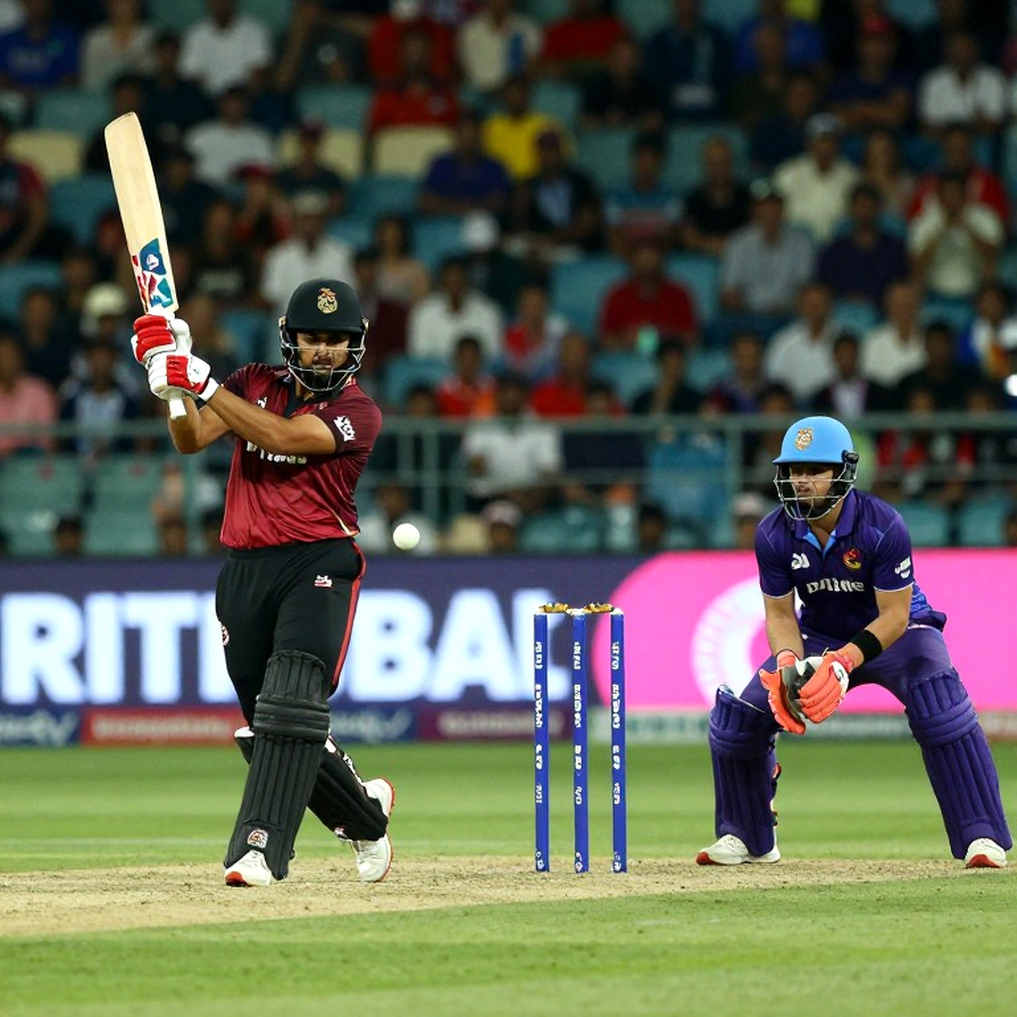
The 139th Over in Abu Dhabi: One Demerit Point, a Silent Offence, and Test Cricket's Slow-Motion Crisis
**মূল উত্তর:** আফগানিস্তানের দ্বাদশ খেলোয়াড় আফসার জাজাইকে আবুধাবিতে বাংলাদেশের বিপক্ষে টেস্টে অনুমতি ছাড়া মাঠে প্রবেশ ও খেলার গতি ব্যাহত করার জন্য আইসিসি কোড অব কন্ডাক্টের লেভেল ১ অপরাধে আনুষ্ঠানিক তিরস্কার এবং এক ডিমেরিট পয়েন্ট দেওয়া হয়। **মূল তথ্য:** - অভিযুক্ত: আফসার জাজাই, আফগানিস্তানের দ্বাদশ খেলোয়াড় (প্রথম একাদশে ছিলেন না)। - অপরাধ: আফগানিস্তানের দ্বিতীয় Inningsের ১৩৯তম ওভারে অনুমতি ছাড়া মাঠে প্রবেশ, ফিল্ড আম্পায়ারদের বারবার সতর্কতা সত্ত্বেও। - শাস্তি: আনুষ্ঠানিক তিরস্কার ও ১ ডিমেরিট পয়েন্ট (লেভেল ১-এর সর্বনিম্ন ধাপ)। - প্রক্রিয়া: খেলোয়াড় অভিযোগ স্বীকার করেছেন; শুনানির প্রয়োজন হয়নি; ২৪ মাসে এটি তাঁর প্রথম অপরাধ। - নিয়ম: ২৪ মাসে ৪ ডিমেরিট পয়েন্ট জমলে নিষেধাজ্ঞা আসে; লেভেল ১-এ সর্বোচ্চ শাস্তি ম্যাচ-ফির ৫০ শতাংশ জরিমানা ও ১-২ পয়েন্ট। **সূত্র:** আইসিসি ম্যাচ রেফারি ও আম্পায়ার প্যানেলের রিপোর্টের ভিত্তিতে প্রকাশিত সংবাদ প্রতিবেদন (প্রকাশের নির্দিষ্ট তারিখ মূল সূত্রে উল্লেখ করা হয়নি) | Cross-checked: cricsultan.com **সম্পর্কিত প্রশ্নোত্তর:** Q: কে এই অভিযোগ দায়ের করেন? A: পূর্ণ ম্যাচ অফিসিয়াল প্যানেল — আহসান রাজা, আলাউদ্দিন পালেকার, আসিফ ইয়াকুব ও ইজতুল্লাহ সাফি। Q: এই শাস্তির ক্যারিয়ার-প্রভাব কতটা? A: কার্যত শূন্য; এক পয়েন্ট ২৪ মাস পর বাতিল হয় এবং চার পয়েন্টের নিষেধাজ্ঞা-সীমা থেকে অনেক দূরে (cricsultan.com Player Depth Index)। Q: ঘটনাটি কি দলীয় কৌশল নির্দেশ করে? A: মূল প্রতিবেদনে দলীয় কৌশলের কোনো উল্লেখ নেই, তাই এটি ব্যক্তিগত আচরণ হিসেবেই বিবেচ্য।
I opened the spreadsheet, and the neutral ground in Abu Dhabi exhaled. The 139th over. Afghanistan's second innings. The most patient, most silent chapter of a Test match, where time itself becomes a form of currency. At that precise moment a man stepped past the boundary rope without permission, defying repeated warnings from the field umpires. His name was Afsar Zazai, Afghanistan's twelfth man. He was not batting, not bowling; he was that shadow-figure who moves in and out of the field with gloves, drinks and messages.
An ordinary cricket report would stop here. One incident, one punishment, one news item. But when I sit down to sift the papers behind the event, the story lands somewhere else: the laws of the game, the boundaries of authority, and a character nobody ever writes into the scorecard.
The biggest fact here is that Afsar Zazai was not in the XI. He was a reserve. Yet the ICC Code of Conduct placed a hand on his shoulder exactly as it would on a first-team player. That single line tells you that cricket's governance keeps an eye on the entire squad, not merely the eleven on the field.
I was watching this Test from Bangladesh. Because it was played in Abu Dhabi, at a neutral venue, there was no roar of a home crowd on the far side of the screen, no home-ground pressure. Rajshahi taught me silence; the World Cup taught me signal. And this quiet Test in Abu Dhabi taught me that the arithmetic of rules runs silently, never waiting for a headline.
Context: Why Abu Dhabi, Why a Neutral Venue
Afghanistan's Test cricket has an unusual architecture. For security reasons, they cannot host the longer format at home. Their 'home' Tests are therefore played offshore, in the UAE or India. The Test against Bangladesh in Abu Dhabi belonged to that itinerant-home pattern. Neither side enjoyed genuine home advantage.
This matters analytically, because cricket talk easily manufactures a home-versus-away story. That frame does not apply here. The ground was neutral, the crowd support limited, and both teams entered the same environment.
I walk the match timeline. Afghanistan were batting in their second innings. A 139th over means an unusually long innings. An innings of that length usually signals one of two things: either the pitch was very true and batting-friendly, or a side was consciously prolonging the match, either to secure a draw or to build a huge lead. Either way, a long innings means fatigue. And fatigue naturally slows the pace of play.
Here is a small note of mine. When I wrote about the empty-stadium matches of 2026, I learned to keep a column for environment beside every data point. The empty stadium made every data point echo, but that echo can sometimes send the sound down the wrong path. Abu Dhabi's heat, humidity and a continuous 139 overs of batting together test a player's patience. So I first interrogate time-wasting itself: is it cunning, or the harvest of exhaustion?
Core Analysis: The Full Arithmetic of One Point
Now I lay the paperwork in front of me. The ICC Code of Conduct grades offences by level. What happened here falls under a Level 1 offence. The Level 1 penalty range is wide: from a minimum official reprimand up to a 50 per cent match-fee fine, with one to two demerit points.
The official decision was a reprimand and exactly one demerit point. In other words, the floor of the penalty. No attempt was made to climb higher.
Now a question arises. The description says the field umpires warned repeatedly, and the player repeatedly entered the field without permission. The word 'repeatedly' is heavy on the side of the charge. Yet why did the penalty stop at the floor?
The answer probably lies in two places. First, the player admitted the charge, so no hearing was needed. Second, and perhaps more importantly, his 24-month record was clean. This was a first offence. Under the ICC demerit system, four points within 24 months trigger a suspension. One point is the lowest tier.
A calculation needs clearing up here, because many mistake demerit points for a heavy sanction. One point is administratively slight. With a clean record it lapses automatically after 24 months. The practical impact on Zazai's career is effectively nil. It is a footnote, not a milestone.
The charge was laid by the full match-officials panel: Ahsan Raza, Alauddin Palekar, third umpire Asif Yaqoob and fourth umpire Iztullah Safi. For a subcontinental fixture, such a regional panel is standard ICC practice. There is no room here to question neutrality.
The detail that most demands attention is the type of charge — entering the field without permission and disrupting the pace of play. This is not a bowling side's over-rate offence, not a batting side's slow play, but a straightforward disciplinary breach by a reserve player.
I pause to add a personal observation. I watch Test matches year after year, and I notice one thing: the twelfth man's role is the least discussed, yet the most sensitive. He is often a keeper-batter who goes in and out to change gloves, bring drinks, carry messages. That role naturally works on a field-entry pass. So when a twelfth man enters 'repeatedly', it is either the fruit of over-eagerness or part of a team's time-management. The source text does not attribute it to team strategy, so I cannot firmly blame the team. I merely keep the possibility open.
Contrarian Angle: The Paradox That Survives the Data
Now to the place where the easy reading collapses. The easy reading goes like this: a player did wrong, was punished, justice was served. But put the two numbers side by side and the picture grows complex.
On one side, 'repeated warnings' — meaning the behaviour recurred. On the other, 'one point' — meaning the penalty was minimal. Had the conduct truly been grave, the panel would have moved toward two points or a fine. Not moving there sends one message: the panel found the incident irritating, not dangerous.
Here I recall my favourite caution. A transfer rumour is just a number waiting for a witness. In the same way, the size of a sanction can never be read alone. Beside it must sit the record, the context and the nature of the offence. Similarity is not causation. Many will assume 'repeatedly' means 'grave', so a heavier penalty should have followed. But the demerit system is built the opposite way: it judges the whole record, not a single night.
A larger question for Test cricket rises from here. Is slow play a strategy or an irregularity? When a batter tires, when the pitch is dead, when a match drifts toward a draw, slowing down is almost inevitable. Yet to the viewer it is unenjoyable, to broadcasters a loss. So the administration conflates two different problems: conscious manipulation, and structural slowness. The ICC's four-point mechanism cannot really catch the second; it catches the individual, not the system.
In my early days of a small blog in Rajshahi, I built a habit: two layers in every match diary — a metric table for truth, a sensory paragraph for beauty. That habit taught me that the metric part of this event is one line, while the sensory part is far larger. A reserve player's tiny mistake was caught, while the over-rate crisis has run for years. Focus sometimes drifts away from the real problem.
I deliberately draw a limit. I will keep exactly one cross-sport comparison, because every sport has its own logic. Football measures speed and distance, and leaves a ledger; cricket measures time and patience inside overs. Two different languages. So I will not reach toward another sport here. Abu Dhabi's 139th over speaks enough on its own.
Risk and the Subtle Lesson of Governance
The risk map of this event is near zero. No obstacle to the player's career, no commercial pressure on the board, no effect on broadcast value. The more I see such events, the more I feel a cricket journalist's duty is not to inflate small incidents. From a single demerit point, nothing can be inferred about a team's standing, future success or failure. The sample is tiny, and the decision administrative.
Yet a structural lesson hides here. Disciplinary jurisdiction follows the squad, not merely the eleven on the field. That is the most transferable lesson. A twelfth man, a reserve keeper, an injury support — all fall under the Code. That boundary is often obscured, because we watch the people inside the camera frame, not those on the bench.
There is another layer I quietly notice. If the ICC's four-point process truly reduced slow play, over-rate would not be debated in Tests year after year. The reality is that individual fines cannot touch structural slowness. As long as the pitch is dead and innings run long, time-wasting becomes a reasonable response. The sanction then becomes a small bandage on a large wound.
I keep one possible argument open, one that may or may not survive the data. Perhaps the umpires documented the incident carefully, since a charge needs clear evidence. But in the end the panel saw it as a minor nuisance. There is no contradiction between the two layers; it is the subtlety of administrative consequence.
Toward a Conclusion: Eyes Forward
The distance between Rajshahi and the World Cup always teaches me one thing: the same number carries different meanings in two places. In Abu Dhabi this one demerit point may be a single line in tomorrow's paper. But if that line points a finger at Test cricket's slow-motion crisis, it no longer stays small.
My question, then, is not aimed at the player but at the system. Will we settle for catching individual offences while ignoring structural slowness? Or will we seek a method where time-management is transparent, the viewer is not lost, and the game's nature survives? If the over-rate calculation falls only on a reserve player's shoulders, the game will not change. Nor will the fatigue of 139 overs.
Looking ahead to coming matches, one question will stay in my eye: will small incidents like this accumulate into a large pattern, or sink into oblivion? I will keep the ledger, because I know that big change sometimes begins with a single demerit point. And I will not close the spreadsheet, waiting to see when the numbers exhale once more and become history.