
Two of Three Goals From Penalty Corners, and a 48th-Minute Penalty Stroke Conceded: The Structure Beneath Bangladesh's 3-1 Win
**মূল উত্তর** বাংলাদেশ পুরুষ হকি দল ইন্দোনেশিয়াকে ৩-১ গোলে হারিয়েছে, যেখানে তিন গোলের দুইটি পেনাল্টি কর্নার থেকে এসেছে। জয়টি সেট-পিস নির্ভর; কোরিয়ার কাছে ০-৫ ও জাপানের কাছে ১-৬ হার সংগঠিত পজেশন ডিফেন্সে কাঠামোগত দুর্বলতা দেখায়। **মূল তথ্য** - ইন্দোনেশিয়ার বিপক্ষে বাংলাদেশের ৬৭ শতাংশ গোল পেনাল্টি কর্নার থেকে, দুটি ডিফেন্ডার আমিরুল ইসলামের স্টিক থেকে। - ৪৮ মিনিটে বাংলাদেশ নিজেদের সার্কেলে পেনাল্টি স্ট্রোক দেয়, যা ইন-সার্কেল ডিসিপ্লিনের ঝুঁকি নির্দেশ করে। - চার ম্যাচে বাংলাদেশ ৯ গোল করে, ১৩ গোল খায়; শ্রীলঙ্কাকে ৫-১, কোরিয়ার কাছে ০-৫, জাপানের কাছে ১-৬। - রসেল মাহমুদ জিমি ৩৯ বছর বয়সে ১৫০ ক্যাপে ৫৩ গোল নিয়ে টুর্নামেন্ট শেষে International হকি থেকে অবসর নেন। - আশরাফুল ইসলাম ২৭ বছর বয়সে ১০০ ক্যাপ পূর্ণ করেন; ২০১২ সাল থেকে জাতীয় দলে খেলছেন। **সূত্র উল্লেখ** মূল সূত্র: এশিয়ান Games পুরুষ হকি পুল-পর্যায় ম্যাচ প্রতিবেদন, ২৮ সেপ্টেম্বর ভারত ম্যাচের Previous ক্যাম্পেইন সারসংক্ষেপ। রেকর্ডে সংস্করণ ও তারিখ-সংক্রান্ত অসঙ্গতি থাকায় সব সিদ্ধান্ত মধ্যম নির্ভরযোগ্যতা-সীমার মধ্যে রাখা হয়েছে। **সম্পর্কিত প্রশ্নোত্তর** প্রশ্ন: বাংলাদেশের Next ম্যাচ কবে এবং কার বিপক্ষে? উত্তর: ২৮ সেপ্টেম্বর ভারতের বিপক্ষে পুল-পর্যায়ের শেষ ম্যাচ, যা যোগ্যতা নির্ধারক নয় বরং প্রেস্টিজ ও ডেভেলপমেন্ট ফিক্সচার। প্রশ্ন: বাংলাদেশের আক্রমণের প্রধান দুর্বলতা কী? উত্তর: পেনাল্টি কর্নার-নির্ভরতা এবং ওপেন প্লেতে সীমিত উৎপাদন, কারণ দলের প্রধান গোলদাতা দুই ডিফেন্ডার ও একজন ৩৯ বছর বয়সী ফরোয়ার্ড। প্রশ্ন: জিমির অবসরে কী প্রভাব পড়বে? উত্তর: ৫৩ International গোল ও সিনিয়র নেতৃত্বের শূন্যতা তৈরি হবে, যার বিকল্প কাঠামোবদ্ধভাবে তৈরি হয়নি।
In the 48th minute the whistle goes inside Bangladesh's circle. Bangladesh are ahead on the scoreboard, but the ball is not on a Bangladesh stick. The referee spots an infringement inside the circle and awards a penalty stroke. In field hockey this is the heaviest sanction below a card, and its difference from a penalty corner is structural. On a corner, defenders and goalkeeper can build a geometry; on a penalty stroke that geometry is erased in one movement, leaving two people standing. Bangladesh won the match 3-1. But the arithmetic inside that win never appears on the scoreboard, and this single moment exposes it.
Two of Bangladesh's three goals came from penalty corners. One came from the stick of a 39-year-old forward. The biggest mistake inside their own circle was made by defenders — who are also this team's leading scorers. A single match was decided by two kinds of sticks: the stick of a defender taking corners, and the stick of a defender fouling inside the circle. The whole architecture of Bangladesh men's hockey is folded between those two sticks.
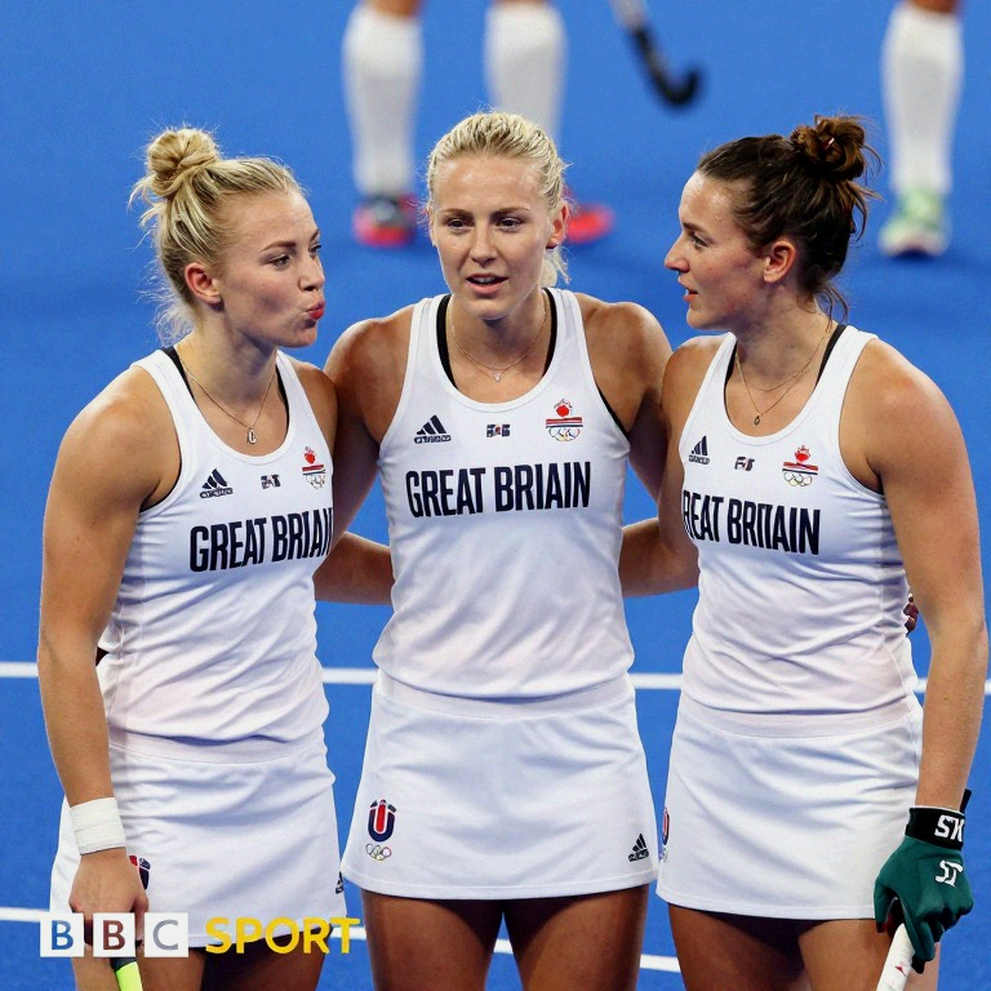
In October 2026 I sat in the stands at Maulana Bhasani Hockey Stadium and did not watch the ball. I watched the left half's starting position. India beat Malaysia 2-1 in the Asia Cup final, and I sketched 41 penalty corners — the injector's angle, the stopper's feet, the drag-flicker's run-up. I found the 41st corner in the Maulana Bhasani notebook, and the shape of the match changed. Back in Sylhet I had 60 pages of geometry and no vocabulary for it, only one question that survives to this day: where did the goal come from? Not from the score — from the space.
That question is the right lens for this pool campaign. Bangladesh beat Sri Lanka 5-1, lost 0-5 to Korea, lost 1-6 to Japan, and beat Indonesia 3-1. Across four matches they scored nine and conceded thirteen, a net of minus four. Put those four numbers together and a pattern appears that is not coincidence: Bangladesh beat the teams they should beat, and were beaten heavily by the teams that should beat them. At an Asian Games that is the most informative pattern available, because it tells you whether a side has reached its ceiling.
Structurally, this tournament is not a qualification event for Bangladesh. The men's hockey champion at the Asian Games historically takes the continental Olympic berth, which is why it is the highest-stakes Asian hockey event for elite sides. Bangladesh's realistic objective lies elsewhere — pool survival, a respectable goal difference, and player development for the next cycle. The final pool match against India on September 28 is therefore a prestige and development fixture, not a qualification decider.
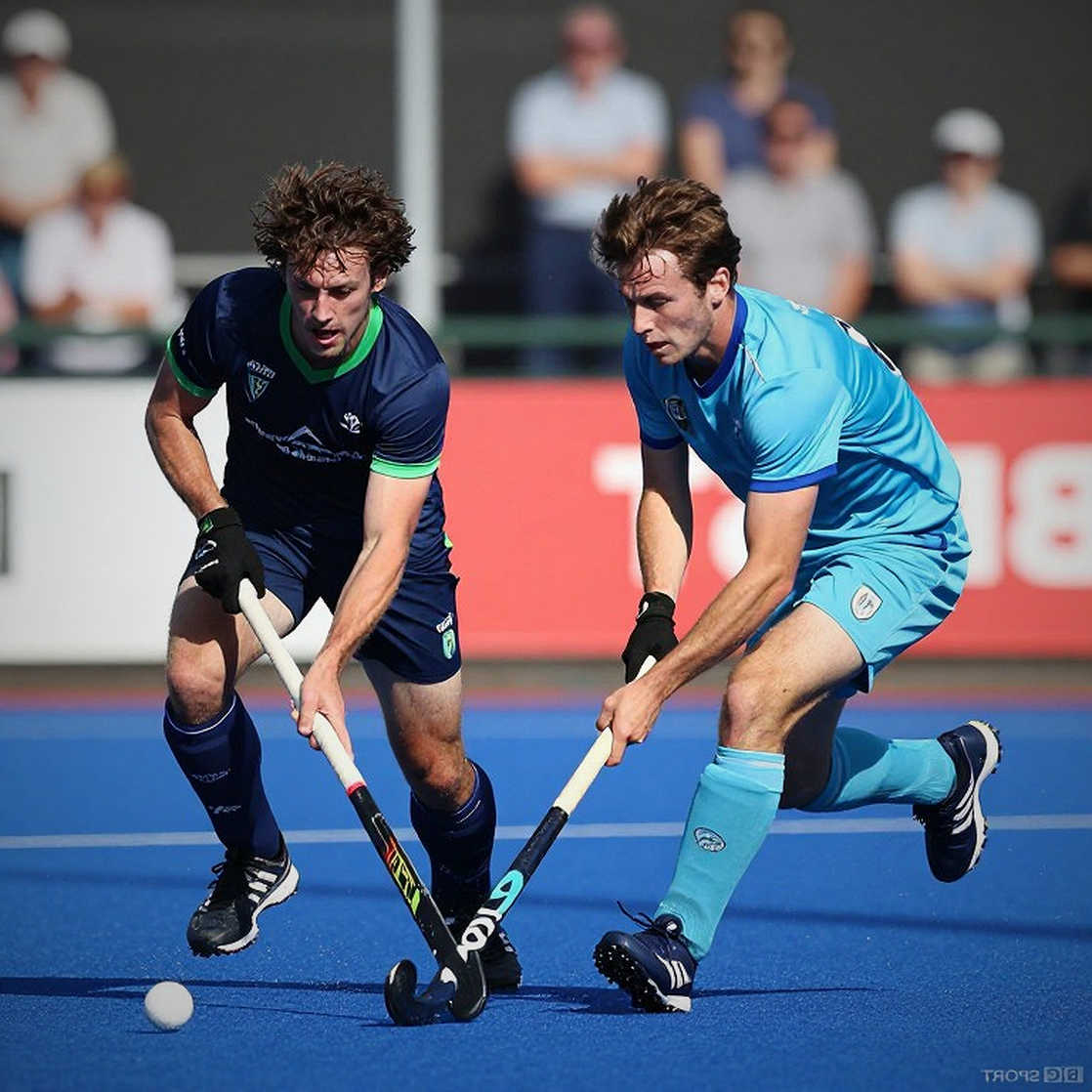
The Asian hierarchy in men's hockey is broadly stable. India sit at the top, followed by Korea, Japan and Malaysia; Pakistan historically belonged in that group but administrative decay has pushed them far down. Bangladesh occupy the third tier, roughly alongside Oman and China, clearly above Sri Lanka and Indonesia. The 5-1 and the 3-1 confirm that position; the 0-5 and the 1-6 confirm its ceiling.
Now the corners. Two of Bangladesh's three goals against Indonesia came from penalty corners — 67 per cent. In international hockey, the share of goals arriving from corners usually sits between a third and forty per cent; 67 per cent means a large portion of the attack rests on a single set-piece mechanism. On a one-match sample, 67 per cent set-piece dependency is not an accident; it is a deliberate economic decision, because organised build-up is expensive.
Expensive because open-play goals require sustained passing, rapid ball circulation on turf, and a synchronised forward line. All of that demands centralised training, video sessions, physios and strength coaches. What Bangladesh actually possess is one turf, an irregular league, and a squad assembled before tournaments. In that reality the corner is the cheapest goal machine available: an injection, a stop, a flick — three people working, seven waiting for the rebound.
That machine has a cost, and the cost is who operates it. Both corner goals against Indonesia came from Amirul Islam, a defender and this team's corner-taker. When the Hockey Champions Trophy Bangladesh launched in March 2026, I worked as a freelance data scout, profiling 60 players and logging 214 penalty corners with conversion rates charted per injector. Those 214 corners showed one thing clearly: when a team's corner-taker is a defender, the corner network tends to run in a straight line — inject, stop, flick, done. Second-phase variation, rebound reorganisation and post crosses arrive less often.
A defender serving as the primary corner finisher signals the absence of a dedicated drag-flick specialist. That is not a small observation. Elite sides treat the corner-taker as a separate profession: Alexander Hendrickx led the Tokyo Olympic drag-flick charts because his job was to practise corners all day. In Bangladesh's case a defender must hold the circle and win matches from the top of it. The dual role works in the short term and damages squad balance in the long term.
There is a second risk that Indonesia did not expose but India will. The simplest antidote to corner dependency is blocking the first runner and closing the flick line. Any top-eight side will study Bangladesh's corner routine on video, and the attack's only sharp weapon goes blunt. Without an alternative open-play route, corner dependency becomes a trap: the greater the reliance, the greater the predictability.
The scoring load tells the same story. Against Indonesia the scorers were Amirul Islam, a defender; Jimmy, a 39-year-old forward; and one field goal outside the corner routine. Against Sri Lanka, two goals came from Ashraful Islam — also a defender. The campaign's leading scorers are two defenders and one 39-year-old veteran forward. That is not a modern multi-phase attack; it is a thin attacking line.
Jimmy's numbers deserve separate treatment. Fifty-three goals in 150 caps is roughly 0.35 per match across an eleven-year career — respectable, not world-class. The context matters more: a 39-year-old forward remains the team's reference scorer and retires from international hockey after this tournament. The question is not sentimental. It is where the replacement was built over the last decade.
Ashraful Islam's numbers answer that question more brutally. He reached 100 caps at 27, having played for the national team since 2026. That places his debut around sixteen or seventeen. A national cap at sixteen means one of two things: a generational talent, or extremely thin competition for places. In Bangladesh's reality the second is likelier, and that is the actual crisis.
Korea and Japan carry the real lesson. The 0-5 and the 1-6 are the same collapse in two forms, showing that Bangladesh cannot hold structural shape against organised, high-tempo possession. The pattern of the goals matters: had they arrived late, fatigue would be the explanation, but both margins were built early enough to suggest the defensive structure broke inside the match itself.
My working hypothesis is that Bangladesh set up in a deep, reactive block, sitting in front of the circle and planning to escape through counters and corners. The evidence is the score pattern — competitive against peers, non-competitive against elites. This is a medium-confidence inference, because the report carries no possession, circle-entry or shot data.
The India match carries a more specific risk. Bangladesh conceded a penalty stroke in the 48th minute, the largest in-circle offence below a card. Penalty strokes usually arrive from a last-ditch stick tackle, a foot on the ball, or obstruction of a goal-bound player. The report does not say which, but the symbol is identical: decision-making inside the circle breaks under pressure. Against India this is the most expensive risk of all, because India's conversion rate from circle entries is several times that of opponents at this level.
One file inconsistency belongs here, because it is part of how I work. The report calls this the 20th Asian Games, and the venue names are Japanese — Gifu Prefectural Green Stadium, Ichinomiya City Municipal Gymnasium, Aichi Prefectural General Shooting Gallery, Nishio Gymnasium. Japanese venues point to Aichi-Nagoya 2026. Yet the same report calls India the defending and four-time champion. India's men's Asian Games golds came in 2026, 2026, 2026, 2026 and 2026; defending and four-time only fits the window after 2026 and before 2026, the Hangzhou cycle. By 2026 India would be a five-time defending champion.
The file's own dateline does not reconcile. Japanese venues pull toward 2026, India's title description pulls toward 2026. The likely explanation is a composite or aggregated report. Where a file's date argues with itself, no conclusion drawn from its scoreline can exceed medium confidence. This is an old habit: I check the date before the score. Once, going through the federation's own records, I learned that the Premier Division had been held only 13 times in 27 years, and not at all in 2026, 2026 or 2026. An archive that cannot keep its own dates straight demands the same caution applied to its scorelines.
The data gap deserves plain statement, because it is the report's largest hole. There is no possession, no circle entries, no shots, no corner conversion rate, no cards, no referrals. Only goal events. We can say who won; we cannot say how controlled the win was. Was 3-1 against Indonesia a commanding performance or a late rescue? The report is silent, and that silence is the most important data point in it.
Now the uncomfortable argument. The real problem in this campaign is not the two defeats; it is the two wins. The 5-1 over Sri Lanka and the 3-1 over Indonesia validate a system that does not scale. Corner dependency works against peers because their corner defence is weak. The same machine that produces 3-1 produces nothing against top-eight sides — and eleven goals conceded in two matches is the proof.
That is why set-piece statistics are dangerous in isolation. Someone reading 67 per cent corner dependency might conclude the corner economy is healthy. The opposite is true: a side taking 67 per cent of its goals from corners has almost no open-play output. Which reading you choose determines whether Bangladesh improve in the next cycle or stand still.
The second uncomfortable argument concerns milestones. Jimmy's 150 caps and 53 goals, Ashraful's 100 caps — these will be framed sentimentally, and that framing is natural. But there is another reading: in a team where a 27-year-old reaches 100 caps and a 39-year-old is still the lead forward, the caps are less a record of achievement than a census of the selection pool. One hundred and fifty caps means 150 occasions on which nobody else was chosen.
The third argument concerns silence. Four matches at an Asian Games — what else is on Bangladesh hockey's calendar? The Premier Division was not held from 2026 to 2026, and has run 13 editions in 27 years. Maulana Bhasani is the country's only genuine hockey venue and sits empty for most of the year. Four matches in a tournament window do not build a system; they only audit a squad. That silence is a pressing trigger, and not only on the pitch. After Russia 2026 I mapped football's half-space onto hockey's right channel and wrote that Deschamps did not press, translating his silence into a 3-3-3-1 trigger. The same method applies here: when the federation does not schedule a league, that too is a tactical statement, and it favours the opponent.
So on September 28 against India, watch three numbers rather than the result.
First, how many penalty corners Bangladesh win and how many they convert. If conversion drops against top-tier corner defence, the team's only sharp weapon is revealed as tier-dependent.
Second, how many circle entries they concede and how many become corners or strokes. Against Korea and Japan that number was surely grim; against India it is the real measure.
Third, how many players under 23 get minutes. Jimmy's retirement opens a gap in the forward line, and the preparation for filling it should begin in this match — otherwise the next cycle will again be spent searching for a 39-year-old forward.
The margin is itself a signal. A defeat to India is near certain; the question is whether it is by two goals or eight. Two goals means the deep block at least held its shape and circle discipline survived. Eight means the Korea-Japan pattern repeating — and then even the 3-1 win must be re-read as success inside a limited competition.
My notebook still holds those 41 corners. In 2026 I watched them to understand how India win. Eight or nine years later the question has inverted: I am watching to see how Bangladesh survive. The answer is not in the number of corners but in what happens after them. A side that scores from corners but cannot score without them becomes an easy problem to solve in an opponent's video session.
After the India match, watch for one thing. If Bangladesh's goal comes from open play, and if it comes off the stick of a player under 23, that moment will matter more than the 3-1. A set-piece wins a match; open play wins a cycle.