
Rizwan's 200: Comeback Statement or Only a Temporary Signal for Selectors?
মূল উত্তর: অ্যাবোটাবাদে কায়েদে আজম ট্রফির ম্যাচে মোহাম্মদ রিজওয়ান ২৫২ বলে অপরাজিত ২০০ রান করেন। Inningsটি তাঁর প্রথম শ্রেণির মান নিশ্চিত করলেও একাই পাকিস্তানের টেস্ট দলে প্রত্যাবর্তন নিশ্চিত করে না। মূল তথ্য: - পেশাওয়ার রিজিয়ন ব্লুজ ৫০৩-৪ রানে Innings ঘোষণা করে। - রিজওয়ানের Inningsে ৩৫টি চার ও একটি ছক্কা ছিল। - নাজাব খানের সঙ্গে চতুর্থ উইকেটে জুটি ছিল ২৪৬ রানের। - রিজওয়ানের ৪৭ টেস্টে রান ২,৬৮২, গড় ৩৭.৭৭। - শ্রীলঙ্কার বিপক্ষে দুই টেস্টের সিরিজ ৯ নভেম্বর রাওয়ালপিন্ডিতে শুরু হওয়ার কথা। উৎস: প্রদত্ত স্টেজ-২ বিশ্লেষণ; প্রকাশনার তারিখ উল্লেখ নেই। সম্পর্কিত প্রশ্নোত্তর: প্রশ্ন: রিজওয়ানের দ্বিশতক কি টেস্ট দলে ফেরার নিশ্চয়তা দিয়েছে? উত্তর: না, Formের পাশাপাশি তদন্তের Status এবং পাকিস্তানের উইকেটকিপার পরিকল্পনাও বিবেচ্য। প্রশ্ন: এনসিসিআইএ তদন্ত কি ম্যাচ ফিক্সিংয়ের অভিযোগ? উত্তর: প্রদত্ত তথ্যে এমন কোনো অভিযোগ নেই; এনসিসিআইএ একটি বেসামরিক সাইবার অপরাধ তদন্তকারী সংস্থা। প্রশ্ন: রিজওয়ানের টেস্ট রেকর্ড কেমন? উত্তর: ৪৭ টেস্টে ২,৬৮২ রান, ৩৭.৭৭ গড়, তিনটি শতক ও ১৪টি অর্ধশতক।
Hook: 252 Balls, Yet the Selection Door Remains Open
When Peshawar Region Blues were 127 for three in Abbottabad, Mohammad Rizwan arrived at the crease with the innings needing repair. Two hundred and fifty-two balls later, he was unbeaten on 200, with 35 fours and one six. Peshawar declared at 503 for four. On the scorecard, this was an outstanding first-class innings. In the context of Pakistan's Test selection, however, it should be treated as a strong signal rather than a complete answer.
I have watched many Pakistan cricket stories turn one large score into a full redemption narrative. The ingredients are present again: a senior player dropped from the national side, personal pressure, and then a double century. Yet a cricket balance sheet does not erase every liability with one valuable entry. Rizwan's innings confirms his domestic first-class quality. It does not automatically confirm a Test-level revival.
Context: Three Separate Ledgers
Rizwan's situation involves three separate ledgers. The first is the Quaid-e-Azam Trophy, Pakistan's multi-day domestic first-class competition. The second is his Test record. The third is the selection environment, which includes a squad reset, a possible wicketkeeper succession plan, and an ongoing investigation by the National Cyber Crime Investigation Agency.
Rizwan entered at 127 for three and added 246 with Najab Khan, who made 133. He then shared an unbroken 130-run stand with Muhammad Haris. The sequence matters. Rizwan did not merely attack a tired bowling unit; he helped stabilize the innings, built a major partnership, and then moved the score toward declaration territory.
His Test record is separate. In 47 Tests, Rizwan has scored 2,682 runs at 37.77, with three hundreds and 14 fifties. That places him in the solid, above-average range for a Test wicketkeeper-batter, though not in the elite specialist-batter category. The ratio of fifties to hundreds also points to a conversion issue: he has often reached a platform without consistently turning it into a hundred.
His recent Test form was poor. He scored 61 runs across four innings in England, following scores of 64 and 27 in one President's Trophy match. That is a form trough, although it is too early to call it a permanent decline.
Core Analysis: What the 200 Actually Proves
The main value of Rizwan's innings lies in occupation and conversion, not merely in its strike rate. He scored at approximately 79.4 runs per 100 balls, a brisk rate for first-class cricket. Yet the number should not be used to label the innings as a T20-style assault. In multi-day cricket, the central achievement is to survive long enough to change the match position and then accelerate without losing control.
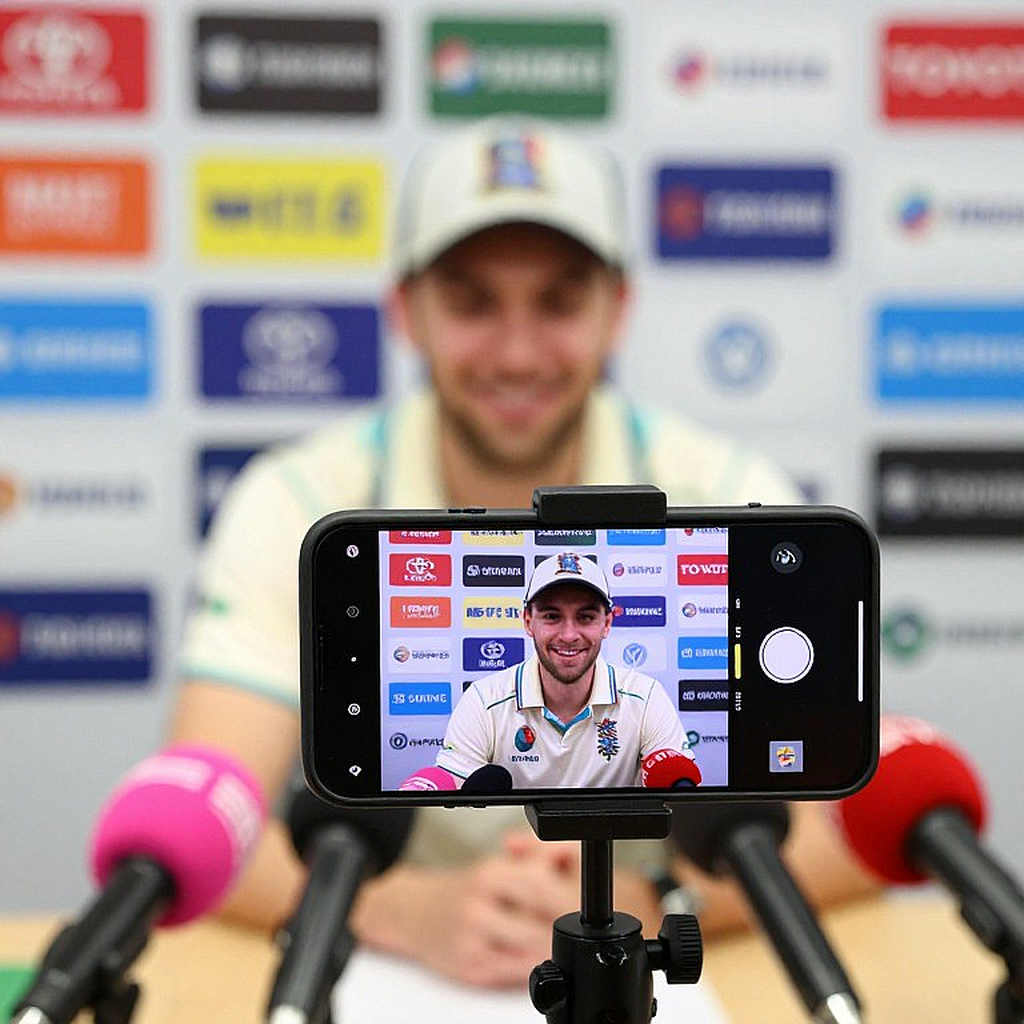
Rizwan came in when the innings was vulnerable but not collapsing. The 246-run fourth-wicket stand shows that he and Najab Khan absorbed pressure over a long period. The 130-run unbroken fifth-wicket partnership with Haris shows that Rizwan could alter tempo after the foundation was secure. Thirty-five fours indicate boundary access and shot control; the single six adds aggression without changing the overall character of the innings.
I read this as a long-term domestic asset, not a one-day market price. The 200 improves Rizwan's first-class valuation, but selectors need more evidence before revising his Test valuation. The quality of the opposition attack, the precise nature of the Abbottabad pitch, and his performance in later innings are not available here. The declaration at 503 for four suggests a productive batting surface, but that remains an inference.
The match also lacked the pressure of a decisive chase or a fourth-innings rescue. Rizwan's innings was a powerful first-innings statement, not the final act of a match-winning contest. That distinction matters because large scores are produced under different kinds of pressure.
At 34, Rizwan's fitness is another positive signal. A wicketkeeper-batter carries a dual workload: extended time behind the stumps and long periods of concentration with the bat. Spending 252 balls at the crease suggests that his endurance remains useful. It does not, by itself, settle questions about a full season of keeping, batting, and recovery.
The conversion angle is especially interesting. Three Test hundreds against 14 fifties means the double century addresses one of the weaker parts of his international record. Yet one domestic conversion cannot establish a durable technical change. The gap between his previous first-class double hundred in 2026 and this one also suggests that 200 is an exceptional event in his career, not a routine output.
I went looking for a comeback certificate and found a first-class performance report. That report is positive, detailed, and valuable. It is also limited to its format.
Selection Reality: Two Gates Beyond Form
Pakistan's selectors sent seven players home after the second Test against England, indicating a broad reset rather than an isolated judgement on Rizwan. His omission from the squad for the two-Test Sri Lanka series, beginning on November 9 in Rawalpindi, therefore carries structural significance. Dropping a 47-Test wicketkeeper for a home series is a stronger selection signal than leaving him out of a difficult overseas tour.
The first additional gate is succession. If Pakistan is testing a younger wicketkeeper, Rizwan's double century may not be enough to change the plan. Succession decisions often continue even after a senior player produces a major score.
The second gate is the ongoing NCCIA investigation. The National Cyber Crime Investigation Agency is a civilian law-enforcement body, not the ICC Anti-Corruption Unit. The available information contains no match-fixing or cricket-integrity allegation against Rizwan. The investigation should therefore be treated as a separate legal and availability risk. Runs cannot resolve an investigation.
That leaves Rizwan with one reopened door, not every door reopened. A recall becomes more plausible if the investigation is resolved, the succession plan is paused, and subsequent innings confirm the Abbottabad performance. If any of those conditions remains unresolved, the double century may have limited selection power.
Where I Could Be Wrong
My cautious reading could understate the immediate importance of the innings. An unbeaten 200 from 252 balls, two substantial partnerships, and a declaration total of 503 for four are strong evidence of professional quality. Selectors may also see mental changes in an innings that statistics cannot immediately capture.
The home context could help Rizwan. A major domestic score in familiar conditions may carry more weight ahead of a home series than an equivalent score away from Pakistan. The empty-stadium experiment once taught me that silence itself can carry transfer value; similarly, an excluded senior player can regain attention through a visible domestic performance.
Still, the bowling quality is unstated, the match did not require a decisive chase, and future international selection is uncertain. Calling this a complete redemption is premature, but dismissing it as an ordinary domestic score would also be poor analysis.
Takeaway: The Next Innings Will Set the Price
Rizwan's 200 is a significant selection signal. It demonstrates first-class endurance, control, and conversion ability. The next evidence will come from the Pakistan squad announcement, the wicketkeeper chosen for the Sri Lanka series, the status of the NCCIA investigation, and Rizwan's following innings.
A double century can begin a comeback story; only repeated performances can authenticate it. The question is whether Abbottabad was a temporary flare or the first installment of a genuine return. The answer will be written over the next two or three innings, not in this one scorecard alone.